


-
![Barolo "Paesi Tuoi" DOCG 2021]()
Barolo “Paesi Tuoi” DOCG 2021
Barolo Paesi Tuoi is more than just a designation of origin. The name – borrowed from the novel "Among Peasants" by Cesare Pavese – evokes Piedmont not just as a landscape, but as a cultural space: rural, archaic, full of inner tensions. And so this Barolo is not an expression of a single cru, but a synthesis of the villages, hills and soils that together form the essence of this appellation. The grapes come from different, characterful vineyards around Barolo, Monforte and Serralunga, carefully selected and vinified separately. Long maceration periods, followed by around two years of ageing in traditional, large oak barrels – the result is a classic style with depth.
- Grape variety: 100% Nebbiolo
- Cultivation: conventional
- Maturation: 24 months large oak barrel
- Vegan: yes
- Filtration: yes
- Alcohol content: 14,00 % vol
- Serving temperature: 18‑20 °C
- Storage potential: 2037+
- Closure: natural corks
- Total extract: 29,98 g/l
- Total acidity: 6,01 g/l
- Residual sugar: 1,06 g/l
- Sulfite: 80 mg/l
- pH value: 3,46
- Allergens
contains sulphites
stored air-conditioned0,75 l · 32,00 €/l · Price (DE) incl. VAT, excl. Shippingavailable immediately
![Barolo DOCG 2021]()
Barolo DOCG 2021
Between the famous hills of the Langhe, the Nebbiolo grapes for this Barolo ripen in some of the most renowned cru sites: Cerequio, Bussia Bofani, Brunate, Briccolina and Boscareto. The different soils – from calcareous marl to sandy-limestone Helveticum formations – formations combine here to create a finely balanced expression of elegance and depth. The ageing in large oak barrels preserves the character of the vineyards without smoothing out their peculiarities.
- Grape variety: 100% Nebbiolo
- Cultivation: conventional
- Maturation: 24 months wooden barrel
- Filtration: yes
- Alcohol content: 14,50 % vol
- Serving temperature: 18‑20 °C
- Storage potential: 2037+
- Closure: natural cork
- Total extract: 29,89 g/l
- Total acidity: 5,86 g/l
- Residual sugar: 0,92 g/l
- Sulfite: 82 mg/l
- pH value: 3,46
- Allergens
contains sulphites - Nutritional Information per 100 ml
- Energy in kcal: 83 kcal
- Energy in kJ: 348 kJ
- Carbohydrates: 0,80 g
- Of which sugar: 0,10 g
stored air-conditioned0,75 l · 33,33 €/l · Price (DE) incl. VAT, excl. Shippingavailable immediately
![Barolo del Comune del Barolo "Essenze" DOCG 2020]()
Barolo del Comune del Barolo “Essenze” DOCG 2020
Essenze is no coincidence of a name. This Barolo from the appellation's historic heartland does not seek to make a splash, but rather to capture the essence: provenance, typicity and inner depth. The grapes come from selected plots around the village of Barolo itself – including the renowned Cannubi, Liste and Fossati vineyards, whose limestone-rich marl soils and varying altitudes lend the wine a multi-layered character. Following fermentation on the skins, the wine matures for two years in large and small barrels made of Slavonian and French oak – vinified separately according to the character of each plot before the final cuvée is blended.
- Grape variety: 100% Nebbiolo
- Cultivation: conventional
- Maturation: barrique
- Filtration: yes
- Alcohol content: 14,50 % vol
- Serving temperature: 18‑20 °C
- Storage potential: 2038+
- Closure: natural cork
- Total extract: 29,86 g/l
- Total acidity: 5,92 g/l
- Residual sugar: 1,03 g/l
- Sulfite: 85 mg/l
- pH value: 3,49
- Allergens
contains sulphites
stored air-conditioned0,75 l · 41,33 €/l · Price (DE) incl. VAT, excl. Shippingavailable immediately
![Barolo DOCG 2020]()
Barolo DOCG 2020
This classic Barolo, based on an exciting blend of plots from Serralunga d'Alba, Castiglione Falletto and Barolo, shows the stylistic signature of the region at its best. The soils are structurally diverse: rich in calcareous marl, loam and mineral intersperses, each parcel contributes its part to the tension of the wine. The 2020 vintage reveals a model year of balance: a cool, precise ripening process with milder temperatures early on, followed by warm but balanced days and cool nights until the harvest. After traditional vinification – including daily pumping over during the 25-day maceration period – the wine matured for around 24–30 months in tonneaux.
- Grape variety: 100% Nebbiolo
- Cultivation: close to nature
- Maturation: 18‑36 months tonneau
- Filtration: yes
- Alcohol content: 14,00 % vol
- Serving temperature: 18‑20 °C
- Storage potential: 2039+
- Closure: natural cork
- Total extract: 29,89 g/l
- Total acidity: 5,97 g/l
- Residual sugar: 0,82 g/l
- Sulfite: 74 mg/l
- pH value: 3,46
- Allergens
contains sulphites
stored air-conditioned0,75 l · 49,33 €/l · Price (DE) incl. VAT, excl. Shippingavailable immediately
![Barolo del Comune di Serralunga d'Alba DOCG 2020]()
Barolo del Comune di Serralunga d’Alba DOCG 2020
Serralunga d'Alba stands for powerful Barolo with depth, structure and astonishing ageing potential. Giovanni Rosso draws the best from this origin: south-east to south-west facing vines on calcareous, clayey-maceous soils at high altitudes (300-350 metres), combined with rigorous natural cultivation. The 2020 vintage recorded optimal ripeness, favoured by warm days, cool nights and a flawless autumn. After careful manual harvesting, each parcel underwent separate 25-day maceration, after which the wine matured for between 24 and 60 months in large oak barrels.
- Grape variety: 100% Nebbiolo
- Cultivation: close to nature
- Maturation: 24‑30 months in oak barrels
- Filtration: yes
- Alcohol content: 14,00 % vol
- Serving temperature: 18‑20 °C
- Storage potential: 2039+
- Closure: natural cork
- Food recommendations
brasato al barolo with root vegetables and polenta - Total extract: 30,04 g/l
- Total acidity: 6,08 g/l
- Residual sugar: 0,76 g/l
- Sulfite: 69 mg/l
- pH value: 3,43
- Allergens
contains sulphites
stored air-conditioned0,75 l · 49,33 €/l · Price (DE) incl. VAT, excl. Shippingavailable immediately
![Barolo DOCG 2021]()
Barolo DOCG 2021
Before individual vineyards became a currency, Barolo was an idea. An idea that combined different soils, different slopes, different communities into one whole – and created a complexity that no single vineyard could achieve on its own. Davide Rosso sticks to this idea. His Barolo DOCG combines grapes from three municipalities in equal parts: Serralunga d'Alba with its hard limestone marls and uncompromising tannin structure, Castiglione Falletto with somewhat lighter, sandy soils and a natural aromatic suppleness, and the commune of Barolo itself, whose Tortonian soils lend the Nebbiolo a floral, accessible side.
- Grape variety: 100% Nebbiolo
- Cultivation: close to nature
- Maturation: 18‑36 months tonneau
- Filtration: yes
- Alcohol content: 14,00 % vol
- Serving temperature: 18‑20 °C
- Storage potential: 2040+
- Closure: natural cork
- Food recommendations
tajarin al ragù di salsiccia - Total extract: 29,93 g/l
- Total acidity: 5,92 g/l
- Residual sugar: 0,88 g/l
- Sulfite: 73 mg/l
- pH value: 3,44
- Allergens
contains sulphites
stored air-conditioned0,75 l · 50,67 €/l · Price (DE) incl. VAT, excl. Shippingavailable immediately
![Barolo del Comune di Serralunga d'Alba DOCG 2021]()
Barolo del Comune di Serralunga d’Alba DOCG 2021
Anyone looking for the hardest terroir in the Barolo zone will inevitably end up in Serralunga d'Alba. The whitish limestone marl soils of the Helvetian formation – compacted, rich in minerals, barren – give the Nebbiolo here a rigour that is not found elsewhere in the Langhe. No flattery, no quick opening. Instead: structure, depth, staying power. The Rosso family has been cultivating these soils for over a century. For the Barolo del Comune, Davide Rosso draws from four parcels that cover the entire breadth of the municipality: Costa Bella in the northern part, south-facing; Broglio, sandy and east-facing in the heart of Serralunga; Sorano, clay-rich, also east-facing; and Meriame, limestone-rich, a more recent acquisition. No single site dominates, the goal is a wine that represents Serralunga as a whole, not just one facet. Hand-picked in mid-October, spontaneous fermentation in concrete tanks for 25 days with daily pumping over and a délestage at half-time. Maturation in 50-hectolitre French oak barrels for 18 to 36 months, depending on the origin of the grapes. Bottled without filtration.
- Grape variety: 100% Nebbiolo
- Cultivation: close to nature
- Maturation: 24‑30 months in oak barrels
- Filtration: yes
- Alcohol content: 14,00 % vol
- Serving temperature: 18‑20 °C
- Storage potential: 2040+
- Closure: natural cork
- Food recommendations
brasato al barolo with root vegetables and polenta - Total extract: 29,92 g/l
- Total acidity: 5,95 g/l
- Residual sugar: 0,72 g/l
- Sulfite: 67 mg/l
- pH value: 3,39
- Allergens
contains sulphites
stored air-conditioned0,75 l · 50,67 €/l · Price (DE) incl. VAT, excl. Shippingavailable immediately
![Barolo "Essenze" Riserva DOCG 2015]()
Barolo “Essenze” Riserva DOCG 2015
A Riserva that only comes into being when the year allows it – and which makes a promise with its name: Essenze stands for the essence of the grape variety, the terroir and the time. The grapes come exclusively from the best cru sites in the municipalities of Barolo, Monforte, Serralunga, La Morra and Castiglione Falletto. Each parcel is vinified separately, carefully monitored, matured – and finally composed like a mosaic. The result: a Riserva Barolo that does not need to be loud to radiate authority. It is only bottled in exceptional years such as 2015 – after more than 42 months of ageing in large barrels and barriques.
- Grape variety: 100% Nebbiolo
- Cultivation: conventional
- Maturation: barrique/large oak barrel
- Filtration: yes
- Alcohol content: 14,50 % vol
- Serving temperature: 18‑20 °C
- Storage potential: 2044+
- Closure: natural cork
- Total extract: 30,45 g/l
- Total acidity: 5,90 g/l
- Residual sugar: 1,09 g/l
- Sulfite: 89 mg/l
- pH value: 3,57
- Allergens
contains sulphites
stored air-conditioned0,75 l · 52,00 €/l · Price (DE) incl. VAT, excl. Shippingavailable immediately
![Barolo "San Giuseppe" DOCG 2020]()
Barolo “San Giuseppe” DOCG 2020
Pecchenino, traditionally known in Dogliani for Dolcetto, ventured into Monforte d'Alba, one of the eleven Barolo villages and home to some of the appellation's most prestigious single vineyards, in the early 2000s. Today, the family cultivates plots in the three prestigious Menzioni Geografiche Aggiuntive Ravera di Monforte, Le Coste di Monforte and Bussia – sites whose names carry weight in connoisseur circles. San Giuseppe is not a single vineyard, but a composed vision: 50% Ravera di Monforte, 35% Le Coste and 15% Bussia merge to create a Barolo that combines the strengths of these different terroirs. Ravera, at an altitude of 440 metres, with its whitish marl, brings minerality and structure. Le Coste, exposed to the south-east, delivers elegance and aromatic finesse. Bussia, the largest and best known of the three, contributes strength and ageing potential. The chalky, clayey soils, the south to south-westerly exposure and the precise manual labour in the vineyard – everything follows the principle of low yields for maximum concentration.
- Grape variety: 100% Nebbiolo
- Cultivation: close to nature
- Maturation: 24/12 months tonneau/cement
- Vegan: yes
- Filtration: yes
- Alcohol content: 14,50 % vol
- Serving temperature: 18‑20 °C
- Storage potential: 2038+
- Closure: Diam
- Total extract: 29,85 g/l
- Total acidity: 6,01 g/l
- Residual sugar: 0,79 g/l
- Sulfite: 75 mg/l
- pH value: 3,46
- Allergens
contains sulphites - Nutritional Information per 100 ml
- Energy in kcal: 80 kcal
- Energy in kJ: 336 kJ
stored air-conditioned0,75 l · 52,00 €/l · Price (DE) incl. VAT, excl. Shippingavailable immediately
![Barolo del Comune di Monforte d'Alba DOCG 2021]()
Barolo del Comune di Monforte d’Alba DOCG 2021
The grapes for Clerico's entry-level Barolo come from younger vines in the top vineyards of Pajana, Ciabot Mentin and Percristina (Mosconi). The 2021 vintage is considered one of the best of the last decade: a balanced vegetation cycle with warm, sunny days and cool nights promoted even ripening and preserved the concise acidity structure. In the glass, it shines a rich garnet red with ruby-coloured reflections. The nose reveals a clear, complex aroma of ripe cherry, dark plum and dried rose, complemented by hints of violet, tobacco, liquorice and a fine, balsamic note. Powerful and precise on the palate, with juicy fruit, present, well-integrated acidity and taut, fine-grained tannins that promise a long development. The 2021 still needs to develop a little, but the essential components are already very convincing today. SUPERIORE.DE
- Grape variety: 100% Nebbiolo
- Cultivation: conventional
- Maturation: 24 months 50/50 barrique/tonneau
- Filtration: no
- Alcohol content: 14,50 % vol
- Serving temperature: 18‑20 °C
- Storage potential: 2040+
- Closure: natural cork
- Total extract: 30,02 g/l
- Total acidity: 6,04 g/l
- Residual sugar: 1,25 g/l
- Sulfite: 76 mg/l
- pH value: 3,35
- Allergens
contains sulphites
stored air-conditioned0,75 l · 52,00 €/l · Price (DE) incl. VAT, excl. Shippingavailable immediately
![Barolo "Albe" DOCG 2022]()
Barolo “Albe” DOCG 2022
Albe! ... the poetic name of this Barolo refers to the sky at sunrise, as experienced from the estate's various terroirs: Coste di Vergne, Fossati and La Volta. These high-altitude vineyards each produce slightly different dawns, which is symbolically reflected in the harmony of the cuvée. The grapes come from young but mature Nebbiolo vines and combine the nuances of each plot into a fluid, elegant expression. The grapes were carefully hand-harvested; each plot was vinified separately and only blended into the cuvée in the spring before bottling. Ageing takes place over approximately 36 months in large Slavonian oak barrels (40–75 hl) with annual racking – a process that fosters depth and harmony.
- Grape variety: 100% Nebbiolo
- Cultivation: close to nature
- Maturation: 36 months large oak barrel
- Vegan: yes
- Filtration: yes
- Alcohol content: 15,00 % vol
- Serving temperature: 18‑20 °C
- Storage potential: 2046+
- Closure: natural cork
- Total extract: 30,18 g/l
- Total acidity: 6,02 g/l
- Residual sugar: 0,81 g/l
- Sulfite: 74 mg/l
- pH value: 3,40
- Allergens
contains sulphites - Nutritional Information per 100 ml
- Energy in kcal: 90 kcal
- Energy in kJ: 377 kJ
- Fat: < 0,50 g
- Of which saturated fat : < 0,10 g
- Carbohydrates: 1,40 g
- Of which sugar: < 0,50 g
- Albumen: < 0,50 g
- Salt: < 0,01 g
stored air-conditioned0,75 l · 52,00 €/l · Price (DE) incl. VAT, excl. Shippingavailable immediately
![Barolo "Etichetta Bianca" DOCG 2021]()
Barolo “Etichetta Bianca” DOCG 2021
"Il ritorno alle origini." This is how Matteo Ascheri describes his new Barolo. In an appellation that has been increasingly focussing on single vineyards for decades, this is a deliberate approach: not a single parcel, but a careful selection from the best vineyards of the house. Thoroughness and uncompromisingness, not in the vineyard alone, but continued with the same meticulousness in the cellar. Seven generations of experience, a clear statement. 100% Nebbiolo, hand-picked between 5 and 20 October – when the Nebbiolo in the Langhe reaches its ripening point, not earlier. Fermentation for 14 days at 28°C. What follows takes time: Storage potential of 20 to 25 years. 2021 was a year of great elegance in the Langhe – even ripeness, cool nights, precise phenolic structure. Wine Spectator has included the 2021 in its Top 100. The wine explains why.
- Grape variety: 100% Nebbiolo
- Cultivation: conventional
- Maturation: 24 months in oak barrels
- Filtration: yes
- Alcohol content: 14,50 % vol
- Serving temperature: 18‑20 °C
- Storage potential: 2040+
- Closure: natural cork
- Food recommendations
finanziera alla piemontese, brasato al barolo, tartufo nero su tagliolini, matured parmigiano reggiano - Total extract: 29,93 g/l
- Total acidity: 6,01 g/l
- Residual sugar: 1,58 g/l
- Sulfite: 74 mg/l
- pH value: 3,42
- Allergens
contains sulphites - Nutritional Information per 100 ml
- Energy in kcal: 82 kcal
- Energy in kJ: 340 kJ
stored air-conditioned0,75 l · 57,33 €/l · Price (DE) incl. VAT, excl. Shippingavailable immediately
![Barolo "Tortoniano" DOCG 2019]()
Barolo “Tortoniano” DOCG 2019
Tortoniano Barolo is a blend of Nebbiolo, 50% of which comes from the Cerequio vineyard, the other half from other plots, including some plantings in the Novello commune. It combines the complexity and nuances of the Nebbiolo grape with a fruit-driven and engaging personality. The aromatic bouquet shows hints of sweetness and richness with a potpourri of blackberries, summer cherries and spices. On the palate it is powerful and immediate, the tannins are clear and tangible. Will continue to develop towards perfection, elegance and finesse over the next few years. SUPERIORE.DE
- Grape variety: 100% Nebbiolo
- Cultivation: close to nature
- Maturation: 24 months 50%/50% barrique/tonneau
- Filtration: yes
- Alcohol content: 14,00 % vol
- Serving temperature: 18‑20 °C
- Storage potential: 2036+
- Closure: natural cork
- Total extract: 30,25 g/l
- Total acidity: 6,05 g/l
- Residual sugar: 1,08 g/l
- Sulfite: 83 mg/l
- pH value: 3,55
- Allergens
contains sulphites
stored air-conditioned0,75 l · 61,32 €/l · Price (DE) incl. VAT, excl. Shippingavailable immediately
![Barolo DOCG 2020]()
Barolo DOCG 2020
Prunotto's Barolo is a very beautiful, ethereal wine. Rose petals, spices, blood orange, mint and crushed red berry fruit keep it firmly grounded. On the palate, it is saturated and rich with dark flavours that are firmly connected to spices, liquorice and crushed blue flowers. There is power and richness deep within this wine, the well-proportioned tannin is fresh and firm, giving it energy and drive. SUPERIORE.DE
- Grape variety: 100% Nebbiolo
- Cultivation: conventional
- Maturation: 18 months large oak barrels
- Filtration: yes
- Alcohol content: 14,00 % vol
- Serving temperature: 18‑20 °C
- Storage potential: 2038+
- Closure: natural cork
- Total extract: 29,97 g/l
- Total acidity: 5,98 g/l
- Residual sugar: 1,05 g/l
- Sulfite: 75 mg/l
- pH value: 3,49
- Allergens
contains sulphites
![Barolo DOCG 2021]()
Barolo DOCG 2021
A historic Barolo from the estate (first produced in 1905!), composed from Nebbiolo parcels in the heart of the appellation. The grapes are selectively harvested by hand, the lots are carefully destemmed and fermented; maceration takes around eight days at moderate temperatures and malolactic fermentation is completed before the onset of winter. The wine then matures for at least 18 months in large oak barrels of various sizes – an ageing process that preserves balance, transparency and expression of origin. The 2021 vintage began with a mild winter and abundant rainfall, which created valuable water reserves. A light frost in mid-April reduced the yields, but without affecting the quality. This was followed by a long, stable summer without heat peaks; scattered thunderstorms in June/July and pronounced day/night amplitudes during the ripening phase ensured a precise harvest from 6 to 15 October. The grapes achieved excellent phenolic ripeness with bright acidity.
- Grape variety: 100% Nebbiolo
- Cultivation: conventional
- Maturation: 18 months large oak barrels
- Filtration: yes
- Alcohol content: 14,00 % vol
- Serving temperature: 18‑20 °C
- Storage potential: 2040+
- Closure: natural cork
- Total extract: 30,02 g/l
- Total acidity: 6,03 g/l
- Residual sugar: 1,11 g/l
- Sulfite: 78 mg/l
- pH value: 3,45
- Allergens
contains sulphites
stored air-conditioned0,75 l · 65,33 €/l · Price (DE) incl. VAT, excl. Shippingavailable immediately
![Barolo "Castiglione" DOCG 2020]()
Barolo “Castiglione” DOCG 2020
As always, Castiglione is mainly based on grapes from Ravera, with smaller portions from Ginestra, Mosconi, Bricco Ravera (in Monforte), Le Coste, Costabelle, Meriame, Briccolina and Codana. Every year it is a dazzling wine that shows how convincing even an "entry-level wine" from a top producer can be. Rich, voluptuous and explosive, it has enormous fullness and resonance from the very first sip. On the nose, bright red cherry and plum fruit, wild flowers, mint, blood orange and spices. Its silky tannins are accompanied by a beautiful, mentholated brightness. A real charmer! SUPERIORE.DE
- Grape variety: 100% Nebbiolo
- Cultivation: close to nature
- Maturation: 24 months large oak barrel
- Vegan: yes
- Filtration: yes
- Alcohol content: 14,50 % vol
- Serving temperature: 18‑20 °C
- Storage potential: 2044+
- Closure: natural cork
- Total extract: 29,83 g/l
- Total acidity: 6,05 g/l
- Residual sugar: 1,11 g/l
- Sulfite: 77 mg/l
- pH value: 3,42
- Allergens
contains sulphites - Nutritional Information per 100 ml
- Energy in kcal: 80 kcal
- Energy in kJ: 336 kJ
stored air-conditioned0,75 l · 69,33 €/l · Price (DE) incl. VAT, excl. Shippingavailable immediately
![Barolo "La Tartufaia" DOCG 2022]()
Barolo “La Tartufaia” DOCG 2022
La Tartufaia is the most inviting introduction to Giulia Negri's Barolo universe – and at the same time the most complex in its origin. The grapes come from two vineyards: Serradenari and Brunate. Brunate, one of the most sought-after crus in the entire appellation, straddles the border between La Morra and the village of Barolo – facing west, on tortonian clay with a high sand content and alkaline pH. This soil chemistry is crucial: an alkaline pH means fewer available minerals, more compact vegetation, grapes with thicker skins – and ultimately a Barolo that is fruitier, more accessible and rounder than its siblings. Spontaneous fermentation in 60-hectolitre wooden vats, around 40 days of maceration on the skins – somewhat shorter than the other parcels. Then 24 months in 25-hectolitre Austrian oak barrels.
- Grape variety: 100% Nebbiolo
- Cultivation: close to nature
- Maturation: 24 months tonneau
- Filtration: no
- Alcohol content: 14,00 % vol
- Serving temperature: 18‑20 °C
- Storage potential: 2042+
- Closure: natural cork
- Food recommendations
finanziera alla piemontese, brasato al barolo, matured castelmagno - Total extract: 29,97 g/l
- Total acidity: 5,97 g/l
- Residual sugar: 1,09 g/l
- Sulfite: 79 mg/l
- pH value: 3,35
- Allergens
contains sulphites
stored air-conditioned0,75 l · 72,00 €/l · Price (DE) incl. VAT, excl. Shippingavailable immediately
![Barolo DOCG 2021]()
Barolo DOCG 2021
As always, Vietti's outrageously priced "entry-level" Barolo (formerly Castiglione) is based mainly on grapes from Ravera, with smaller portions from Ginestra, Mosconi, Bricco Ravera (in Monforte), Le Coste, Costabelle, Meriame, Briccolina and Codana. Ruby red colour of medium intensity. The nose is explosive, opulent, persuasive and immediate. Notes of plum, red and ripe black cherry, black cherry, rose petals and tobacco are perceptible. The palate is classic, rich, powerful, with notes of alpine herbs and a leathery finish. The tannin is already well integrated. Especially in the peak year 2021, this wine is an absolute insider tip in the winery's incredibly terrificBarolo line-up every year, and not just because of its price. SUPERIORE.DE
- Grape variety: 100% Nebbiolo
- Cultivation: close to nature
- Maturation: 24 months large oak barrel
- Vegan: yes
- Filtration: yes
- Alcohol content: 14,50 % vol
- Serving temperature: 18‑20 °C
- Storage potential: 2045+
- Closure: natural cork
- Total extract: 29,89 g/l
- Total acidity: 6,11 g/l
- Residual sugar: 1,09 g/l
- Sulfite: 79 mg/l
- pH value: 3,40
- Allergens
contains sulphites - Nutritional Information per 100 ml
- Energy in kcal: 80 kcal
- Energy in kJ: 336 kJ
stored air-conditioned0,75 l · 72,00 €/l · Price (DE) incl. VAT, excl. Shippingavailable immediately
![Barolo DOCG 2022]()
Barolo DOCG 2022
When Eugenio Palumbo, Vietti's cellar master, described the summer of 2022, he came up with a phrase that has been echoing through the Langhe ever since: "Barolo grapes are usually harvested in wellies, not Crocs." A hot, dry year – harvested 15 days earlier than usual, and the decisions made in the vineyard made all the difference. As in every year, the Barolo is made from grapes sourced from around twenty different plots – the portions remaining after selection for the single-vineyard wines. In 2022, there was a rare twist: the Brunate, Cerequio and Villero vineyards were not released as separate MGA wines this time. It was therefore not the second selection, but their entire harvest that went into this wine. Palumbo himself calls the result "a sort of super single-vineyard" – and he's right.
- Grape variety: 100% Nebbiolo
- Cultivation: close to nature
- Maturation: 24 months large oak barrel
- Vegan: yes
- Filtration: yes
- Alcohol content: 14,50 % vol
- Serving temperature: 18‑20 °C
- Storage potential: 2046+
- Closure: natural cork
- Food recommendations
tajarin al tartufo bianco, risotto al barolo - Total extract: 29,92 g/l
- Total acidity: 6,04 g/l
- Residual sugar: 1,12 g/l
- Sulfite: 82 mg/l
- pH value: 3,39
- Allergens
contains sulphites - Nutritional Information per 100 ml
- Energy in kcal: 81 kcal
- Energy in kJ: 337 kJ
- Carbohydrates: 0,10 g
- Of which sugar: 0,10 g
stored air-conditioned0,75 l · 72,00 €/l · Price (DE) incl. VAT, excl. Shippingavailable immediately
![Barolo Bussia DOCG 2019]()
Barolo Bussia DOCG 2019
Bussia was there first. When the Barolo producers began to list their single vineyards on the label, Bussia was already there – the first MGA in the entire appellation ever to be bottled as a single vineyard. Today, covering 340 hectares, it is the second-largest MGA in the Barolo region, and despite its size, it is remarkably homogeneous in terms of soil and character: dense, earthy depth that unfolds into complexity over time. Orlando and Attilio Pecchenino hail from Dogliani, the heart of Dolcetto production in the Langhe. The fact that the brothers, renowned for their fine Dolcetti, also produce a Barolo of such precision is only surprising at first glance. Craftsmanship and terroir are the constants – whilst the grape variety varies.
- Grape variety: 100% Nebbiolo
- Cultivation: close to nature
- Maturation: 24 months in oak barrels/concrete tanks
- Filtration: yes
- Alcohol content: 14,50 % vol
- Serving temperature: 18‑20 °C
- Storage potential: 2042+
- Closure: natural cork
- Food recommendations
braised beef in barolo, tajarin with white truffle, aged fassona beef - Total extract: 30,55 g/l
- Total acidity: 5,96 g/l
- Residual sugar: 0,93 g/l
- Sulfite: 75 mg/l
- pH value: 3,45
- Allergens
contains sulphites
stored air-conditioned0,75 l · 73,33 €/l · Price (DE) incl. VAT, excl. Shippingavailable immediately
![Barolo Bussia DOCG 2021]()
Barolo Bussia DOCG 2021
Orlando and Attilio Pecchenino are from Dogliani. The fact that these brothers, who have made a name for themselves as Dolcetto producers, also produce a Barolo of such depth and precision is no contradiction – it is the same approach, applied to a different terroir. The Corsini vineyard in the Bussia MGA, Monforte d’Alba: south-west facing, calcareous-clay soil with brownish marl, Guyot training, 5,000 vines per hectare. At 340 hectares, Bussia is the second-largest MGA in the Barolo region – and was historically the first single vineyard to ever be bottled as such. Despite its size, its soils are remarkably homogeneous, and its character unmistakable: dense depth that unfolds into great complexity over time.
- Grape variety: 100% Nebbiolo
- Cultivation: close to nature
- Maturation: 24 months in oak barrels/concrete tanks
- Filtration: yes
- Alcohol content: 14,50 % vol
- Serving temperature: 18‑20 °C
- Storage potential: 2044+
- Closure: natural cork
- Food recommendations
braised beef in barolo, piedmont‑style hare, tajarin with black truffle, matured castelmagno from the mountain pastures - Total extract: 30,22 g/l
- Total acidity: 6,01 g/l
- Residual sugar: 0,97 g/l
- Sulfite: 84 mg/l
- pH value: 3,44
- Allergens
contains sulphites
stored air-conditioned0,75 l · 73,33 €/l · Price (DE) incl. VAT, excl. Shippingavailable immediately
![Barolo "Briccolina" DOCG 2016]()
Barolo “Briccolina” DOCG 2016
Briccolina is one of the smallest but most prestigious vineyards in Serralunga d'Alba. The steep slopes and the limestone and clay-rich marl soil give the wines from this parcel a striking, almost architectural structure. The south-east exposure ensures even sunshine and slow ripening, giving the flavours depth and precision. Dense, bright garnet red in colour with ruby reflections. The bouquet is multi-layered: ripe sour cherry, blackcurrant, dried roses, with hints of graphite, liquorice, fine leather and a touch of undergrowth. Powerful on the palate, with pithy, ripe tannins and clear, supporting acidity. The fruit is concentrated but not heavy, embedded in a subtle spiciness and mineral vein. The finish is long, structured and characterised by persistent freshness. A Barolo of rare precision and depth that masterfully reflects the character of the tiny Briccolina vineyard in a great vintage – and has the potential to age for decades. SUPERIORE.DE
- Grape variety: 100% Nebbiolo
- Cultivation: conventional
- Maturation: 24 months barrique
- Filtration: yes
- Alcohol content: 14,50 % vol
- Serving temperature: 18‑20 °C
- Storage potential: 2035+
- Closure: natural cork
- Total extract: 28,85 g/l
- Total acidity: 5,48 g/l
- Residual sugar: 1,95 g/l
- Sulfite: 78 mg/l
- pH value: 3,44
- Allergens
contains sulphites
![Barolo "Le Coste di Monforte" DOCG 2020]()
Barolo “Le Coste di Monforte” DOCG 2020
The MGA Le Coste is located in the heights of Monforte d'Alba, where the rows of vines nestle at 440 metres on south-east facing slopes – a site that Barolo connoisseurs appreciate for its vigour and unmistakable character. The whitish marl soils of this plot of just under one hectare give the Nebbiolo the mineral depth and structural rigour that make Monforte wines so unique. Orlando and Attilio Pecchenino vinify the grapes of this single-vineyard Barolo with the utmost respect for the terroir: temperature-controlled fermentation in steel tanks is followed by an extended maceration of 60 days using the historic method of the sunken cap, before the wine matures for a full 36 months in large oak barrels and cement vats after malolactic fermentation.
- Grape variety: 100% Nebbiolo
- Cultivation: close to nature
- Maturation: 24/12 months tonneau/cement
- Vegan: yes
- Filtration: yes
- Alcohol content: 14,50 % vol
- Serving temperature: 18‑20 °C
- Storage potential: 2044+
- Closure: Diam
- Total extract: 29,65 g/l
- Total acidity: 5,89 g/l
- Residual sugar: 0,55 g/l
- Sulfite: 55 mg/l
- pH value: 3,42
- Allergens
contains sulphites
stored air-conditioned0,75 l · 76,00 €/l · Price (DE) incl. VAT, excl. Shippingavailable immediately


Barolo – 181 ways to read origin
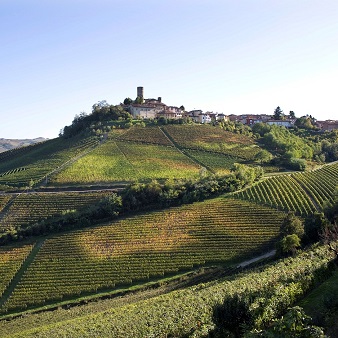
Barolo is a dry red wine made from 100 percent Nebbiolo and comes from a clearly defined part of the Langhe southwest of Alba. Eleven municipalities, 181 officially defined MGAs and a late-ripening grape variety create a diversity within a compact area that cannot be captured by terms such as "powerful" or "elegant" alone.
The key lies in origin. Barolo, La Morra, Castiglione Falletto, Serralunga d'Alba, Monforte d'Alba and the other municipalities provide the first point of orientation. The picture becomes more precise with the MGAs – clearly delimited geographical indications such as Cannubi, Bussia, Brunate, Monprivato, Monvigliero, Ravera or Vigna Rionda. They show just how precisely Barolo can be located without creating an official hierarchy of sites.
Origin alone, however, does not explain a wine. Exposure, altitude, the individual parcel and the vintage matter just as much as the producer's decisions. Some Barolo open comparatively early, others need time; some are fragrant and taut, others deeper and more structured. Anyone wishing to understand Barolo should therefore look not for a single ideal type, but for the interaction between place, year and individual signature.
- Grape variety: exclusively Nebbiolo
- Origin: vineyards in 11 municipalities of the Langhe
- MGA: 181 officially defined geographical indications, including 11 municipal designations
- Ageing: at least 38 months, including 18 months in wood
- Character: shaped by origin, vintage and producer
Barolo DOCG – the binding framework
Barolo DOCG is made exclusively from Nebbiolo. The production area lies in the Langhe of southern Piedmont and includes vineyards in eleven municipalities. Barolo received DOC status in 1966 and was elevated to DOCG in 1980.
The Disciplinare regulates grape variety, origin, yields, minimum parameters, ageing periods and the use of additional geographical indications. Barolo and Barolo Riserva are permitted, with or without a Menzione Geografica Aggiuntiva. Under defined conditions, the term "Vigna" may also appear together with the name of a vineyard or traditional place-name. The vintage must be stated on the label.
The legal framework is therefore precise. It deliberately does not prescribe a uniform Barolo style. That is a central part of the fascination: two wines can belong to the same DOCG and still tell very different stories about where they come from and how they were made.
Eleven municipalities, many perspectives
The often-mentioned "eleven municipalities of Barolo" are geographically less straightforward than the phrase suggests. Barolo, Castiglione Falletto and Serralunga d'Alba lie entirely within the production zone. Only specific parts of La Morra, Monforte d'Alba, Novello, Verduno, Grinzane Cavour, Diano d'Alba, Cherasco and Roddi are included.
The names most frequently seen on labels are Barolo, La Morra, Castiglione Falletto, Serralunga d'Alba and Monforte d'Alba. Many of the best-known origins are concentrated there. Yet the overall picture would be incomplete without Verduno and Monvigliero, Novello and Ravera, Grinzane Cavour and the smaller sections of the remaining municipalities.
As tempting as it may be to assign a typical flavour to each place, that model quickly reaches its limits. A phrase such as "La Morra is fine" or "Serralunga is powerful" may neatly summarise individual observations, but it cannot explain an entire municipality. Within just a few kilometres, altitude, exposure, slope position and geological subsoil can change.
The municipality therefore provides the first orientation. Looking more closely leads to the MGAs – and to the real fine detail of origin.
Beneath the hills: marl, sandstone and ancient seas
The landscape of Barolo was formed from marine sediments deposited over long geological periods. What appears today as a harmonious landscape of hills is, beneath the surface, a complex mosaic of different formations.
Among the defining units are the Marne di Sant'Agata Fossili with their predominantly fine calcareous and clay-rich sediments, the Formazione di Lequio with marl and more pronounced sandstone layers, and the Arenarie di Diano. The Conglomerati di La Morra and other, sometimes more localised formations add further complexity.
Their boundaries do not neatly follow today's municipal borders. That is precisely why the old idea of a simple geological east-west divide is too crude for Barolo.
Geology alone never explains the taste of a wine. Marl does not automatically mean elegance, nor sandstone necessarily power. Only in combination with soil development, altitude, slope position, exposure, water availability and microclimate does the environment in which Nebbiolo ripens take shape.
The production rules also reflect the topography: suitable hillside sites are permitted, while valley floors and wet, flat or insufficiently exposed areas are excluded. Approved vineyards lie between 170 and 540 metres above sea level. With such a late-ripening variety, even small differences in site can have noticeable consequences.
Geology is therefore an important key to Barolo – but not a sensory translation machine.
Nebbiolo – one grape, many expressions
Barolo consists exclusively of Nebbiolo. No second grape variety is added and no blend softens its particular character. It is precisely this uncompromising rule that makes differences in place, vintage and producer especially clear.
Typical is the combination of a comparatively pale colour with remarkable structure. Young wines can show floral notes, red fruit and fine spice; with age, the ruby colour moves towards garnet and the aromatic spectrum becomes more complex. Acidity and tannin form the backbone and contribute substantially to the ageing potential of good Barolo.
Nebbiolo buds early and ripens late. The course of the growing season therefore plays a major role, as do vineyard altitude and exposure. At the same time, the variety responds sensitively to decisions in the cellar. Time on the skins, extraction, fermentation management, vessel choice and length of ageing all influence how early a wine opens and how it presents its structure.
This is why the image of Barolo as invariably massive and unapproachable for decades is too simplistic. A young wine can be fragrant, precise and surprisingly accessible – and still age exceptionally well. Another may initially appear closed and need patience.
Nebbiolo provides the common language. Origin and producer determine tone and expression.
181 MGAs – origin becomes precise
Since 2010, Barolo has had 181 officially defined Menzioni Geografiche Aggiuntive, or MGAs. These include 11 municipal designations. The remaining MGAs identify geographically delimited areas within the production zone.
Cannubi, Brunate, Cerequio, Rocche dell'Annunziata, Monprivato, Villero, Bussia, Ginestra, Lazzarito, Vigna Rionda, Monvigliero and Ravera are among the origin names wine lovers encounter again and again. They make it possible to locate Nebbiolo within the appellation with far greater precision.
In everyday wine language, MGAs are often described as "crus" or "sites". This is useful as a point of orientation, but legally it remains a simplification. An MGA may contain several parcels and owners and does not necessarily correspond to a single vineyard.
Above all, the 181 MGAs do not form an official quality hierarchy. Cannubi does not rank above Bussia in the regulations, nor Vigna Rionda above Ravera. The designation tells you where a wine comes from – not how good it must be.
That is exactly what makes MGAs so fascinating. Tasting the same origin from several producers, or several MGAs from one estate side by side, gradually reveals where place speaks most clearly and where the producer's signature comes to the fore.
In this way, Barolo becomes a map of origin that unfolds bottle by bottle.
Municipality, MGA and "Vigna" – how to read a label
A closer look at a Barolo label reveals several levels of origin.
It begins with the Barolo DOCG appellation. Within its production area lie vineyards in eleven municipalities, whose names provide an initial geographical orientation. The regulations also provide for municipal MGAs, allowing the municipality itself to be indicated more precisely on the label under certain conditions.
The next level is the specific MGA. It narrows origin further within the area: Bussia, for example, lies in Monforte d'Alba, Monvigliero in Verduno and Vigna Rionda in Serralunga d'Alba. With an MGA Barolo, this geographical origin explicitly becomes part of the wine's identity.
The term "Vigna" can take precision one step further. It may only be used together with an MGA and identifies a specifically named vineyard or traditional place-name. Additional requirements apply to origin, documentation and separate vinification or storage; permitted yields are also lower.
Greater precision does not automatically mean higher quality. Neither MGA nor "Vigna" is an official seal of quality. Above all, they reveal one thing: where a wine comes from in even greater detail.
Ageing is part of Barolo
Barolo must age for at least 38 months from 1 November of the harvest year, while Riserva requires 62 months. In both cases, 18 months in wood are mandatory.
Barolo may be released for sale no earlier than 1 January of the fourth year after the harvest, and Barolo Riserva no earlier than 1 January of the sixth year.
Just as interesting is what the Disciplinare leaves open. Neither barrel size nor type of wood nor a particular vinification philosophy is prescribed. Large botti, smaller barrels, new or used wood, different lengths of skin contact and additional bottle ageing all remain within the producer's control inside the legal framework.
"Riserva" therefore means one thing first of all: a longer legally required ageing period. It does not represent an automatic quality level above every regular Barolo. Some estates use the designation only for selected origins or vintages; others already age their standard Barolo substantially longer than the law requires.
With Barolo, time is not a decorative extra. It is part of the wine's construction.
Why Barolo can taste so different
Two bottles can both be made from 100 percent Nebbiolo, come from the same year and say Barolo DOCG on the label – and still taste remarkably different.
In the vineyard, differentiation begins with municipality, MGA and parcel. Altitude, exposure, slope position, geology and microclimate create different conditions for Nebbiolo's long ripening season. Even within the same MGA, a higher parcel or one with a different exposure can develop differently from a neighbouring part of the slope.
Then comes the vintage. Temperature patterns, rainfall, heat periods, cool nights and conditions around harvest change the balance between ripeness, acidity, tannin and aroma. Even a famous origin cannot erase these differences.
Finally, the producer translates the raw material into wine. Harvest date, maceration time, intensity of extraction, fermentation management, barrel size, proportion of new wood and length of ageing all influence the way a Barolo expresses its origin.
The once-famous divide between "traditionalists" and "modernists" no longer explains this diversity adequately. Many producers have developed their methods, combined elements from both approaches and long since moved beyond earlier dogmas.
The more interesting question is specific: how does this producer work with this vineyard in this year?
Barolo and the vintage
With Barolo, it is particularly worthwhile to read the vintage alongside the wine. Nebbiolo ripens late and spends a long part of the year in the vineyard. The course of spring, summer and autumn can therefore clearly influence how tannin, acidity, fruit and aromatic depth come together.
This does not mean vintages can usefully be sorted into simple categories such as "great" and "weak". A cooler year can produce highly compelling wines in a particular site or in the hands of a particular grower, while warmer years show different strengths. The moment at which a bottle is opened also matters: the same vintage can change fundamentally with increasing bottle age.
That is why vintage depth becomes genuine guidance when buying Barolo. At SUPERIORE.DE, numerous Barolo vintages from individual estates can be found side by side – in some cases spanning more than a decade. Alongside young releases are wines that have already completed a substantial part of their bottle development and have matured for years under controlled storage conditions.
Barolo can therefore be selected not only by producer and MGA, but also by the desired stage of development: from youthful tension through the first mature aromas to more complex, already evolved bottles.
Detailed assessments of individual years and the wines currently available can be found on our Barolo vintage pages:
Barolo and Barbaresco – close neighbours, distinct identities
Barolo and Barbaresco are both made exclusively from Nebbiolo and lie only a few kilometres apart in the Langhe. Even so, they have their own production areas, systems of origin and ageing requirements.
One clear difference lies in the required ageing. Barolo needs at least 38 months, including 18 months in wood; Barbaresco at least 26 months, including 9 months in wood. Barolo therefore officially reaches the market later.
These rules create neither a quality hierarchy nor a reliable formula for taste. The familiar shorthand "Barolo powerful, Barbaresco fine" may fit individual wines, but it explains neither the diversity of origins nor the producer's signature.
It is more revealing to understand the two wines as independent responses of the same grape variety to neighbouring places.
A wine finds its identity
Some of the best-known stories in Italian wine surround the origins of Barolo. Particularly persistent is the idea that Nebbiolo was invariably made sweet until the 19th century and that only the French oenologist Louis Oudart turned it into dry Barolo. The historical development was more complex.
As early as the 1830s, the Piedmontese oenologist Paolo Francesco Staglieno worked intensively on dry, ageworthy Nebbiolo wines and also operated in the circle of Camillo Benso di Cavour. Juliette Colbert Falletti, Marchesa di Barolo, Cavour, Staglieno and later Oudart are among the figures who contributed in different ways to the development and dissemination of the wine.
Modern Barolo therefore did not emerge in a single stroke of genius. It found its form gradually – through advances in viticulture, better control of fermentation and a growing understanding of how Nebbiolo could be made dry and stable.
In the 20th century, origin was also defined with increasing precision. DOC status followed in 1966 and DOCG in 1980. At the same time, work in the cellars was changing.
From the 1980s onwards, this development became particularly visible. A younger generation sometimes favoured shorter macerations, more precise temperature control and smaller, often new oak barrels. Other producers continued to rely on long macerations and large botti. From this debate emerged the much-discussed "Barolo Wars" between "modernists" and "traditionalists".
Today, that division feels almost more historical than the wines themselves. Many producers have refined their methods, adjusted extraction and wood use, and combined elements from different approaches.
With the official introduction of the MGAs in 2010, attention shifted even more clearly towards what makes Barolo particularly compelling today: not the search for one correct style, but for origin and its interpretation.
Barolo in many signatures
Barolo shows its full range when the same grape variety and the same legal framework are interpreted by different producers. Some estates work with numerous MGAs across several municipalities, others focus on a small number of vineyards they have come to know ever more precisely over decades. Others deliberately combine several origins into one Barolo.
Vietti makes the geographical breadth of the appellation particularly vivid. Brunate, Cerequio, Lazzarito, Monvigliero, Ravera and Rocche di Castiglione are all part of the portfolio, as is the Riserva Villero. Under one house signature, very different origins can therefore be compared directly.
At Roberto Voerzio, much of the focus lies on La Morra and well-known MGAs such as Brunate, Cerequio, La Serra and Rocche dell'Annunziata. His wines show how finely origin can be differentiated even within a single municipality.
Aldo Conterno, by contrast, is closely associated with Bussia in Monforte d'Alba. Romirasco, Cicala and Colonnello lie within this extensive MGA; Granbussia brings selected lots together in a long-aged Riserva. Even a major origin such as Bussia can therefore be further differentiated.
Massolino stands particularly strongly for Serralunga d'Alba. Vigna Rionda, Margheria and Parafada show different facets of this area, while Parussi opens the view towards Castiglione Falletto.
Cavallotto focuses on Bricco Boschis and Vignolo, distinctive origins in Castiglione Falletto. Long ageing in large casks also shows how far producers can follow their own path within the legal requirements.
G.D. Vajra brings together different perspectives on the appellation with Bricco delle Viole, Ravera and Coste di Rose. Elio Altare, with Arborina, represents not only a specific origin but also a generation that fundamentally questioned ideas about vinification and ageing in the 1980s.
Luciano Sandrone shows another side of Barolo. Alongside wines from clearly defined individual origins, Le Vigne represents the traditional idea of combining Nebbiolo from several vineyards and municipalities into one Barolo. In Barolo, origin therefore does not always have to mean a single site.
Giulia Negri, finally, brings the higher-altitude sites of La Morra into focus with Serradenari, broadening the picture of a municipality too often reduced to a supposedly fixed style.
Bruno Giacosa, Pio Cesare, Roagna, Domenico Clerico, E. Pira & Figli, Elvio Cogno, Giovanni Rosso, Conterno Fantino, Michele Chiarlo, Pecchenino and other estates in our range add further origins, vintages and cellar philosophies to this landscape.
The more interesting question is therefore less: who makes the best Barolo? And more: which origin and which signature suit your own taste?
Buying Barolo: origin, vintage and stage of maturity
With Barolo, choice means far more than a large number of different labels. What matters is which producers, MGAs and vintages are actually available side by side.
At SUPERIORE.DE, the range extends from classic Barolo through numerous MGA wines and Riserva to matured vintages. Some producers are represented not only by several origins but by sequences of vintages reaching far back in time.
With a wine of such great ageing potential, this opens possibilities that go beyond buying the current release. Those discovering Barolo can begin by getting to know different producers. Those wishing to go deeper can compare several MGAs from the same estate or the same origin from different producers. And anyone curious about how Nebbiolo changes with age can choose between young and already matured bottles.
Age alone, however, is not a mark of quality. The wine, vintage and storage conditions are decisive. Mature Barolo from our stock have continued their development under fully climate-controlled, light-protected and constant storage conditions – an important prerequisite when long ageing itself becomes part of the purchasing decision.
In the end, selection comes down to four questions: which origin? Which producer? Which vintage? Which stage of maturity?
Anyone who can answer these questions is usually closer to the right Barolo than with any ranking.
Discover Barolo and find the wine that matches your idea of this great Piedmontese Nebbiolo classic.
If you would like to explore Barolo in more detail, here are answers to the most important questions about origin, Nebbiolo, MGA, "Vigna", Riserva, vintage, ageing potential and shipping.
Questions and answers about Barolo
What is Barolo?
Barolo is a dry red wine with DOCG status from the Langhe in Piedmont. It is made exclusively from Nebbiolo and may only come from the clearly defined production area with vineyards in eleven municipalities.
Is Barolo a grape variety?
No. Barolo is the name of the origin and the DOCG wine produced there. The grape variety is Nebbiolo.
How many municipalities does Barolo come from?
The production area includes vineyards in eleven municipalities: Barolo, Castiglione Falletto, Serralunga d'Alba, La Morra, Monforte d'Alba, Novello, Verduno, Grinzane Cavour, Diano d'Alba, Cherasco and Roddi. Only Barolo, Castiglione Falletto and Serralunga d'Alba lie entirely within the production area; only specific parts of the other municipalities are included.
Is Barolo dry or sweet?
Today's Barolo DOCG is a dry red wine. Historical accounts of sweeter Nebbiolo wines belong to the development history of the area, but they do not describe the current style of the appellation.
What does MGA mean in Barolo?
MGA stands for "Menzione Geografica Aggiuntiva". It is an officially defined geographical indication within the Barolo area. There are 181 MGAs in total, including 11 municipal designations.
Are the MGAs a quality classification?
No. MGAs define origin, not a legal hierarchy. Barolo has no official classification into Grand Cru or Premier Cru. The reputation of individual origins has grown historically, but carries no higher legal rank.
What does "Vigna" mean on a Barolo label?
"Vigna" identifies a specifically named vineyard or traditional place-name. In Barolo, the term may only be used together with an MGA and is subject to additional production and documentation requirements.
What does Riserva mean in Barolo?
Barolo Riserva ages for at least 62 months, regular Barolo for 38 months. In both cases, 18 months in wood are required. Riserva therefore primarily indicates the longer legally required ageing period.
What is the difference between Barolo and Barbaresco?
Both wines are made exclusively from Nebbiolo, but they come from separate DOCG areas within the Langhe and follow different ageing requirements. Barolo must age for at least 38 months, Barbaresco for at least 26 months. This creates neither an automatic quality hierarchy nor a reliable formula for taste.
Which Barolo vintage is the best?
There is no universally "best" vintage. Vintage quality depends just as much on origin and producer as on the weather. The desired drinking window also matters: some years show more openly at an earlier stage, while others need more bottle age.
How long can Barolo age?
High-quality Barolo can age for many years and, in suitable cases, for decades. The specific potential depends on vintage, origin, producer, ageing and storage conditions.
Should Barolo be decanted?
Young Barolo can benefit from air, especially when tannin and aroma still seem closed. With long-matured bottles, more caution is advisable because a developed bouquet can react more sensitively. The age and condition of the bottle should therefore determine the approach.
Can Barolo be ordered online at SUPERIORE.DE?
Yes. The Barolo wines offered by SUPERIORE.DE can be ordered directly online. Depending on availability, the selection includes classic Barolo, numerous MGA wines, Riserva, as well as young and already matured vintages. The wines are stored under fully climate-controlled conditions until shipping.
How is Barolo shipped?
Barolo is shipped insured in tested packaging suitable for bottle transport. Delivery times and shipping costs depend on the destination country and are shown transparently in the shop.
What food goes with Barolo?
Acidity, tannin and aromatic depth make Barolo a good partner for rich, structured dishes. Brasato, game, mushrooms, truffles or mature cheese are classic pairings. What matters most is the balance between the intensity of the dish and the structure of the wine.
The closer you look, the greater Barolo becomes
Barolo thrives on precision. One grape variety, eleven municipalities and 181 geographical indications create a clear framework – and within it a remarkable diversity.
Nebbiolo is the common language. Bussia speaks differently from Monvigliero, Ravera differently from Vigna Rionda, and even the same MGA can take on very different contours in the hands of two producers. Vintage adds another layer, one that continues to reveal itself anew as the wine develops in bottle.
The deeper one goes into Barolo, the less useful terms such as prestige, power or "king of wines" become. More interesting are the places behind them, the people who interpret those places and the years in which the wines were made.
Barolo does not become greater because we turn it into a legend. It becomes greater the closer we look. SUPERIORE.DE
- 24 Years of Expertise
- 3,500+ Wines in Stock
- 350+ Winemakers
- 28,000+ Positive Reviews
- Fully Air-Conditioned Storage