


-
!["Cetamura" Chianti DOCG 2024]()
“Cetamura” Chianti DOCG 2024
Cetamura – an uncomplicated but never banal everyday wine with a Ligurian name: The Etruscans once settled on the land that is now part of Tenuta Badia a Coltibuono – and so the name Cetamura also comes from that era. Since 1988, the wine has been selectively vinified from the best Sangiovese grapes with the aim of achieving a lively profile that is also suitable for everyday drinking. Bright ruby red in the glass. The nose reveals juicy cherry, red berries and floral accents, with a subtle spiciness in the background. The palate is fresh and soft with fine fruit and a pleasant structure, rounded off by a clean acidity and lively freshness. A harmonious, uncomplicated Chianti – perfect for pasta, pizza or relaxed enjoyment in good company. SUPERIORE.DE
 From 6 bottles per 7,50 € (0,75l · 10,00 €/l)
- Grape variety: 100% Sangiovese
- Cultivation: close to nature
- Maturation: stainless steel
- Filtration: yes
- Alcohol content: 12,50 % vol
- Serving temperature: 16‑18 °C
- Storage potential: 2030+
- Closure: Diam
- Total extract: 29,71 g/l
- Total acidity: 5,49 g/l
- Residual sugar: < 0,50 g/l
- Sulfite: 81 mg/l
- pH value: 3,50
- Allergens
contains sulphites - Nutritional Information per 100 ml
- Energy in kcal: 76 kcal
- Energy in kJ: 318 kJ
- Carbohydrates: 2,40 g
stored air-conditioned0,75 l · 11,87 €/l · Price (DE) incl. VAT, excl. Shippingavailable immediately
!["Barone Ricasoli" Chianti DOCG 2024]()
“Barone Ricasoli” Chianti DOCG 2024
This cuvée, made from 85% Sangiovese and 15% other grape varieties, comes from the historic vineyards near Gaiole in Chianti. Vinification takes place in temperature-controlled stainless steel tanks, whilst traditional ageing methods preserve the typical Sangiovese freshness and the authentic Chianti character. Bright ruby red in the glass. The bouquet is characterised by dark fruit: black cherries and redcurrants, accompanied by elegant hints of violet and balsamic notes of liquorice and mint. On the palate, it is juicy and refreshing, with the characteristic playful acidity of Sangiovese, velvety spice and charming fruity notes that linger right through to the finish. An unpretentious yet refined Chianti of remarkable authenticity. SUPERIORE.DE
- Grape varieties: 85% Sangiovese, 15% Other Grape Varieties
- Cultivation: conventional
- Maturation: stainless steel
- Filtration: yes
- Alcohol content: 13,00 % vol
- Serving temperature: 16‑18 °C
- Storage potential: 2029+
- Closure: twist lock
- Total extract: 29,15 g/l
- Total acidity: 5,82 g/l
- Residual sugar: 1,24 g/l
- Sulfite: 83 mg/l
- pH value: 3,36
- Allergens
contains sulphites - Nutritional Information per 100 ml
- Energy in kcal: 75 kcal
- Energy in kJ: 312 kJ
stored air-conditioned0,75 l · 11,87 €/l · Price (DE) incl. VAT, excl. Shippingavailable immediately
!["Biskero" Chianti DOCG 2024 (BIO)]()
“Biskero” Chianti DOCG 2024 (BIO)
Anyone who thinks of Chianti as a classic in a straw basket is not historically wrong – but is wrong when it comes to the reality of one of Italy's most diverse wine denominations. Today, Chianti DOCG covers a huge area in Tuscany that stretches from Florence to Siena and includes seven subzones: Colli Senesi, Colli Fiorentini, Rufina, Montalbano, Montespertoli, Colli Aretini – and the heart, Chianti Classico, which has long had its own DOCG. What remains is a denomination with great geographical breadth that reflects the Tuscan hinterland – and where, if you are serious about it, you can make fascinatingly honest wines, today even without Fiasco Classico.
- From 6 bottles per 8,99 € (0,75l · 11,99 €/l)
- Grape varieties: 85% Sangiovese, 5% Canaiolo, 5% Mammolo, 5% Merlot
- Cultivation: biological
- Maturation: 4 months 30/70 tonneau/stainless steel
- Filtration: yes
- Alcohol content: 13,00 % vol
- Serving temperature: 16‑18 °C
- Storage potential: 2029+
- Closure: Nomacorc
- Food recommendations
pasta al ragù, bruschetta with liver crostini, grilled sausage, pecorino di pienza - Total extract: 28,98 g/l
- Total acidity: 5,47 g/l
- Residual sugar: 1,29 g/l
- Sulfite: 79 mg/l
- pH value: 3,41
- Eco-Control-No.: IT‑BIO‑006
- Allergens
contains sulphites - Nutritional Information per 100 ml
- Energy in kcal: 75 kcal
- Energy in kJ: 314 kJ
- Carbohydrates: 1,20 g
- Of which sugar: 0,10 g
stored air-conditioned0,75 l · 12,93 €/l · Price (DE) incl. VAT, excl. Shippingavailable immediately
![Chianti Colli Senesi DOCG 2024 (BIO)]()
Chianti Colli Senesi DOCG 2024 (BIO)
From the youngest vineyards of the 530-hectare Camigliano estate – where the tufa soils on the south-western slope of Montalcino give the Sangiovese particularly juicy fruit and fragrant flavour. 80% Sangiovese, supplemented by 20% Merlot for supple fullness. After gentle pressing, the wine ferments at a controlled temperature in stainless steel, then matures in large barrels and rests in the bottle for a few weeks before bottling. Vivid ruby red with garnet nuances, aromas of sour cherry, wild berries and a hint of liquorice, fruity and fresh on the palate, with soft tannins and animating length. SUPERIORE.DE
- Grape varieties: 80% Sangiovese, 20% Merlot
- Cultivation: biological
- Maturation: 6 months in oak barrels
- Filtration: yes
- Alcohol content: 13,00 % vol
- Serving temperature: 18‑20 °C
- Storage potential: 2029+
- Closure: natural cork
- Food recommendations
meat/grilled dishes - Total extract: 29,78 g/l
- Total acidity: 5,39 g/l
- Residual sugar: 1,65 g/l
- Sulfite: 52 mg/l
- pH value: 3,39
- Eco-Control-No.: IT‑BIO‑004
- Allergens
contains sulphites - Nutritional Information per 100 ml
- Energy in kcal: 76 kcal
- Energy in kJ: 316 kJ
- Fat: < 0,10 g
- Of which saturated fat : < 0,10 g
- Carbohydrates: < 0,10 g
- Of which sugar: < 1,00 g
- Albumen: < 0,10 g
- Salt: < 0,01 g
stored air-conditioned0,75 l · 13,20 €/l · Price (DE) incl. VAT, excl. Shippingavailable immediately
!["Vigna di Pallino" Chianti DOCG 2024 (BIO)]()
“Vigna di Pallino” Chianti DOCG 2024 (BIO)
Vigna di Pallino offers excellent value for money. Its bouquet displays the typical fruity and spicy notes, along with well-balanced acidity. On the palate, it is lively and vibrant; the primary flavours and the juicy, soft tannins harmonise beautifully, making this Sangiovese a wonderful accompaniment to medium-bodied Tuscan cuisine. SUPERIORE.DE
- Grape variety: 100% Sangiovese
- Cultivation: biological
- Maturation: stainless steel
- Filtration: yes
- Alcohol content: 13,50 % vol
- Serving temperature: 16‑18 °C
- Storage potential: 2029+
- Closure: Diam
- Total extract: 29,76 g/l
- Total acidity: 5,98 g/l
- Residual sugar: 2,23 g/l
- Sulfite: 78 mg/l
- pH value: 3,38
- Eco-Control-No.: IT‑BIO‑004
- Allergens
contains sulphites
stored air-conditioned0,75 l · 14,53 €/l · Price (DE) incl. VAT, excl. Shippingavailable immediately
!["Berardenga" Chianti Colli Senesi DOCG 2024]()
“Berardenga” Chianti Colli Senesi DOCG 2024
Felsina's entry-level wine, made from 100% Sangiovese from the border between Chianti Classico and the Colli Senesi. The estate, acquired by Domenico Poggiali in 1966, is situated in Castelnuovo Berardenga on diverse soils comprising sandstone, marl and limestone. Following temperature-controlled fermentation in stainless steel, the wine is aged for twelve months in medium-sized Slovenian oak barrels. Ruby red with violet hues in the glass. On the nose, fruity aromas of wild berries and blackcurrant, complemented by pleasant spicy notes. On the palate, it is round and supple, with well-structured tannins and a delicate final of red fruits and vanilla. A classic Chianti from the Colli Senesi, perfect for everyday enjoyment with meat dishes. SUPERIORE.DE
- Grape variety: 100% Sangiovese
- Cultivation: conventional
- Maturation: 12 months wooden barrel
- Filtration: yes
- Alcohol content: 13,00 % vol
- Serving temperature: 18‑20 °C
- Storage potential: 2030+
- Closure: natural cork
- Food recommendations
pizza, pasta all'arrabiata - Total extract: 29,61 g/l
- Total acidity: 5,87 g/l
- Residual sugar: 1,35 g/l
- Sulfite: 88 mg/l
- pH value: 3,36
- Allergens
contains sulphites
stored air-conditioned0,75 l · 15,87 €/l · Price (DE) incl. VAT, excl. Shippingavailable immediately
!["Berardenga" Chianti Colli Senesi DOCG 2023]()
“Berardenga” Chianti Colli Senesi DOCG 2023
Felsina's entry-level wine made from 100% Sangiovese from the border between Chianti Classico and the Colli Senesi. The vineyard, acquired by Domenico Poggiali in 1966, is located in Castelnuovo Berardenga on diverse soils of sandstone, marl and limestone. After temperature-controlled fermentation in stainless steel, the wine matures for twelve months in medium-sized Slovenian oak barrels. Ruby red in colour with violet hues in the glass. Fruity aromas of wild berries and berry bush on the nose, complemented by pleasant spicy notes. Round and supple on the palate with well-structured tannins and a delicate final of red fruit and vanilla. A classic Chianti from the Colli Senesi, perfect for everyday enjoyment with meat dishes. SUPERIORE.DE
- Grape variety: 100% Sangiovese
- Cultivation: close to nature
- Maturation: 12 months wooden barrel
- Filtration: yes
- Alcohol content: 13,00 % vol
- Serving temperature: 18‑20 °C
- Storage potential: 2029+
- Closure: natural cork
- Food recommendations
pizza, pasta all'arrabiata - Total extract: 29,56 g/l
- Total acidity: 5,78 g/l
- Residual sugar: 1,28 g/l
- Sulfite: 91 mg/l
- pH value: 3,37
- Allergens
contains sulphites
!["When We Dance" Chianti DOCG 2025]()
“When We Dance” Chianti DOCG 2025
"When We Dance" – sting's 1994 ballad is about a love that makes angels hide their wings. The eponymous Chianti is more down-to-earth, but no less seductive: a classic triad of Sangiovese, Canaiolo and Colorino, as Tuscany has known it for centuries. The biodynamically farmed grapes are harvested by hand and matured in stainless steel for six months – no wood, no distractions, just pure varietal expression.
- Grape varieties: 95% Sangiovese, 5% Colorino and Canaiolo
- Cultivation: conventional
- Maturation: 6 months stainless steel
- Filtration: yes
- Alcohol content: 13,00 % vol
- Serving temperature: 16‑18 °C
- Storage potential: 2031
- Closure: natural cork
- Total extract: 29,58 g/l
- Total acidity: 5,82 g/l
- Residual sugar: < 1,00 g/l
- Sulfite: 64 mg/l
- pH value: 3,49
- Allergens
contains sulphites - Nutritional Information per 100 ml
- Energy in kcal: 79 kcal
- Energy in kJ: 331 kJ
- Carbohydrates: 2,60 g
- Of which sugar: 2,60 g
stored air-conditioned0,75 l · 17,20 €/l · Price (DE) incl. VAT, excl. Shippingavailable immediately
!["Selezione RS Cultusboni" Chianti Classico DOCG 2023]()
“Selezione RS Cultusboni” Chianti Classico DOCG 2023
The wines of La Badia have a clear style: clean and traditionally vinified, they are always a great pleasure. Intense ruby red, the bouquet has a burst of red-coloured fruit, pipe tobacco, cedar wood and sweet spices. The full-bodied flavour of Roberto Stucchi is wonderfully smooth, the acidity well balanced and the finish clean and long-lasting. SUPERIORE.DE
- Grape variety: 100% Sangiovese
- Cultivation: close to nature
- Maturation: stainless steel tank
- Filtration: yes
- Alcohol content: 14,00 % vol
- Serving temperature: 16‑18 °C
- Storage potential: 2030
- Closure: Diam
- Total extract: 29,84 g/l
- Total acidity: 5,89 g/l
- Residual sugar: 1,22 g/l
- Sulfite: 87 mg/l
- pH value: 3,43
- Allergens
contains sulphites
stored air-conditioned0,75 l · 17,20 €/l · Price (DE) incl. VAT, excl. Shippingavailable immediately
![Chianti Rufina DOCG 2024]()
Chianti Rufina DOCG 2024
Federico Giuntini-Antinori runs the area's most traditional estate, whose family tree can be traced back to the 15th century. Rufina is the northernmost district in Chianti, where the vineyards grow around the Villa di Selvapiana and in the vineyards of San Martino a Quona, Pian de' Marroni and Cerbognole. Mainly Sangiovese with small additions of Canaiolo, Colorino and Malvasia Nera are harvested between the end of September and the beginning of October, partly by hand. Spontaneous fermentation takes place in steel tanks at 28-30°C with a 25-day maceration period. Maturation lasts 12 months in 25-litre French oak barrels and concrete vats.
- Grape varieties: 95% Sangiovese, 5% Canaiolo
- Cultivation: close to nature
- Maturation: 10 months wooden barrel
- Filtration: yes
- Alcohol content: 12,50 % vol
- Serving temperature: 16‑18 °C
- Storage potential: 2032+
- Closure: natural cork
- Total extract: 29,58 g/l
- Total acidity: 5,79 g/l
- Residual sugar: 0,92 g/l
- Sulfite: 77 mg/l
- pH value: 3,38
- Allergens
contains sulphites - Nutritional Information per 100 ml
- Energy in kcal: 73 kcal
- Energy in kJ: 305 kJ
- Carbohydrates: 0,80 g
- Of which sugar: 0,00 g
stored air-conditioned0,75 l · 18,53 €/l · Price (DE) incl. VAT, excl. Shippingavailable immediately
!["Brolio" Chianti Classico DOCG 2023]()
“Brolio” Chianti Classico DOCG 2023
The classic from the heart of Chianti Classico: Brolio combines the excellent drinkability of a young Chianti Classico with a complex, complete structure. The vineyards grow on the historic Castello di Brolio between 280 and 480 metres above sea level on five representative soil types – from sandstone to galestro and marine sediments. Intense ruby red colour. Fresh, floral nose with notes of chinotto, violets and mimosa, leading to fruity nuances of black cherries and sweet mint. Velvety and complex on the palate with great harmony, elegant structure and a long, mineral final. A textbook Chianti Classico from a historic terroir. SUPERIORE.DE
- From 6 bottles per 12,99 € (0,75l · 17,32 €/l)
- Grape varieties: 95% Sangiovese, 5% Colorino
- Cultivation: conventional
- Maturation: 9 months used tonneaux
- Filtration: yes
- Alcohol content: 14,00 % vol
- Serving temperature: 18‑20 °C
- Storage potential: 2031+
- Closure: natural cork
- Total extract: 29,65 g/l
- Total acidity: 5,75 g/l
- Residual sugar: 1,62 g/l
- Sulfite: 85 mg/l
- pH value: 3,36
- Allergens
contains sulphites - Nutritional Information per 100 ml
- Energy in kcal: 81 kcal
- Energy in kJ: 337 kJ
- Carbohydrates: 0,90 g
- Of which sugar: 0,10 g
stored air-conditioned0,75 l · 18,53 €/l · Price (DE) incl. VAT, excl. Shippingavailable immediately
!["Duelame" Chianti Classico DOCG 2024 (BIO)]()
“Duelame” Chianti Classico DOCG 2024 (BIO)
The name says it all: "Due lame" – two terraces – refers to the extreme range in altitude of the vineyards, which stretch from 420 to 655 metres. These are the highest-altitude Sangiovese vineyards in the whole of Tuscany, perched on the mineral-rich terraces that gave the village of Lamole its name. The soils, composed of ochre-coloured "Macigno Toscano" interspersed with galestro and alberese, lend the wine its characteristic sharpness and elegance. The estate, situated in the heart of Chianti Classico, has been part of the Santa Margherita Group (Herita Wines) since 1993 and vinifies its wines in the historic cellars of a castle dating from 1350. The grapes undergo visual sorting, ferment in stainless steel with 7–10 days' contact with the skins, and mature on the lees until late winter. A brief ageing period in large oak barrels rounds off the wine.
- Grape variety: 100% Sangiovese
- Cultivation: biological
- Maturation: 6/6 months stainless steel/wood barrel
- Filtration: no
- Alcohol content: 13,50 % vol
- Serving temperature: 16‑18 °C
- Storage potential: 2033+
- Closure: natural cork
- Total extract: 29,69 g/l
- Total acidity: 5,87 g/l
- Residual sugar: 2,44 g/l
- Sulfite: 59 mg/l
- pH value: 3,35
- Eco-Control-No.: IT‑BIO‑014
- Allergens
contains sulphites
stored air-conditioned0,75 l · 19,87 €/l · Price (DE) incl. VAT, excl. Shippingavailable immediately
![Chianti Classico DOCG 2024 (BIO)]()
Chianti Classico DOCG 2024 (BIO)
A Chianti Classico born of the fusion of centuries-old tradition and modern winemaking techniques: Organically farmed since the 1980s, the vineyards of Monti in Chianti and Vitignano (situated slightly below) – with their clay-loam and limestone soils – strive for character and balance. The vines (90% Sangiovese, complemented by a little Colorino, Canaiolo and Ciliegiolo) are planted at altitudes ranging from 250 m to 330 m above sea level.
- Grape varieties: 90% Sangiovese, 10% Canaiolo, Ciliegiolo and Colorino
- Cultivation: biological
- Maturation: 12 months large oak barrel
- Filtration: yes
- Alcohol content: 13,50 % vol
- Serving temperature: 16‑18 °C
- Storage potential: 2034+
- Closure: Diam
- Total extract: 28,98 g/l
- Total acidity: 6,15 g/l
- Residual sugar: 0,95 g/l
- Sulfite: 53 mg/l
- pH value: 3,33
- Eco-Control-No.: IT‑BIO‑006
- Allergens
contains sulphites - Nutritional Information per 100 ml
- Energy in kcal: 81 kcal
- Energy in kJ: 337 kJ
- Carbohydrates: 1,30 g
stored air-conditioned0,75 l · 20,80 €/l · Price (DE) incl. VAT, excl. Shippingavailable immediately
![Chianti Classico DOCG 2023 (BIO)]()
Chianti Classico DOCG 2023 (BIO)
In the divine valley – the translation of Dievole – has been cultivating vines since 1090, twelve kilometres north of Siena. Since the takeover by Alejandro Bulgheroni in 2013 and organic certification in 2017, the traditional estate has experienced an impressive renaissance. The classic blend of Sangiovese, Canaiolo and Colorino matures for 13 months in large, unroasted French oak barrels, which gives the wine its characteristic elegance.
- Grape varieties: 90% Sangiovese, 7% Canaiolo, 3% Colorino
- Cultivation: biological
- Maturation: 13 months large oak barrel
- Filtration: yes
- Alcohol content: 13,50 % vol
- Serving temperature: 18‑20 °C
- Storage potential: 2031+
- Closure: Diam
- Total extract: 29,91 g/l
- Total acidity: 5,86 g/l
- Residual sugar: 1,27 g/l
- Sulfite: 75 mg/l
- pH value: 3,40
- Eco-Control-No.: IT‑BIO‑006
- Allergens
contains sulphites - Nutritional Information per 100 ml
- Energy in kcal: 77 kcal
- Energy in kJ: 324 kJ
stored air-conditioned0,75 l · 21,20 €/l · Price (DE) incl. VAT, excl. Shippingavailable immediately
!["Ardalico" Chianti Classico DOCG 2022 (BIO)]()
“Ardalico” Chianti Classico DOCG 2022 (BIO)
Curtain up for Ardalico: Named after a character from the epic novel Orlando Furioso, the new entry-level Chianti Classico from one of the most important wineries in the appellation impresses with an invigorating balance of fresh sour cherry and cherry flavours, ripe red berry fruit with fig notes, delicate smokiness, harmonious herbal and floral accents and a beautiful tannin core.
- From 6 bottles per 14,49 € (0,75l · 19,32 €/l)
- Grape variety: 100% Sangiovese
- Cultivation: biodynamic
- Maturation: 12 months stainless steel
- Vegan: yes
- Filtration: yes
- Alcohol content: 13,50 % vol
- Serving temperature: 18‑20 °C
- Storage potential: 2031+
- Closure: natural cork
- Total extract: 29,84 g/l
- Total acidity: 5,91 g/l
- Residual sugar: 1,85 g/l
- Sulfite: 77 mg/l
- pH value: 3,35
- Eco-Control-No.: IT‑BIO‑015
- Allergens
contains sulphites - Nutritional Information per 100 ml
- Energy in kcal: 80 kcal
- Energy in kJ: 333 kJ
stored air-conditioned0,75 l · 21,20 €/l · Price (DE) incl. VAT, excl. Shippingavailable immediately
!["Ruspoli" Chianti Classico DOCG 2024 (BIO)]()
“Ruspoli” Chianti Classico DOCG 2024 (BIO)
When a princess decided in 1958 to start bottling wine, she didn't do it just any old way, but with a high standard of quality. Eleonora Ruspoli Berlingieri, who brought the historic Lilliano estate near Castellina in Chianti into the family's ownership as early as 1920, was the first to recognise the oenological potential of this site. At her side was Giulio Gambelli, the legendary Sangiovese guru and one of the great interpreters of Tuscan wines. Today, brothers Giulio and Pietro Ruspoli carry on the legacy – the family still resides in the historic Palazzo Ruspoli in the heart of Rome. The Chianti Classico named after them comes from around 40 hectares of vineyards on limestone-rich, stony Alberese soils, which, at an altitude of around 300 metres, delay the ripening of the grapes and thus preserve both acidity and aromatic freshness. The organically farmed vineyards produce a cuvée comprising 90% Sangiovese, complemented by five% each of Colorino and Merlot – a classic blend that complies with DOCG regulations and highlights the typical character of the region.
- Grape varieties: 90% Sangiovese, 5% Merlot, 5% Colorino
- Cultivation: biological
- Maturation: 12‑14 months in oak barrels
- Filtration: yes
- Alcohol content: 13,50 % vol
- Serving temperature: 16‑18 °C
- Storage potential: 2032+
- Closure: natural cork
- Total extract: 29,81 g/l
- Total acidity: 5,79 g/l
- Residual sugar: 1,05 g/l
- Sulfite: 74 mg/l
- pH value: 3,34
- Eco-Control-No.: IT‑BIO‑015
- Allergens
contains sulphites
stored air-conditioned0,75 l · 21,20 €/l · Price (DE) incl. VAT, excl. Shippingavailable immediately
!["Maggiolo" Chianti Classico DOCG 2024 (BIO)]()
“Maggiolo” Chianti Classico DOCG 2024 (BIO)
In May, when the iris – known as "giaggiolo" in Tuscan – bathes the vineyards of Lamole in a violet glow, the soul of this wine is revealed. The name Maggiolo was born from the fusion of 'flower' and 'month': a Chianti Classico that captures the sunny generosity of the high-altitude vineyards, situated between 420 and 655 metres, in liquid form. Unlike the purist Duelame, the Maggiolo relies on a blend of 80% Sangiovese with 10% each of Cabernet Sauvignon and Merlot. Following visual selection of the grapes, they are fermented separately in stainless steel. The Sangiovese matures for 18 months in large oak casks, whilst the international varieties are aged in barriques; a marriage of structure and suppleness.
- Grape varieties: 90% Sangiovese, 5% Cabernet Sauvignon, 5% Merlot
- Cultivation: biological
- Maturation: 18 months in wooden barrel/barrique
- Filtration: yes
- Alcohol content: 13,50 % vol
- Serving temperature: 18‑20 °C
- Storage potential: 2032+
- Closure: natural cork
- Total extract: 29,86 g/l
- Total acidity: 5,89 g/l
- Residual sugar: 2,15 g/l
- Sulfite: 52 mg/l
- pH value: 3,42
- Eco-Control-No.: IT‑BIO‑014
- Allergens
contains sulphites
stored air-conditioned0,75 l · 22,53 €/l · Price (DE) incl. VAT, excl. Shippingavailable immediately
!["Tolaini" Chianti Classico DOCG 2024 (BIO)]()
“Tolaini” Chianti Classico DOCG 2024 (BIO)
With the 2024 vintage, Tolaini is revamping its Chianti Classico range: the previous Vallenuova Annata has been promoted to Riserva, and this entry-level wine – named after the estate itself – takes its place. The grapes come from the vineyards surrounding the estate in Castelnuovo Berardenga, the southernmost corner of the Chianti Classico region, where silty-clay soils mixed with limestone and stones shape the character of the Sangiovese.
- Grape varieties: 95% Sangiovese, 5% Canaiolo
- Cultivation: biological
- Maturation: 10 months concrete tank
- Vegan: yes
- Filtration: no
- Alcohol content: 13,50 % vol
- Serving temperature: 16‑18 °C
- Storage potential: 2031+
- Closure: natural cork
- Food recommendations
roast rabbit - Total extract: 28,20 g/l
- Total acidity: 5,45 g/l
- Residual sugar: < 1,00 g/l
- Sulfite: 70 mg/l
- pH value: 3,38
- Eco-Control-No.: IT‑BIO‑006
- Allergens
contains sulphites - Nutritional Information per 100 ml
- Energy in kcal: 75 kcal
- Energy in kJ: 314 kJ
- Carbohydrates: 0,90 g
- Of which sugar: 0,10 g
stored air-conditioned0,75 l · 22,53 €/l · Price (DE) incl. VAT, excl. Shippingavailable immediately
![Chianti Classico DOCG 2023]()
Chianti Classico DOCG 2023
Where the Lombards once built their fortress and Frederick II held court, Marco Ricasoli Firidolfi now cultivates his vines – a descendant of Bettino Ricasoli, who invented the Chianti formula in the 19th century. Monti in Chianti, situated at an altitude of 340 to 510 metres, is considered one of the best vineyards in the entire region. Limestone soils, organic farming and three-phase manual harvesting form the basis for this classic Chianti: 90% Sangiovese, supplemented by Canaiolo from our own selection. Matured for twelve months in Allier oak, bottled unfiltered.
- Grape varieties: 93% Sangiovese, 5% Canaiolo, 2% Colorino
- Cultivation: close to nature
- Maturation: 12 months 20/80 concrete tank/tonneau
- Vegan: yes
- Filtration: no
- Alcohol content: 13,50 % vol
- Serving temperature: 14‑16 °C
- Storage potential: 2032+
- Closure: natural cork
- Total extract: 29,97 g/l
- Total acidity: 6,25 g/l
- Residual sugar: 0,55 g/l
- Sulfite: 87 mg/l
- pH value: 3,32
- Allergens
contains sulphites - Nutritional Information per 100 ml
- Energy in kcal: 75 kcal
- Energy in kJ: 312 kJ
stored air-conditioned0,75 l · 22,53 €/l · Price (DE) incl. VAT, excl. Shippingavailable immediately
!["Tenuta S. Alfonso" Chianti Classico DOCG 2023]()
“Tenuta S. Alfonso” Chianti Classico DOCG 2023
A Sangiovese cru that demonstrates the philosophy of single-vineyard viticulture to perfection. Sergio Zingarelli and his team recognised early on the extraordinary potential of the clay-dominated soils of Sant'Alfonso – plots with minimal skeleton content, which create the ideal conditions for concentrated, aromatically complex wines. Sangiovese clones were specifically cultivated here, which harmonise with the clay-rich structures and develop the highest phenol concentrations.
- Grape variety: 100% Sangiovese
- Cultivation: conventional
- Maturation: 12 months wooden barrel
- Filtration: yes
- Alcohol content: 14,50 % vol
- Serving temperature: 16‑18 °C
- Storage potential: 2032+
- Closure: natural cork
- Total extract: 30,25 g/l
- Total acidity: 5,38 g/l
- Residual sugar: 2,87 g/l
- Sulfite: 88 mg/l
- pH value: 3,55
- Allergens
contains sulphites
stored air-conditioned0,75 l · 22,53 €/l · Price (DE) incl. VAT, excl. Shippingavailable immediately
![Chianti Classico DOCG 2024 (BIO)]()
Chianti Classico DOCG 2024 (BIO)
Barbara Widmer's Chianti Classico has for years been characterised by clarity and terroir: 100% Sangiovese from plots in Castellina and Radda (230–400 m), on limestone- and clay-rich soils with a south to south-west aspect. Fermented in stainless steel tanks, then aged for around twelve months on the fine lees in stainless steel and cement tanks – deliberately without the use of wood, to allow the grape variety to express itself purely and precisely.
- Grape variety: 100% Sangiovese
- Cultivation: biological
- Maturation: 12 months stainless steel/cement
- Vegan: yes
- Filtration: yes
- Alcohol content: 13,00 % vol
- Serving temperature: 16‑18 °C
- Storage potential: 2033+
- Closure: Diam
- Food recommendations
salami, cheese, pasta, poultry and grills of all kinds - Total extract: 29,88 g/l
- Total acidity: 5,89 g/l
- Residual sugar: 1,11 g/l
- Sulfite: 81 mg/l
- pH value: 3,35
- Eco-Control-No.: IT‑BIO‑015
- Allergens
contains sulphites
stored air-conditioned0,75 l · 23,33 €/l · Price (DE) incl. VAT, excl. Shippingavailable immediately
!["Pèppoli" Chianti Classico DOCG 2023]()
“Pèppoli” Chianti Classico DOCG 2023
Pèppoli is an entertaining, very relaxed red wine with a firm fan base. A sparkling, intense ruby colour with a slight garnet hue. The Pèppoli expresses its strong personality through its bouquet of ripe fruit with light mineral accents. The juicy flavour with lively tannins spreads gently yet powerfully across the palate and lingers for a long time. Very easy to drink, very classic and, incidentally, excellent value! SUPERIORE.DE
- Grape varieties: 90% Sangiovese, 10% Merlot and Syrah
- Cultivation: conventional
- Maturation: 12 months barrique and large wooden barrel
- Filtration: yes
- Alcohol content: 13,50 % vol
- Serving temperature: 18‑20 °C
- Storage potential: 2030+
- Closure: natural cork
- Total extract: 29,70 g/l
- Total acidity: 5,40 g/l
- Residual sugar: 0,50 g/l
- Sulfite: 88 mg/l
- pH value: 3,47
- Allergens
contains sulphites
stored air-conditioned0,75 l · 23,87 €/l · Price (DE) incl. VAT, excl. Shippingavailable immediately
![Chianti Classico DOCG 2024]()
Chianti Classico DOCG 2024
Since 1977, every Castellare label has featured a different bird – a tribute to the biodiversity of the Tuscan vineyards and a symbol of Paolo Panerai's vision to preserve authentic Chianti Classico. The estate consistently avoids international grape varieties and relies exclusively on Tuscan tradition: 95% Sangioveto, the fine local Sangiovese clone, and 5% Canaiolo form the classic blend of Italy's most famous red wine. The grapes grow on limestone soils at an altitude of between 350 and 400 metres in Castellina in Chianti, where they develop their characteristic elegance. Following vinification, the wine is aged for seven months in French barriques.
- Grape varieties: 95% Sangiovese, 5% Canaiolo
- Cultivation: close to nature
- Maturation: 7 months used barrique
- Filtration: yes
- Alcohol content: 13,00 % vol
- Serving temperature: 18‑20 °C
- Storage potential: 2031+
- Closure: natural cork
- Total extract: 29,81 g/l
- Total acidity: 5,76 g/l
- Residual sugar: 0,95 g/l
- Sulfite: 77 mg/l
- pH value: 3,40
- Allergens
contains sulphites - Nutritional Information per 100 ml
- Energy in kcal: 78 kcal
- Energy in kJ: 328 kJ
- Carbohydrates: 2,50 g
stored air-conditioned0,75 l · 23,87 €/l · Price (DE) incl. VAT, excl. Shippingavailable immediately
![Chianti Classico DOCG 2023]()
Chianti Classico DOCG 2023
In the western heart of Chianti Classico, between Florence and Siena, lie the four historic vineyards of Castello di Monsanto: Il Poggio, Scanni, Il Mulino and Il Salcio. On 72 hectares between 280 and 320 metres above sea level, surrounded by a Mediterranean biotope of cypresses, junipers, brooms and strawberry trees, predominantly Sangiovese vines thrive on the characteristic Galestro soils – the slate-like rock that gives the wines depth and powerful characteristics. The Bianchi family has consistently favoured the quality of Sangiovese for over 60 years and created the first Chianti Classico cru in 1962 with Il Poggio. The Annata is made from a selection of grapes from the younger vineyards, which are particularly suitable for ageing in large Slavonian oak barrels. 90% Sangiovese is complemented by 10% Canaiolo and Colorino – a classic blend that combines freshness and accessibility with the characteristic depth of the Monsanto terroir.
- Grape varieties: 90% Sangiovese, 10% Canaiolo and Colorino
- Cultivation: close to nature
- Maturation: 15 months large wooden barrel
- Vegan: yes
- Filtration: yes
- Alcohol content: 14,50 % vol
- Serving temperature: 16‑18 °C
- Storage potential: 2031+
- Closure: natural cork
- Total extract: 30,25 g/l
- Total acidity: 5,92 g/l
- Residual sugar: 0,56 g/l
- Sulfite: 26 mg/l
- pH value: 3,36
- Allergens
contains sulphites
stored air-conditioned0,75 l · 23,87 €/l · Price (DE) incl. VAT, excl. Shippingavailable immediately


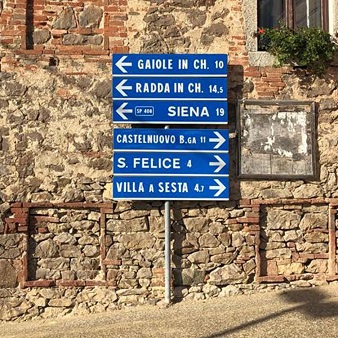
Chianti & Chianti Classico – one name, two systems of origin
Few Italian wine names are as famous as Chianti – and few cause as much confusion. The reason lies in its history: today, Chianti DOCG and Chianti Classico DOCG are two separate designations of origin, with different production areas and their own regulations.
Both have Sangiovese as their principal grape variety. But the similarities do not end there – and that is precisely where the subject becomes interesting. Chianti DOCG extends across a large area of Tuscany and can define its origin more precisely through eight subzones. Chianti Classico comes exclusively from the historic heartland between Florence and Siena and distinguishes between Annata, Riserva and Gran Selezione; for Gran Selezione, additional geographical units known as UGA can indicate an even more specific origin.
Chianti Classico is therefore neither a subzone of today's Chianti DOCG nor simply its "better" version. Once the two systems are considered separately, labels, grape-variety rules and stylistic differences become much easier to understand.
- Chianti DOCG and Chianti Classico DOCG are two separate designations of origin
- Sangiovese is the central grape variety in both
- Chianti DOCG has eight geographical subzones
- Chianti Classico distinguishes between Annata, Riserva and Gran Selezione
- Eleven UGA provide greater geographical precision within Chianti Classico
- The Black Rooster, the Gallo Nero, identifies Chianti Classico exclusively
What is the difference between Chianti and Chianti Classico?
The simplest distinction is geographical: Chianti Classico is produced in the historic wine-growing area between Florence and Siena. Chianti DOCG comes from other, much larger parts of Tuscany and effectively surrounds the Classico area without overlapping it.
The two have also been legally separate since 1996. Today, Chianti DOCG cannot be produced within the Chianti Classico area. Conversely, a Chianti from Rufina, Colli Senesi or Colli Fiorentini does not somehow rank "below" Classico simply because the word is absent from the label. It belongs to a different designation of origin.
The production rules also differ. Chianti DOCG has its own grape-variety requirements, subzones, Riserva and the Superiore designation. Chianti Classico works with Annata, Riserva and Gran Selezione; the latter can also use the UGA system.
A second look at the label therefore resolves almost any confusion: if it says "Chianti Classico DOCG" and carries the Gallo Nero, the wine comes from the historic heartland. If it says, for example, "Chianti Rufina DOCG", it belongs to the separate Chianti system.
How one Chianti became two DOCGs
The confusion has historical roots. As early as 1398, "Chianti" appeared in a notarial document as a name for wine from the area of the same name. In 1716, Grand Duke Cosimo III de' Medici officially defined the geographical origin of Chianti wine for the first time. The area protected at the time forms the historical starting point of today's Chianti Classico.
In the 19th century, a second aspect was added: the composition of the wine. Bettino Ricasoli, statesman and owner of Castello di Brolio, concluded after extensive trials in 1872 that Sangiovese should form the basis, complemented by Canaiolo. He recommended Malvasia Bianca only for wines intended to be drunk earlier, not for those meant to age longer.
This often-cited "Ricasoli formula" is important historically – but it is not an unchanged recipe for modern Chianti. Grape-variety regulations have been revised several times since then, and Chianti and Chianti Classico have long had separate disciplinari.
In 1924, 33 producers in Radda founded a protection consortium and chose the Black Rooster as their symbol. Enormous international demand had led to increasing quantities of wine from outside the historic area being marketed under the Chianti name.
In 1932, the name Chianti was officially extended to other parts of Tuscany. The original area received the addition "Classico" to distinguish it. Chianti was granted DOCG status in 1984; the decisive step followed in 1996, when Chianti Classico became an independent DOCG with its own production regulations.
One historic name had thus become two modern systems of origin.
Sangiovese – the common language of Chianti
What connects Chianti and Chianti Classico despite all their differences is Sangiovese. This late-ripening variety has a pronounced acidity and can express tannin, fruit and aromatic tension in very different proportions.
Typical aromas range from sour cherry, red cherry and violet to herbs and spices, with tobacco, earth and balsamic notes appearing as the wine matures. But Sangiovese does not have a single uniform flavour profile. Site, vintage, yields, harvest date, vinification and ageing all influence its expression considerably.
Blending is also part of its history. Canaiolo and Colorino are among the traditional red companions, while other permitted varieties may be used depending on the DOCG and category. At the same time, many Chianti and Chianti Classico wines are made from 100 percent Sangiovese.
Pure varietal composition is therefore neither automatically more modern nor inherently superior in quality. Nor does a blend mean that Sangiovese somehow needs to be corrected. What matters is the producer's interpretation of origin and style.
This is precisely where the grape's adaptability becomes apparent: Sangiovese can carry a lively, uncomplicated Chianti just as convincingly as a structured Riserva or a Gran Selezione capable of long bottle development.
Chianti DOCG – a large appellation with eight subzones
The Chianti DOCG production area extends across parts of the provinces of Arezzo, Florence, Pisa, Pistoia, Prato and Siena. This broad geographical span explains why "Chianti" alone does not imply a narrowly defined style.
For greater geographical precision, the current regulations recognise eight subzones:
- Chianti Colli Aretini
- Chianti Colli Fiorentini
- Chianti Colli Senesi
- Chianti Colline Pisane
- Chianti Montalbano
- Chianti Montespertoli
- Chianti Rufina
- Chianti Terre di Vinci
Terre di Vinci was added with the revision of the disciplinare approved in 2026 and applies from the 2026/27 harvest campaign. Older references to seven Chianti subzones are therefore now historically outdated.
The grape-variety rules were also revised in 2026. For wines from the 2026 harvest onwards, the new disciplinare stipulates 60 to 100 percent Sangiovese for red Chianti. White grape varieties may account for no more than ten percent in total; limits also apply to Cabernet Franc and Cabernet Sauvignon. Earlier vintages were produced under the previous rules, which generally required at least 70 percent Sangiovese and included additional provisions for Colli Senesi.
This transitional point matters when buying older vintages: a Chianti from 2023 or 2024 is not retrospectively judged according to the 2026 regulations.
The subzones are not quality categories either. They indicate the more specific area from which the grapes originate. Some have stricter yields, later release dates or additional requirements – but a Chianti Rufina or Colli Senesi is not inherently ranked "higher" than a Chianti without a subzone designation.
Chianti Rufina – why one subzone deserves particular attention
Among the Chianti subzones, Rufina has an especially long and distinctive history. The area east of Florence was already one of the four Tuscan wine origins protected by Cosimo III in 1716.
Many of its vineyards lie at higher elevations and closer to the Apennines than those in many other parts of Chianti DOCG. Altitude, greater day-night temperature differences and a comparatively later growing cycle can give Sangiovese notable freshness and structure.
This does not mean that every Rufina must automatically be leaner or longer-lived. It does, however, explain why the subzone offers such a distinctive perspective on origin within the Chianti system.
Producers such as Fattoria Selvapiana have played an important role in establishing Rufina internationally as a source of serious, ageworthy Sangiovese.
Riserva and Superiore – two terms within the Chianti system
Within Chianti DOCG, two terms are easily confused: Riserva and Superiore.
Chianti Riserva requires at least two years of ageing, calculated from 1 January following the harvest. Individual subzones may impose additional requirements for ageing in wood or bottle. "Riserva" therefore initially describes a legally defined longer ageing period – not automatically a better wine.
Chianti Superiore works differently. The designation may be used within the entire Chianti DOCG production area, but it is not combined with a subzone name. It is subject to stricter production and analytical requirements as well as a later release date. It is not a Riserva and does not belong to the Chianti Classico system.
This is precisely why "Superiore" should not be confused with "Gran Selezione". The two terms belong to different designations of origin and follow different rules.
Since the 2026 amendment, the current Chianti regulations also recognise Chianti Rosé DOCG for the first time. This new category still plays a minor role within the landscape of classic red Chianti, but it shows that even such a historic appellation continues to evolve in regulatory terms.
Chianti Classico – historic heartland and Gallo Nero
Chianti Classico comes from the historic heartland between Florence and Siena. The production area includes the municipalities of Castellina in Chianti, Gaiole in Chianti, Greve in Chianti and Radda in Chianti in their entirety, as well as parts of Barberino Tavarnelle, Castelnuovo Berardenga, Poggibonsi and San Casciano Val di Pesa.
This area has been legally separate from Chianti DOCG since 1996. Although both names share the same historical origin, wines within the Chianti Classico area may not be produced as Chianti DOCG.
Its most visible identifying mark is the Gallo Nero. The Black Rooster was already the symbol of the medieval Lega del Chianti and was adopted by the newly founded protection consortium in 1924. Today it must appear on every bottle of Chianti Classico.
The Gallo Nero is therefore not a general Chianti seal. Anyone looking for it on a bottle is specifically looking for Chianti Classico.
Classico also has its own rules governing grape composition: Annata and Riserva require at least 80 percent Sangiovese. Only permitted red grape varieties may be added; white grapes have not been allowed since the 2006 vintage.
Annata, Riserva and Gran Selezione – three levels of Chianti Classico
Chianti Classico has three categories that differ in more than ageing time alone.
- Chianti Classico Annata: at least 80 percent Sangiovese, at least 12 months of ageing
- Chianti Classico Riserva: at least 80 percent Sangiovese, at least 24 months of ageing, including at least 3 months in bottle
- Chianti Classico Gran Selezione: at least 90 percent Sangiovese, no more than 10 percent permitted indigenous red varieties, at least 30 months of ageing, including at least 3 months in bottle
Gran Selezione is subject to further conditions. The grapes must come from vineyards managed directly by the bottling estate. The category was introduced in 2014 and represents the top tier within the legal classification system of Chianti Classico.
Even so, this does not mean that every Gran Selezione must be superior in quality to every Riserva or Annata. The disciplinare defines a more demanding category with stricter rules – but the actual quality of the wine still depends on vineyard, vintage and producer.
Nor is Riserva an automatic quality seal above every Annata. Many producers make very deliberate decisions about which lots they bottle as Annata, Riserva or Gran Selezione and what stylistic role each wine should play within their range.
The categories help with orientation. They do not replace a ranking.
Eleven UGA – greater geographical precision in Chianti Classico
With the Unità Geografiche Aggiuntive, or UGA, Chianti Classico has significantly refined its approach to origin. Eleven geographical units are defined within the production area:
- San Casciano
- Greve
- Montefioralle
- Lamole
- Panzano
- Radda
- Gaiole
- Castelnuovo Berardenga
- Vagliagli
- Castellina
- San Donato in Poggio
Under the current system, use of a UGA name is tied to Chianti Classico Gran Selezione. The disciplinare provides transitional periods for certain UGA names, but the underlying principle is what matters: the UGA are intended to identify the geographical origin of the grapes more precisely.
They are expressly not a cru classification. Radda does not legally rank above Gaiole, nor Panzano above Castellina. The Consorzio describes the UGA as geographical units without a qualitative hierarchy.
That is precisely what makes them interesting. Rather than claiming that one zone is inherently better than another, they allow producers and wine drinkers to observe differences more closely.
A wine from the higher parts of Radda may face very different conditions from one in Castelnuovo Berardenga; even within a single UGA, vineyards differ in exposure, soil, elevation and microclimate. The UGA is therefore an additional coordinate – not a ready-made judgement of taste.
Altitude, soils and exposure – why Classico does not taste the same everywhere
The Chianti Classico area is a complex hilly landscape. Vineyards lie at different elevations, on slopes with varying exposures and on geologically diverse soils.
Terms such as Galestro, Alberese and Macigno appear frequently. Galestro refers to a crumbly clay-rich shale, Alberese to calcareous rock formations and Macigno to sandstone. Clay, marl, sand and younger deposits are also found, particularly in lower-lying and more southerly areas.
These names are useful, but they should not be mistaken for formulas of taste. Alberese does not automatically create elegance, Galestro does not inevitably produce minerality, and sandstone does not inherently determine a particular tannin profile.
A site's character results from the interaction of soil, elevation, exposure, water availability, wind and temperature. The producer adds another layer through vineyard management, harvest timing and cellar work.
This is also why broad generalisations by municipality fall short. Radda is often associated with tension and finesse, Castelnuovo Berardenga with warmth and power, Lamole with altitude and perfume. Such observations can provide orientation – but they cannot replace the individual vineyard.
The UGA in particular make visible how Chianti Classico is seeking greater geographical precision without automatically equating landscape with quality.
From the fiasco to origin – how the style has changed
For a long time, Chianti was both a place of origin and an international symbol of uncomplicated Italian red wine. The bulbous straw-covered bottle, the fiasco, became a worldwide emblem during the 20th century – and eventually a cliché.
The quality evolution of recent decades has been far more complex. Producers reduced yields, planted more carefully selected vine material, studied soils and exposures in greater detail and changed their cellar practices. At the same time, there was repeated debate over which grape varieties and barrel sizes defined "authentic" Chianti.
At one stage, Cabernet Sauvignon and Merlot, new barriques and greater extraction were regarded as signs of modernity. Other estates remained committed to Sangiovese, Canaiolo, large casks and long, traditional ageing methods. Today, this opposition is considerably less useful.
There is 100-percent Sangiovese aged in barrique just as there are traditional blends matured in large botti. There are elegant wines from warmer areas and powerful wines from higher elevations. Cellar technique alone does not reveal whether a wine expresses its origin convincingly.
Even the historic "Governo all'uso Toscano", in which young wine undergoes a further fermentation with lightly dried grapes, remains permitted under the Chianti regulations. But it defines Chianti as little as the fiasco once did.
Modern Chianti has above all become more diverse and more precise.
Chianti and the vintage
Sangiovese responds markedly to the course of the growing season. Spring rainfall, summer heat, night-time cooling and conditions in September and October all influence ripeness, acidity and tannin.
Yet a "Chianti vintage" is even less uniform than in many smaller appellations. The vineyards of Chianti DOCG are spread across large parts of Tuscany; even within the more compact Classico area, elevation, exposure and microclimate vary considerably.
A warm year can therefore work exceptionally well in a high-altitude or wind-exposed parcel, while a cooler vintage may offer different advantages in more sheltered sites. Added to this are the producer's decisions about when to harvest, how strongly to extract and how long to age the wine.
Vintage ratings are therefore a starting point, not a buying instruction. Chianti becomes particularly revealing when several vintages from the same producer are compared side by side: this makes it easier to distinguish what comes from the place and the estate – and what the vintage changes.
Explore Chianti vintages in detail
Detailed assessments of selected vintages and the currently available Chianti, Chianti Classico, Riserva and Gran Selezione wines can be found on our vintage pages:
Riserva and Gran Selezione in particular can develop additional complexity over many years. The most interesting bottle therefore does not necessarily have to come from the youngest available vintage.
Chianti in many different hands
The best way to understand how differently Chianti is interpreted today is through its producers. Sangiovese connects them, yet even neighbouring vineyards can produce very different answers to the question: what can this grape become in this particular place?
With Ricasoli 1141, the story almost inevitably begins at the beginning. After years of experimentation, Bettino Ricasoli formulated his famous Chianti recipe in 1872; today, the estate distinguishes 19 soil types in five principal geological formations at Brolio. Melini, founded in 1705, represents another side of the story. In 1860, the house adopted the "fiasco strapeso" developed by glassmaker Paolo Carrai and helped make Chianti far more reliable to transport to distant markets.
How fundamentally the understanding of Chianti could later change is demonstrated by Castello di Monsanto and Marchesi Antinori | Tenuta Tignanello. Monsanto's Il Poggio was first produced in 1962 and became the first Chianti Classico to carry the name of a single vineyard on the label; white grapes have been absent since 1968. Tignanello began in 1970 as "Chianti Classico Riserva vigneto Tignanello". In 1971 it became Tignanello, classified as Vino da Tavola, while white varieties were not removed from the blend entirely until 1975. Two developments that show how early producers began to rethink origin, grape varieties and the rules in force.
San Felice likewise combines innovation with research. First produced in 1968, Vigorello was one of the early forerunners of the Tuscan wines later known as Super Tuscans. The estate's Vitiarium also collected and studied around 270 old Tuscan grape varieties; this work helped bring varieties such as Pugnitello back into focus. Castellare di Castellina followed a related but distinct path: together with the Universities of Milan and Florence, it established Chianti's first experimental vineyard for the systematic scientific selection of Sangiovese clones. At the same time, Castellare remained firmly committed to indigenous grape varieties in Chianti Classico.
In Panzano, Fontodi and Castello dei Rampolla show how differently even neighbouring ideas of origin can develop. Fontodi lies in the Conca d'Oro, is certified organic and has devoted itself intensively to Sangiovese from this natural amphitheatre. Castello dei Rampolla took a different direction early on: Sammarco was created in 1980 together with Giacomo Tachis from the idea of incorporating Cabernet Sauvignon into the estate's own interpretation of the area; in 1994 the estate began converting to biodynamic farming. Side by side, the two make it especially clear that origin does not prescribe a single style.
Further north, altitude itself becomes part of the story. Castello di Volpaia farms its vineyards near Radda largely above 400 metres on sandstone-dominated soils; the fortified medieval village, first documented in 1172, remains closely integrated with wine production to this day. Altitude becomes even more pronounced at Lamole di Lamole. The highest vineyards in Lamole rise above 650 metres, while Vigneto di Campolungo lies between 420 and 576 metres. Terraces, Macigno sandstone and cool elevated sites give this part of the Classico area a remarkably distinct identity.
Castello di Ama, meanwhile, shows how early individual vineyards came to be understood systematically as distinct origins. The vineyards around the village of Ama are spread across four valleys; Vigneto Bellavista first appeared with the 1978 vintage, followed by La Casuccia in 1985. Riecine represents a different kind of consistency: Englishman John Dunkley purchased the first vineyards in 1971 and focused from the outset on Sangiovese and the individual character of Gaiole. Today, the Gran Selezione Vigna Gittori carries this idea down to parcel level – from a vineyard planted in 1974 at 500 metres.
At the south-eastern edge of the Classico area lies Fèlsina. Here, Castelnuovo Berardenga meets the landscape towards the Crete Senesi. The estate relies consistently on Sangiovese for its Chianti Classico wines; Rancia, first produced in 1983, is one of its defining single-vineyard wines.
But Chianti does not end with the Gallo Nero. Fattoria Selvapiana shows in Rufina how distinctive Sangiovese can be east of Florence. With Vigneto Bucerchiale, first produced in 1979, the estate was among the early Tuscan producers to connect a Sangiovese Riserva with a single vineyard. Tenuta Il Palagio opens the view in another direction: located near Figline Valdarno in the Chianti Colli Fiorentini landscape, the estate is now farmed organically and produces Chianti DOCG alongside Toscana wines.
These fifteen estates do not form a ranking. They represent different places, decisions and eras – and for that very reason show why Chianti today is better understood through origin and producer than through the idea of one single, binding style.
Buying Chianti – origin first, then category
When choosing Chianti, one simple order of priorities is more useful than any points table: first the origin, then the category, followed by producer and vintage.
If you are looking for a lively, uncomplicated Sangiovese for everyday drinking or with food, Chianti DOCG offers a broad selection. Subzones such as Rufina, Colli Senesi or Colli Fiorentini provide additional geographical guidance.
If you want to explore the historic heartland specifically, Chianti Classico Annata is a natural starting point. Riserva and Gran Selezione offer longer ageing and often greater selection; with Gran Selezione, the UGA can narrow the origin further.
At SUPERIORE.DE, the selection ranges from classic Chianti DOCG through Rufina and other subzones to numerous Chianti Classico Annata, Riserva and Gran Selezione wines. Depending on availability, this also includes different vintages, single-vineyard selections and mature bottles.
With Chianti Classico in particular, comparing wines within a single estate can be revealing: Annata against Riserva, different vineyards or UGA, or the same wine across several vintages. This turns a broad selection into a coherent picture.
If you are already looking for mature Sangiovese, our range may also include mature wines, depending on availability. Our bottles are stored under fully climate-controlled, light-protected and constant conditions until dispatch.
In the end, just a few questions reliably lead to the right bottle: Chianti or Chianti Classico? Which subzone or UGA? Annata, Riserva or Gran Selezione? Which producer? What stage of maturity?
Once these layers are separated, the famous name reveals one of Italy's most diverse Sangiovese landscapes.
Questions and answers about Chianti & Chianti Classico
What is Chianti?
Chianti DOCG is a protected Tuscan designation of origin for wine in which Sangiovese is the central grape variety. Its large production area covers parts of six provinces and is divided into eight geographical subzones.
What is Chianti Classico?
Chianti Classico DOCG is an independent designation of origin from the historic heartland between Florence and Siena. It has its own disciplinare and has been legally separate from Chianti DOCG since 1996.
What is the difference between Chianti and Chianti Classico?
The wines come from different production areas and follow different rules. Chianti DOCG has eight subzones as well as Riserva and Superiore. Chianti Classico distinguishes between Annata, Riserva and Gran Selezione and uses the Black Rooster as its mandatory identifying symbol.
Is Chianti Classico better than Chianti?
Not automatically. Chianti Classico is not a quality level above Chianti, but a separate DOCG. In both systems, quality depends on origin, vineyard, vintage and producer. A high-quality Chianti Rufina can therefore be more ambitious than a simple Chianti Classico.
Which grape variety is used for Chianti?
Sangiovese is the principal grape variety. The Chianti regulations applying from the 2026 harvest permit 60 to 100 percent Sangiovese for red Chianti. Earlier vintages were subject to higher minimum proportions. Chianti Classico Annata and Riserva require at least 80 percent, while Gran Selezione requires at least 90 percent Sangiovese.
Can Chianti be made from 100 percent Sangiovese?
Yes. Both Chianti DOCG and Chianti Classico DOCG can be made entirely from Sangiovese. Blending with other permitted varieties is possible, but not compulsory.
Can Chianti contain white grapes?
Within the relevant limits, permitted white grape varieties may be used in Chianti DOCG. In Chianti Classico, only red grape varieties have been permitted since the 2006 vintage.
What does the Black Rooster on a bottle of Chianti mean?
The Gallo Nero is the mandatory symbol of Chianti Classico DOCG. It does not identify every Chianti. A bottle of Chianti DOCG from Rufina, Colli Senesi or another Chianti subzone therefore does not carry the Gallo Nero.
Which subzones does Chianti DOCG have?
The current system recognises eight subzones: Colli Aretini, Colli Fiorentini, Colli Senesi, Colline Pisane, Montalbano, Montespertoli, Rufina and Terre di Vinci. Terre di Vinci was newly added in 2026.
What is Chianti Rufina?
Chianti Rufina is one of the eight subzones of Chianti DOCG. It lies east of Florence in a comparatively high-altitude area influenced by the Apennines and has a long, distinctive wine-growing tradition.
What does Riserva mean in Chianti?
Chianti Riserva must age for at least two years. Chianti Classico Riserva requires at least 24 months of ageing, including at least three months in bottle. Riserva therefore primarily describes a legally defined longer ageing period, not automatically higher quality in every individual bottle.
What is Chianti Superiore?
Chianti Superiore is a designation within Chianti DOCG. These wines are subject to stricter production requirements and a later release date. Chianti Superiore does not belong to the Chianti Classico system and should not be confused with Gran Selezione.
What is Chianti Classico Gran Selezione?
Gran Selezione is the most demanding legal category within Chianti Classico DOCG. It requires at least 90 percent Sangiovese, exclusively grapes from vineyards managed by the bottling estate itself, and at least 30 months of ageing, including three months in bottle.
What does UGA mean in Chianti Classico?
UGA stands for "Unità Geografica Aggiuntiva". The eleven UGA are more narrowly defined geographical units within Chianti Classico. Under the current system, they are linked to Gran Selezione. They describe origin and do not form an official quality hierarchy.
Which UGA are there in Chianti Classico?
The eleven UGA are San Casciano, Greve, Montefioralle, Lamole, Panzano, Radda, Gaiole, Castelnuovo Berardenga, Vagliagli, Castellina and San Donato in Poggio.
What does Chianti taste like?
Sangiovese often shows aromas of red cherry and sour cherry, floral and herbal notes, lively acidity and noticeable tannin. Depending on origin, vintage and ageing, Chianti can be light and juicy or structured, savoury and built for long development.
How long can Chianti age?
Simpler Chianti wines are often enjoyed young. High-quality Chianti Rufina, Chianti Classico Riserva and Gran Selezione, by contrast, can develop for many years. A single general ageing period would be too simplistic; producer, vintage and the individual bottle are what matter.
Should Chianti be decanted?
Young, structured Chianti Classico, Riserva or Gran Selezione can benefit from air. Older bottles should be decanted more cautiously, as a mature bouquet may react more sensitively.
What food goes well with Chianti?
The combination of acidity, fruit and tannin makes Chianti especially versatile with food. Pasta with ragù, grilled meat, Bistecca Fiorentina, wild boar, mushrooms, pulses and mature Pecorino are classic pairings.
Can you buy mature Chianti?
Yes. Depending on availability, SUPERIORE.DE offers mature Chianti Classico, Riserva and Gran Selezione alongside current vintages. With older bottles, traceable storage conditions and the condition of the wine are particularly important.
How is Chianti stored and shipped by SUPERIORE.DE?
Our wines are stored under fully climate-controlled, light-protected and constant conditions until dispatch. They are shipped insured in tested packaging suitable for bottles; delivery times and shipping costs depend on the destination country.
Chianti becomes simpler once you understand its origin
Chianti seems complicated because the same historic name now refers to two independent wine systems. Behind it, however, lies a clear logic.
Chianti DOCG expresses Sangiovese across a broad Tuscan landscape and eight subzones. Chianti Classico focuses on the historic heartland, distinguishes between Annata, Riserva and Gran Selezione, and makes origin increasingly visible through the Gallo Nero and the UGA.
What unites the two is not one particular flavour profile, but Sangiovese and the grape's ability to respond to different places and vintages.
Chianti therefore does not need to be reduced to the straw-covered bottle, the Black Rooster, Riserva or Gran Selezione. It becomes more interesting once you ask where a wine comes from, who made it and how that producer interprets its origin.
A famous name thus becomes not more complicated, but more precise. And that is where the true diversity of Chianti begins. SUPERIORE.DE
- 24 Years of Expertise
- 3,500+ Wines in Stock
- 350+ Winemakers
- 28,000+ Positive Reviews
- Fully Air-Conditioned Storage