


-
![Barbaresco "La Casa in Collina" DOCG 2023]()
Barbaresco “La Casa in Collina” DOCG 2023
Delicate on the nose, full-bodied on the palate. La Casa in Collina is Vite Coltes' charming take on Barbaresco. Crafted from traditional blends of grape varieties grown on historic terroirs with a gentle southerly aspect, this wine combines nuance with character: Around 20 days of slow fermentation and a year in large oak casks create a balance that allows for depth without sacrificing elegance. In the glass, it is a rich ruby red that deepens to a delicate garnet at the rim. The nose opens with a refined profile: ripe plum, red wild berries and violets, underpinned by ground coffee, tobacco leaf and a hint of delicate woody spices – subtly intense, yet never overpowering. On the palate, it is lively and carefully structured, with well-integrated tannins, fresh acidity and dense fruit. The significant oak influence is noticeable, yet nuanced. The finish is long, spicy and pleasantly rounded, with a hint of subtle vanilla and juicy cherry.
- Grape variety: 100% Nebbiolo
- Maturation: 12 months large wooden barrel
- Filtration: yes
- Alcohol content: 14,00 % vol
- Serving temperature: 18‑20 °C
- Storage potential: 2037+
- Closure: natural cork
- Total extract: 29,87 g/l
- Total acidity: 5,95 g/l
- Residual sugar: 1,31 g/l
- Sulfite: 84 mg/l
- pH value: 3,49
- Allergens
contains sulphites
stored air-conditioned0,75 l · 26,53 €/l · Price (DE) incl. VAT, excl. Shippingavailable immediately
![Barbaresco DOCG 2022]()
Barbaresco DOCG 2022
There are wines that possess that unmistakable clarity that summarises the terroir in a nutshell. The classic Barbaresco from Fontanabianca is one such wine – composed from various parcels around Neive, vinified with the precision that Matteo Pola has made the philosophy of the house in the third generation. Where the single vineyards Bordini and Serraboella express the specific characteristics of their crus, this Barbaresco paints the bigger picture: 5.5 hectares on the typical limestone-clay soils of the municipality, 300 metres above sea level, where Nebbiolo has been developing the elegance that Neive stands for in the world of Barbaresco for generations.
- Grape variety: 100% Nebbiolo
- Maturation: 10‑13 months in large oak barrels/barriques
- Vegan: yes
- Filtration: no
- Alcohol content: 14,00 % vol
- Serving temperature: 16‑18 °C
- Storage potential: 2036+
- Closure: natural corks
- Total extract: 29,36 g/l
- Total acidity: 5,93 g/l
- Residual sugar: 1,58 g/l
- Sulfite: 91 mg/l
- pH value: 3,48
- Allergens
contains sulphites
stored air-conditioned0,75 l · 31,99 €/l · Price (DE) incl. VAT, excl. Shippingavailable immediately
![Barbaresco DOCG 2020]()
Barbaresco DOCG 2020
The grapes for Batasiolo's Barbaresco come from the gently rolling hills around the village of the same name, where Nebbiolo has found its unmistakable expression for centuries. The year 2020 brought moderate temperatures and a balanced interplay of sun and rain – ideal conditions to maintain the balance between finesse and structure. In the glass, it glows a clear garnet red with a brick-coloured rim – an indication of its youth and the journey that still lies ahead. The nose opens with ripe cherry, dried raspberry and a hint of rose petals, framed by tobacco, sweet spices and a hint of undergrowth. Taut yet supple on the palate, with fine-grained tannins that give the wine backbone and a fresh, precise acidity that carries its inner tension. Ageing in large wooden barrels allows the fruit to shine, while subtle balsamic and earthy notes develop. The finish is long, clear and elegant, carried by a subtle mineral vein. A Barbaresco that epitomises the classic school of Piedmont – noble, long-lasting and with a depth that will continue to develop for several years. Very good value. SUPERIORE.DE
- Grape variety: 100% Nebbiolo
- Maturation: 15 months wooden barrel
- Filtration: yes
- Alcohol content: 14,50 % vol
- Serving temperature: 16‑18 °C
- Storage potential: 2033+
- Closure: natural cork
- Total extract: 27,40 g/l
- Total acidity: 5,12 g/l
- Residual sugar: 0,40 g/l
- Sulfite: 106 mg/l
- pH value: 3,52
- Allergens
contains sulphites
stored air-conditioned0,75 l · 33,33 €/l · Price (DE) incl. VAT, excl. Shippingavailable immediately
![Barbaresco DOCG 2023]()
Barbaresco DOCG 2023
There are wines that possess that unmistakable clarity which captures the essence of the terroir without beating about the bush. Fontanabianca's classic Barbaresco is just such a wine – blended from various plots around Neive, vinified with the precision that Matteo Pola, the third generation of the family, has made the estate's philosophy. Whilst the single-vineyard wines Bordini and Serraboella express the specific characteristics of their crus, this Barbaresco paints the bigger picture: 5.5 hectares on the municipality's typical limestone-clay soils, 300 metres above sea level, where Nebbiolo has, for generations, developed the elegance for which Neive is renowned in the world of Barbaresco.
- Grape variety: 100% Nebbiolo
- Maturation: 10‑13 months in large oak barrels/barriques
- Vegan: yes
- Filtration: no
- Alcohol content: 14,00 % vol
- Serving temperature: 18‑20 °C
- Storage potential: 2037+
- Closure: natural corks
- Total extract: 29,89 g/l
- Total acidity: 5,97 g/l
- Residual sugar: 1,46 g/l
- Sulfite: 88 mg/l
- pH value: 3,45
- Allergens
contains sulphites - Nutritional Information per 100 ml
- Energy in kcal: 79 kcal
- Energy in kJ: 330 kJ
- Carbohydrates: 0,20 g
- Of which sugar: 0,20 g
stored air-conditioned0,75 l · 34,67 €/l · Price (DE) incl. VAT, excl. Shippingavailable immediately
![Barbaresco DOCG 2022]()
Barbaresco DOCG 2022
For over 60 years, the Produttori del Barbaresco have stood for an uncompromising commitment to quality, supported by over 50 winegrowers who contribute their finest grapes from Barbaresco, Neive and Treiso to the cooperative. The Barbaresco 2022 is a prime example of collective precision and classic style: the Nebbiolo grapes come from selected municipal vineyards, some of which border the crus, on limestone and clay-rich soils. Vinification was carried out using traditional methods: extended maceration, ageing for 24 months in large Slavonian oak barrels, followed by a further period of rest in the bottle.
- Grape variety: 100% Nebbiolo
- Maturation: 24 months large wooden barrel
- Filtration: yes
- Alcohol content: 15,00 % vol
- Serving temperature: 16‑18 °C
- Storage potential: 2038+
- Closure: natural cork
- Total extract: 29,94 g/l
- Total acidity: 6,02 g/l
- Residual sugar: 1,16 g/l
- Sulfite: 76 mg/l
- pH value: 3,34
- Allergens
contains sulphites
stored air-conditioned0,75 l · 42,67 €/l · Price (DE) incl. VAT, excl. Shippingavailable immediately
![Barbaresco "Spezie" Riserva DOCG 2016]()
Barbaresco “Spezie” Riserva DOCG 2016
Obtained from a small, high-altitude vineyard in the historic San Cristoforo cru site above Neive, this Barbaresco combines terroir depth with contemplative maturity. The clay and limestone-rich soil, the exposed south-east exposure and the late harvest characterise the concentrated style. Three weeks of maceration are followed by a long, patient ageing regime: two years in large oak barrels, a further six months in concrete and then many more years in the bottle – until it opens up with the expression that only time can give.
- Grape variety: 100% Nebbiolo
- Maturation: 24 months large wooden barrel/7 years bottle ageing
- Filtration: yes
- Alcohol content: 14,50 % vol
- Serving temperature: 18‑20 °C
- Storage potential: 2035+
- Closure: natural corks
- Total extract: 29,92 g/l
- Total acidity: 5,98 g/l
- Residual sugar: 0,95 g/l
- Sulfite: 82 mg/l
- pH value: 3,45
- Allergens
contains sulphites
stored air-conditioned0,75 l · 42,67 €/l · Price (DE) incl. VAT, excl. Shippingavailable immediately
![Barbaresco Serraboella DOCG 2023]()
Barbaresco Serraboella DOCG 2023
Some vineyards come into a family's possession through strategic acquisitions, others through a marriage that unites two Piedmontese families. When Aldo Pola married Luisella from nearby Serracapelli, this union brought together not only two people, but also the Pola family and the cru that is now one of the most sought-after in the municipality of Neive: Serraboella. Here, on medium-textured limestone soils, 300 metres above sea level, Nebbiolo thrives in a style that differs from the powerful Bordini – more reserved in its youth, almost shy, yet possessing an elegance that comes into its own over the years. What Matteo Pola produces from the 30-year-old vines of this single vineyard is a Barbaresco of remarkable harmony – a wine that impresses not through its intensity, but through that crystalline precision that characterises great terroirs.
- Grape variety: 100% Nebbiolo
- Maturation: 14‑15 months large wooden barrel
- Vegan: yes
- Filtration: no
- Alcohol content: 14,00 % vol
- Serving temperature: 16‑18 °C
- Storage potential: 2038+
- Closure: natural corks
- Total extract: 29,89 g/l
- Total acidity: 5,90 g/l
- Residual sugar: 1,44 g/l
- Sulfite: 87 mg/l
- pH value: 3,46
- Allergens
contains sulphites
stored air-conditioned0,75 l · 44,00 €/l · Price (DE) incl. VAT, excl. Shippingavailable immediately
![Barbaresco "Nubiola" DOCG 2021]()
Barbaresco “Nubiola” DOCG 2021
Nubiola is a Barbaresco with inner tension: differentiated, unagitated, but with a clear character. The name refers to historical roots: Vitis Nubiola was the name given to Nebbiolo in the 13th century. Pelissero has revived this term – not out of sentimentality, but because it suits the style of the wine: Complexity instead of posturing, depth instead of effect. The grapes come from various plots around Treiso, on soils of calcareous marl with a fine clay content. The sites complement each other – altitude, exposure, microclimate – to create a complex but harmonious overall picture. The wine is fermented with natural yeast and matured for 18 months in large barrels and tonneaux, all with deliberate restraint so that the structure and origin remain visible.
- Grape variety: 100% Nebbiolo
- Maturation: 18 months barrique
- Vegan: yes
- Filtration: yes
- Alcohol content: 14,50 % vol
- Serving temperature: 18‑20 °C
- Storage potential: 2039+
- Closure: natural cork
- Total extract: 30,85 g/l
- Total acidity: 5,97 g/l
- Residual sugar: 1,25 g/l
- Sulfite: 97 mg/l
- pH value: 3,51
- Allergens
contains sulphites
stored air-conditioned0,75 l · 44,00 €/l · Price (DE) incl. VAT, excl. Shippingavailable immediately
![Barbaresco Bordini DOCG 2023]()
Barbaresco Bordini DOCG 2023
When Franco Pola bottled the first bottle of his Barbaresco Bordini in 1970, he not only marked the beginning of a family history, but also set an example of the bond between people and the vineyard that has endured for generations. The vineyard bears the same name as the street on which the estate stands – Via Bordini 15 – and this geographical coincidence holds a deeper truth: Here, where the winery building looks directly out onto the south-east-facing slope, family and terroir are inextricably intertwined. On sandy limestone-clay soil, 280 metres above sea level, Nebbiolo vines aged between 50 and 60 years are rooted – one hectare of which is even over 70 years old and ungrafted, a living link to the time when Franco's father, Secondo, still ran the estate as a farm.
- Grape variety: 100% Nebbiolo
- Maturation: 13/3‑4 months large wooden barrel/cement tank
- Vegan: yes
- Filtration: no
- Alcohol content: 14,00 % vol
- Serving temperature: 18‑20 °C
- Storage potential: 2039+
- Closure: natural corks
- Total extract: 29,91 g/l
- Total acidity: 5,87 g/l
- Residual sugar: 1,05 g/l
- Sulfite: 89 mg/l
- pH value: 3,45
- Allergens
contains sulphites - Nutritional Information per 100 ml
- Energy in kcal: 78 kcal
- Energy in kJ: 326 kJ
- Carbohydrates: 0,10 g
- Of which sugar: 0,10 g
stored air-conditioned0,75 l · 44,00 €/l · Price (DE) incl. VAT, excl. Shippingavailable immediately
![Barbaresco Bordini DOCG 2022]()
Barbaresco Bordini DOCG 2022
When Franco Pola bottled the first bottle of his Barbaresco Bordini in 1970, he not only wrote the beginning of a family story, but also symbolised the connection between man and vineyard that lasts for generations. The vineyard bears the same name as the street on which the winery stands – via Bordini 15 – and this geographical coincidence harbours a deeper truth: here, where the winery building looks directly onto the south-east-facing slope, family and terroir are inextricably interwoven. On sandy limestone/clay soil, 280 metres above sea level, Nebbiolo vines 50 to 60 years old take root – one hectare of which is even over 70 years old and ungrafted, a living link to the time when Franco's father Secondo still ran the farm as a farm.
- Grape variety: 100% Nebbiolo
- Maturation: 13/3‑4 months large wooden barrel/cement tank
- Vegan: yes
- Filtration: no
- Alcohol content: 14,00 % vol
- Serving temperature: 16‑18 °C
- Storage potential: 2038+
- Closure: natural corks
- Total extract: 29,67 g/l
- Total acidity: 5,73 g/l
- Residual sugar: 0,96 g/l
- Sulfite: 97 mg/l
- pH value: 3,48
- Allergens
contains sulphites
stored air-conditioned0,75 l · 45,33 €/l · Price (DE) incl. VAT, excl. Shippingavailable immediately
![Barbaresco DOCG 2023]()
Barbaresco DOCG 2023
For years, it remained a dream of the Massolino family to expand their portfolio in Serralunga d'Alba to include their own Barbaresco. It was not until late 2018 that Franco, Roberto and Paola found plots that met their standards, and in 2019 they produced their own Barbaresco for the first time, over a hundred years after the estate was founded. The grapes come from carefully selected vineyards in the Barbaresco area, with soils of varying consistency that bring out a gentler, more approachable side to the Nebbiolo here than in their home town of Serralunga. Following fermentation and maceration in wooden vats at around 30 degrees, the wine matures for approximately 18 months in large wooden barrels before taking on its final form in the bottle in the family's cool, dark cellars.
- Grape variety: 100% Nebbiolo
- Maturation: 18 months tonneau
- Filtration: yes
- Alcohol content: 14,00 % vol
- Serving temperature: 16‑18 °C
- Storage potential: 2037+
- Closure: Diam
- Food recommendations
agnolotti del plin with butter and sage, pan‑fried guinea fowl breast with grapes, toma cheese with chestnut honey - Total extract: 29,87 g/l
- Total acidity: 6,03 g/l
- Residual sugar: 0,61 g/l
- Sulfite: 75 mg/l
- pH value: 3,41
- Allergens
contains sulphites
stored air-conditioned0,75 l · 46,67 €/l · Price (DE) incl. VAT, excl. Shippingavailable immediately
![Barbaresco DOCG 2022]()
Barbaresco DOCG 2022
Massolino's Barbaresco is the quintessence of finely balanced terroir: Nebbiolo grapes from the Starderi, Albesani and Serraboella cru sites mature together to create a complex yet transparent wine. The 2022 vintage provided a balanced climate – warm days and cool nights – which harmoniously blends freshness, finesse and aromatic richness. The colour in the glass is a medium garnet red with bright reflections. The nose exudes a velvety elegance of red fruits, violets, delicate lavender, spicy notes, crushed rock and a hint of orange peel – pure, lively fragrance with contoured clarity. A medium body full of energy unfolds on the palate: silky tannins, lively acidity and polished, mineral tension are the carriers of a fruit-emphasised depth. The finish lingers for a long time – intensely floral, spicy and with vibrant freshness. SUPERIORE.DE
- Grape variety: 100% Nebbiolo
- Maturation: 18 months tonneau
- Filtration: yes
- Alcohol content: 14,50 % vol
- Serving temperature: 16‑18 °C
- Storage potential: 2036+
- Closure: Diam
- Food recommendations
strong pasta with sugo, grilled meat dishes - Total extract: 29,33 g/l
- Total acidity: 6,08 g/l
- Residual sugar: 0,55 g/l
- Sulfite: 78 mg/l
- pH value: 3,44
- Allergens
contains sulphites
![Barbaresco Serraboella DOCG 2022]()
Barbaresco Serraboella DOCG 2022
Some vineyards become the property of a family through strategic acquisition, others through a marriage that unites two Piedmontese families. When Aldo Pola took Luisella from nearby Serracapelli as his wife, this union not only brought two people together, but also the Pola family with the cru that is now one of the most sought-after in the municipality of Neive: Serraboella. Here, on calcareous soils of medium structure, 300 metres above sea level, Nebbiolo thrives in an interpretation that differs from the powerful Bordini – more reserved in its youth, almost shy, but with an elegance that comes to full fruition over the years. What Matteo Pola vinifies from the 30-year-old vines of this single vineyard is a Barbaresco of remarkable harmony – a wine that impresses not with its volume, but with the crystalline precision that characterises great terroirs.
- Grape variety: 100% Nebbiolo
- Maturation: 14‑15 months large wooden barrel
- Vegan: yes
- Filtration: no
- Alcohol content: 14,00 % vol
- Serving temperature: 16‑18 °C
- Storage potential: 2037+
- Closure: natural corks
- Total extract: 29,35 g/l
- Total acidity: 5,87 g/l
- Residual sugar: 0,78 g/l
- Sulfite: 89 mg/l
- pH value: 3,48
- Allergens
contains sulphites
stored air-conditioned0,75 l · 46,67 €/l · Price (DE) incl. VAT, excl. Shippingavailable immediately
![Barbaresco DOCG 2023]()
Barbaresco DOCG 2023
The grapes for Prunotto's highly appealing Barbaresco come from long-established contract vineyards in Treiso and Neive. They are selectively harvested by hand; the batches are destemmed separately and fermented in stainless steel tanks, with maceration lasting around eight days at controlled temperatures. Malolactic fermentation is completed before winter. The wine is then left to mature for around a year in large oak barrels of varying sizes – a process deliberately designed to enhance balance, texture and the expression of its terroir.
- Grape variety: 100% Nebbiolo
- Maturation: 12 months used wooden barrel
- Filtration: yes
- Alcohol content: 14,00 % vol
- Serving temperature: 18‑20 °C
- Storage potential: 2036+
- Closure: natural cork
- Total extract: 29,94 g/l
- Total acidity: 5,94 g/l
- Residual sugar: 1,24 g/l
- Sulfite: 74 mg/l
- pH value: 3,38
- Allergens
contains sulphites
stored air-conditioned0,75 l · 50,67 €/l · Price (DE) incl. VAT, excl. Shippingavailable immediately
![Barbaresco Bordini DOCG 2022]()
Barbaresco Bordini DOCG 2022
The Bordini vineyard in Neive, bathed in sunshine and situated on calcareous, slightly sandy soils, has been renowned for generations for producing Nebbiolo with natural vigour and refined structure. The 2022 vintage brought warm, dry growing conditions which, thanks to cool nights and precise harvest, produced grapes with intense aromas and optimal phenolic ripeness. In the glass, it glows a rich ruby red with a slight garnet sheen. The nose is inviting and multi-layered: juicy plum, ripe strawberry and the warm scent of crushed nutmeg interweave with rose petals, orange peel, a hint of dried herbs and subtle spice. On the palate, the wine reveals its dual nature – generous, red-fleshed fruit paired with the classic Nebbiolo structure that characterises Bordini. Velvety yet distinct tannins provide backbone, whilst the lively acidity balances the rich fruit and lends the full-bodied wine freshness and energy. The finish is long, spicy and threaded with a subtle mineral note – a Barbaresco full of expressiveness that harmoniously unites the essence of the vineyard and the vintage. SUPERIORE.DE
- Grape variety: 100% Nebbiolo
- Maturation: 12‑14 months large wooden barrel
- Vegan: yes
- Filtration: no
- Alcohol content: 14,00 % vol
- Serving temperature: 18‑20 °C
- Storage potential: 2037+
- Closure: Diam
- Total extract: 29,89 g/l
- Total acidity: 5,92 g/l
- Residual sugar: 0,55 g/l
- Sulfite: 89 mg/l
- pH value: 3,41
- Allergens
contains sulphites
stored air-conditioned0,75 l · 52,00 €/l · Price (DE) incl. VAT, excl. Shippingavailable immediately
![Barbaresco Reyna DOCG 2021]()
Barbaresco Reyna DOCG 2021
The vineyards of the Reyna site in the hills of Neive and Barbaresco benefit from an ideal south-east to south-west exposure and reddish limestone marl, which is loosened up by sandy inclusions. The grapes are deliberately harvested late in order to achieve optimum physiological ripeness. After fermentation in stainless steel tanks, the wine matures for around 18 months in large Allier and Slavonian oak barrels, followed by a resting period in the bottle. The 2021 vintage was characterised by a warm, stable summer and cool nights during the ageing phase, which ensured impressive aromatic precision and a taut structure.
- Grape variety: 100% Nebbiolo
- Maturation: 12 months 50%/50% barrique/tonneau
- Filtration: yes
- Alcohol content: 14,00 % vol
- Serving temperature: 18‑20 °C
- Storage potential: 2037+
- Closure: natural cork
- Total extract: 29,89 g/l
- Total acidity: 5,92 g/l
- Residual sugar: 1,08 g/l
- Sulfite: 83 mg/l
- pH value: 3,51
- Allergens
contains sulphites
![Barbaresco "Tulin" DOCG 2019]()
Barbaresco “Tulin” DOCG 2019
The Barbaresco Tulin is a convincing middle ground in Giorgio Pelissero's range. It has the richness normally found in his wines, but also a good dose of freshness. Floral and spicy nuances interweave with a core of red and purple berry fruit, giving it a striking inner flavour and energy. Tulin is an impressive wine that is characterised by its balance. SUPERIORE.DE
- Grape variety: 100% Nebbiolo
- Maturation: 18 months barrique
- Filtration: yes
- Alcohol content: 14,50 % vol
- Serving temperature: 18‑20 °C
- Storage potential: 2037+
- Closure: Natural cork
- Total extract: 29,85 g/l
- Total acidity: 5,95 g/l
- Residual sugar: 1,39 g/l
- Sulfite: 76 mg/l
- pH value: 3,43
- Allergens
contains sulphites
![Barbaresco Bordini DOCG 2023 (BIO)]()
Barbaresco Bordini DOCG 2023 (BIO)
When Giorgio Rivetti saw the hills of Neive, he immediately recognised the potential lying dormant in this Barbaresco commune: soils and exposures in which he saw the characteristics of the most prestigious crus combined. He bought the land. The Rivettis have since established a presence in Neive with four vineyards, each with its own character, each with its own voice in the estate's Barbaresco orchestra. Bordini is the most delicate of these voices.
- Grape variety: 100% Nebbiolo
- Cultivation: biological
- Maturation: 16 to 18 months new barrique
- Filtration: no
- Alcohol content: 14,00 % vol
- Serving temperature: 18‑20 °C
- Storage potential: 2040+
- Closure: natural cork
- Food recommendations
tajarin with white truffle, roast veal, barolo risotto, finanziera - Total extract: 29,89 g/l
- Total acidity: 5,97 g/l
- Residual sugar: 1,11 g/l
- Sulfite: 76 mg/l
- pH value: 3,34
- Eco-Control-No.: IT‑BIO‑015
- Allergens
contains sulphites
![Barbaresco "Tulin" DOCG 2021]()
Barbaresco “Tulin” DOCG 2021
Tulin is a wine that looks in two directions – on the one hand deeply rooted in the single vineyard of the same name directly below the winery in Treiso, and on the other hand an expression of a modern, consciously contoured interpretation of Barbaresco. The wine comes from a south and south-west facing steep slope on calcareous marl soil, interspersed with layers of blue clay – a terroir that produces structure, precision and clarity. In the great Pelissero canon, Tulin stands for finesse with a backbone. The vines are over 50 years old and produce concentrated, but never exuberant harvest. The wine is matured for around 20 months in tonneaux and large barrels – not for effect, but for balance. Vinification is carried out with open mash fermentation and a great deal of patience in the cellar; the use of wood is deliberately minimised.
- Grape variety: 100% Nebbiolo
- Maturation: 20 months in barrique/tonneau
- Filtration: yes
- Alcohol content: 14,50 % vol
- Serving temperature: 18‑20 °C
- Storage potential: 2040+
- Closure: Natural cork
- Total extract: 30,25 g/l
- Total acidity: 6,01 g/l
- Residual sugar: 1,22 g/l
- Sulfite: 78 mg/l
- pH value: 3,41
- Allergens
contains sulphites
stored air-conditioned0,75 l · 70,67 €/l · Price (DE) incl. VAT, excl. Shippingavailable immediately
![Barbaresco Pora Riserva DOCG 2020]()
Barbaresco Pora Riserva DOCG 2020
With further bottle ageing, this Barbaresco tends to be softer and more open, with soft tannins and a broad palate, thanks to the microclimate created by the cru's proximity to the Tanaro river.
- Grape variety: 100% Nebbiolo
- Maturation: 36 months large wooden barrel
- Filtration: no
- Alcohol content: 14,50 % vol
- Serving temperature: 16‑18 °C
- Storage potential: 2036+
- Closure: natural cork
- Total extract: 29,72 g/l
- Total acidity: 5,79 g/l
- Residual sugar: 1,25 g/l
- Sulfite: 49 mg/l
- pH value: 3,45
- Allergens
contains sulphites
stored air-conditioned0,75 l · 72,00 €/l · Price (DE) incl. VAT, excl. Shippingavailable immediately
![Barbaresco Rio Sordo Riserva DOCG 2020]()
Barbaresco Rio Sordo Riserva DOCG 2020
The youngest of the Produttori cru wines, which saw the light of day in 1978. The palate reveals ripe, silky fruit and an important structure.
- Grape variety: 100% Nebbiolo
- Maturation: 36 months large wooden barrel
- Filtration: no
- Alcohol content: 14,50 % vol
- Serving temperature: 16‑18 °C
- Storage potential: 2037+
- Closure: natural cork
- Total extract: 29,87 g/l
- Total acidity: 5,96 g/l
- Residual sugar: 1,26 g/l
- Sulfite: 55 mg/l
- pH value: 3,44
- Allergens
contains sulphites
stored air-conditioned0,75 l · 72,00 €/l · Price (DE) incl. VAT, excl. Shippingavailable immediately
![Barbaresco Muncagota Riserva DOCG 2020]()
Barbaresco Muncagota Riserva DOCG 2020
A Barbaresco with a lot of personality, in which body and tannin structure are well balanced by floral scents of undergrowth, mint and eucalyptus.
- Grape variety: 100% Nebbiolo
- Maturation: 36 months large wooden barrel
- Filtration: yes
- Alcohol content: 14,50 % vol
- Serving temperature: 18‑20 °C
- Storage potential: 2036+
- Closure: natural cork
- Total extract: 29,94 g/l
- Total acidity: 5,89 g/l
- Residual sugar: 1,24 g/l
- Sulfite: 49 mg/l
- pH value: 3,40
- Allergens
contains sulphites
stored air-conditioned0,75 l · 72,00 €/l · Price (DE) incl. VAT, excl. Shippingavailable immediately
![Barbaresco Pajè Riserva DOCG 2020]()
Barbaresco Pajè Riserva DOCG 2020
Brilliant and vertical, it retains its characteristic floral note and the freshness of the fruit typical of the terroir.
- Grape variety: 100% Nebbiolo
- Maturation: 36 months large wooden barrel
- Filtration: no
- Alcohol content: 14,50 % vol
- Serving temperature: 16‑18 °C
- Storage potential: 2036+
- Closure: natural cork
- Total extract: 29,90 g/l
- Total acidity: 5,90 g/l
- Residual sugar: 1,08 g/l
- Sulfite: 46 mg/l
- pH value: 3,42
- Allergens
contains sulphites
stored air-conditioned0,75 l · 72,00 €/l · Price (DE) incl. VAT, excl. Shippingavailable immediately


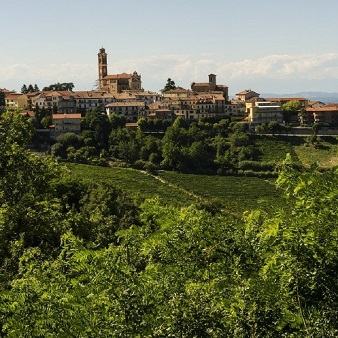
Barbaresco - Nebbiolo shaped by place
Barbaresco is one of Piedmont's most tightly defined appellation wines. It is made exclusively from Nebbiolo and only within a small area of hills east of Alba: Barbaresco, Neive and Treiso, plus San Rocco Seno d'Elvio. The rules are precise - yet the wines can be remarkably different.
Much of that difference begins with place. Sixty-six officially delimited MGAs show exactly which part of this compact area a Barbaresco comes from. Put simply, they are Barbaresco's named sites: clearly defined areas such as Asili, Rabajà, Montestefano or Pajorè. They are not quality categories and do not always correspond to a single parcel. What they do reveal is just how precisely origin can be read here.
Altitude, exposure, vintage and the producer's signature add further layers. From a single grape variety comes a remarkable range of styles - from fragrant and finely drawn to taut, deep and built for long ageing. Barbaresco is therefore best understood not through one fixed flavour profile, but by asking where the wine comes from and how that place has been interpreted.
- Origin: Barbaresco, Neive, Treiso and part of San Rocco Seno d'Elvio
- Grape variety: exclusively Nebbiolo
- Sites: 66 officially delimited MGAs
- Ageing: at least 26 months, including 9 months in wood
- Style: shaped by place, vintage and producer
What is Barbaresco DOCG?
Barbaresco DOCG is a dry red wine made exclusively from Nebbiolo. Its defined production area lies in the Langhe of southern Piedmont. Barbaresco received DOC status in 1966 and was elevated to DOCG in 1980.
The regulations define grape variety, production area, yields, minimum parameters and ageing requirements. Both Barbaresco and Barbaresco Riserva are permitted, with or without an additional geographical designation. Under certain conditions, the term "Vigna" may also be used together with the name of a vineyard or traditional place-name. The vintage must appear on the label.
The DOCG therefore sets a clear framework. It does not prescribe a uniform taste. And it is precisely within those boundaries that the diversity of Barbaresco begins.
Four places, one origin
The production area covers the entire municipalities of Barbaresco, Neive and Treiso. It also includes San Rocco Seno d'Elvio, formerly part of the municipality of Barbaresco and now part of Alba.
The area may be small, but it is far from homogeneous. Ridges, valleys, slope orientation and geological formations change over remarkably short distances. Only suitable hillside sites up to a maximum altitude of 550 metres are permitted. Valley floors and wet, flat or insufficiently exposed sites are excluded, as are north-facing slopes.
Assigning a fixed flavour profile to each place would nevertheless be too simplistic. Even within a single municipality, altitude, exposure, soils and microclimate can vary considerably. The villages provide a first geographical orientation. Barbaresco becomes more precise once the individual MGAs enter the picture.
Marl, sand and steep hills
The hills of Barbaresco were formed from marine sediments dating back to the Miocene. Calcareous marl dominates large parts of the area, frequently accompanied by sand and clay. Within this shared geological framework, however, distinct formations emerge.
Around Barbaresco and adjoining parts of Neive, the Sant'Agata Fossili marls are particularly important, characterised by bluish-grey, calcareous layers. In Treiso, San Rocco Seno d'Elvio and the more southerly parts of Neive, the Lequio Formation becomes more prominent, with a stronger alternation between marl and sand.
These differences help explain the landscape. They do not provide a ready-made map of flavour. Soil, slope position, altitude, exposure, water availability and microclimate all interact - and ultimately the producer decides how to work with the conditions of a particular parcel.
For late-ripening Nebbiolo, well-exposed slopes are particularly important. Even small differences in orientation can influence conditions during the grape's long ripening season. Barbaresco therefore reflects not one single terroir factor, but the interaction between many.
Nebbiolo - one grape, many expressions
Barbaresco is made from 100 percent Nebbiolo. No other grape variety may be included in the blend. What initially sounds like stylistic uniformity makes the differences within the area all the more fascinating.
Nebbiolo combines a comparatively pale colour with pronounced structure. In its youth it often shows floral notes, red-fruit aromas and fine spice; with age, its ruby colour moves towards garnet and its aromatic spectrum gains depth. Acidity and tannin provide the backbone and account for an important part of the wine's ability to develop over time.
There is no rigid formula, however. Some Barbaresco can appear fragrant and surprisingly approachable when young, while others are firmer and require considerably more patience. Place, vintage, extraction and ageing all influence how Nebbiolo presents itself in the glass.
"Barbaresco is elegant" can therefore be an accurate observation, but it is not a sufficient explanation. Far more interesting is where the grapes were grown - and what the producer chose to make of them.
66 MGAs - the map of Barbaresco
Since 2007, Barbaresco has had 66 officially defined Menzioni Geografiche Aggiuntive, or MGAs. They identify clearly delimited areas within the DOCG and may appear on the label alongside the name Barbaresco. Asili, Montefico, Montestefano, Ovello, Pajè, Pora, Rabajà, Rio Sordo, Gallina, Serraboella and Pajorè are among the best-known examples.
In everyday wine language, MGAs are often described as "crus". That is understandable shorthand, but it is not quite the same in legal terms. For practical purposes, they are best understood as Barbaresco's named sites - although an MGA may contain several parcels and different owners and therefore does not automatically correspond to one individual vineyard.
Equally important: the 66 MGAs do not form an official quality hierarchy. Asili or Rabajà have no higher legal rank in the regulations than any other MGA. They identify place, not quality. How compelling a wine ultimately is depends on the specific parcel, the vintage and, above all, the work of the producer.
That is precisely why MGAs are so valuable to wine lovers. Tasting different producers from the same MGA, or several MGAs from a single estate, allows Barbaresco to be understood not only through flavour but increasingly as a geographical landscape.
What MGA and "Vigna" mean
MGA and "Vigna" describe two different levels of geographical precision. An MGA identifies an officially delimited area. The additional term "Vigna" may only be used for Barbaresco together with an MGA and refers to a specifically named vineyard or traditional place-name.
Additional requirements apply. The wine must be vinified and aged separately and its origin documented accordingly; lower permitted yields also apply.
Even so, "Vigna" is not an official seal of higher quality. The term narrows the geographical origin more precisely - it does not automatically make the wine better. Whether that precision results in a great Barbaresco still depends on the interaction between site, vintage and producer.
Ageing: Barbaresco and Riserva
Barbaresco must age for at least 26 months, calculated from 1 November of the harvest year. At least 9 of those months must be spent in wood. For Barbaresco Riserva, the minimum ageing period rises to 50 months, again including at least 9 months in wood.
Barbaresco may be released for sale no earlier than 1 January of the third year after the harvest; Barbaresco Riserva no earlier than 1 January of the fifth year.
Just as interesting is what the regulations leave open. They prescribe neither barrel size nor type of wood nor a particular ageing style. Large casks, smaller barrels and different lengths of maturation all remain possible. This is where the producer's signature begins.
"Riserva" should therefore not be understood as an automatic step up in quality. The designation primarily indicates a longer legally required ageing period. Some estates reserve it for selected sites or vintages, while others age their standard Barbaresco far beyond the statutory minimum anyway.
Why Barbaresco can taste so different
Two wines can both be made from 100 percent Nebbiolo, carry the same vintage and say Barbaresco DOCG on the label - and still taste completely different. That is one of the great attractions of this appellation.
The first differences begin in the vineyard. MGA, individual parcel, altitude, slope position, exposure, soil and microclimate create different conditions for Nebbiolo to ripen. Even within the same MGA, two parcels can differ significantly.
Vintage adds another layer. Temperature patterns, rainfall and conditions around harvest influence ripeness, acidity, tannin and aromatic development. With a late-ripening grape in particular, the character of the year remains perceptible in the wine.
Then comes the cellar. Harvest date, time on the skins, extraction, fermentation, choice of vessel and duration of ageing leave the producer considerable freedom. The regulations set the boundaries, but they do not provide a recipe.
Barbaresco is therefore less a fixed style than a finely articulated system of place. Anyone asking why two wines taste different eventually arrives at the same questions: Where are they from - and who made them?
Barbaresco and Barolo compared
Barbaresco and Barolo are both made exclusively from Nebbiolo and come from neighbouring areas of the Langhe. Even so, they are two independent DOCGs with different production zones, site systems and ageing requirements. Calling Barbaresco the "little brother" of Barolo therefore misses the point.
One clear difference lies in the legally required ageing. Barbaresco needs at least 26 months, including 9 months in wood; Barolo requires at least 38 months, including 18 months in wood. These figures establish neither a quality hierarchy nor a reliable formula for how the wines will taste.
Barbaresco is often described as finer or more approachable at an earlier stage, while Barolo is portrayed as more powerful and tannic. Such tendencies can be valid in individual cases, but they are not rules. Place, vintage and producer matter more than the cliché.
Anyone wishing to understand both wines should therefore ask not which one is "greater", but how Nebbiolo translates two different places.
How Barbaresco became Barbaresco
The history of Barbaresco is closely connected to the development of a distinct dry Nebbiolo wine identified by its place of origin. A decisive step came in 1894, when Domizio Cavazza, director of the Royal Oenological School in Alba, founded the Cantine Sociali di Barbaresco and systematically advanced the identity of the wine.
After difficult decades, the idea gained new momentum in 1958. With the Produttori del Barbaresco, a cooperative once again placed Nebbiolo and shared origin at the centre of its work. A few years later, Gaja began working exclusively with estate-grown grapes - an important step both for the development of the winery and for Barbaresco's international reputation.
DOC status followed in 1966 and DOCG in 1980. At the same time, awareness grew that this compact area contained markedly different origins. Years of mapping historical vineyard names and boundaries eventually resulted in the official system of 66 MGAs in 2007.
The history of Barbaresco is therefore, above all, a story of increasing precision: from Nebbiolo grown in a small area to a wine whose individual places can now be named more accurately than ever before.
The producers of Barbaresco
Barbaresco reveals much of its fascination when the same origin is viewed through the lens of different producers. Some estates build their ranges around individual MGAs; others seek to express a village or the appellation as a whole. The rules are the same. The interpretations are not.
The Produttori del Barbaresco provide one of the most compelling starting points. Alongside their classic Barbaresco, in suitable vintages they produce nine separate Riserva wines from Asili, Montefico, Montestefano, Muncagota, Ovello, Pajè, Pora, Rabajà and Rio Sordo. Anyone wanting to understand how differently Nebbiolo can speak within such a small area is offered something close to a textbook in the glass.
Gaja represents another facet of the appellation. The estate played a decisive role in putting Barbaresco firmly on the international map and demonstrated how strongly a single producer can shape the perception of an entire origin. Bruno Giacosa is one of the historic reference points for Piedmontese Nebbiolo and is closely associated with some of the area's most renowned sites.
With Roagna, Sottimano and Ceretto, the geography becomes even more tangible. Roagna works with sites including Pajè, Asili and Montefico; Sottimano with Basarin, Cottà, Fausoni, Currà and Pajorè. Ceretto, meanwhile, spans Barbaresco, Neive and Treiso with Asili, Gallina and Bernadot. An appellation becomes a map that can actually be tasted.
Pelissero, La Spinetta, Pio Cesare, Vietti, Massolino, Michele Chiarlo, Fontanabianca, Elvio Cogno, Prunotto, Batasiolo and Vite Colte broaden the picture with further perspectives on place and style. Some wines show their finesse early; others are built around structure, depth and long development.
That is why Barbaresco is worth approaching through more than famous names alone. More revealing is the question of which site a producer places at the centre, how they work with Nebbiolo and whether their signature remains recognisable across several different origins. That is where the real pleasure of comparison begins.
Barbaresco and the vintage
With Barbaresco, too, it is worth paying attention to the vintage. Nebbiolo responds sensitively to the course of the growing season, and differences in temperature, rainfall and ripening conditions can show clearly in structure, aroma and accessibility. Yet the year alone never tells the whole story: origin, producer and the point at which a bottle is opened remain just as important.
If you would like to explore individual vintages in more detail or select them specifically, our vintage pages provide further background along with the wines currently available:
In this way, Barbaresco can be explored not only by producer and MGA, but also through the different ways in which Nebbiolo reflects the conditions of a particular vintage.
Buy Barbaresco online at SUPERIORE.DE
Barbaresco rewards curiosity. Clear differences already emerge between the classic wines of different estates, and those who look more closely discover in the MGAs a fascinating world of individual sites: Asili, Rabajà, Montestefano, Pajorè, Ovello and Gallina are just some of the names that offer a different perspective on Nebbiolo.
At SUPERIORE.DE, the selection ranges from historic names such as Gaja, Bruno Giacosa and the Produttori del Barbaresco to producers including Roagna, Sottimano, Ceretto, Pelissero and La Spinetta, whose wines make the diversity of sites and styles particularly rewarding to explore. Some open comparatively early; others gain depth and complexity over many years.
There is no single right way to begin discovering Barbaresco. Start with the signature of a particular producer, with a celebrated MGA, or compare several wines from the same site side by side. That is precisely the fascination of this DOCG: the closer you look, the more there is to discover.
Questions and answers about Barbaresco
What is Barbaresco?
Barbaresco is a dry red wine with DOCG status from the Langhe in Piedmont. It is made exclusively from Nebbiolo and may only come from the defined production area around Barbaresco, Neive, Treiso and San Rocco Seno d'Elvio.
Is Barbaresco a grape variety?
No. Barbaresco is the name of a wine origin and of the DOCG wines produced there. The grape variety is Nebbiolo.
Where is Barbaresco produced?
The production area covers Barbaresco, Neive and Treiso as well as San Rocco Seno d'Elvio within the municipality of Alba. Suitable hillside sites up to a maximum altitude of 550 metres are permitted. Valley floors, wet, flat or insufficiently exposed sites and north-facing slopes are excluded.
Is Barbaresco dry or sweet?
Barbaresco is a dry red wine. Ripe fruit, alcohol and a supple texture can make individual wines seem rich and generous, but they do not make them sweet.
What does MGA mean in Barbaresco?
MGA stands for "Menzione Geografica Aggiuntiva". It refers to an officially delimited area within the Barbaresco appellation. Put simply, the 66 MGAs can be understood as Barbaresco's named sites, although each one does not necessarily correspond to a single individual vineyard.
Are Barbaresco MGAs a quality classification?
No. MGAs define place, not rank. The official system has no hierarchy comparable to Grand Cru or Premier Cru. The reputation of individual MGAs is based on their history, their sites and the wines produced there.
What does "Vigna" mean on a Barbaresco label?
"Vigna" refers to a specifically named vineyard or traditional place-name. In Barbaresco, the term may only be used together with an MGA and is subject to additional requirements.
What does Riserva mean in Barbaresco?
Barbaresco Riserva must age for at least 50 months, including at least 9 months in wood. Standard Barbaresco requires at least 26 months, also including a minimum of 9 months in wood. Riserva therefore primarily indicates a longer legally required ageing period.
What is the difference between Barbaresco and Barolo?
Both wines are made exclusively from Nebbiolo, but they come from different DOCG areas within the Langhe and follow their own production rules. Barolo requires longer ageing. This creates neither a general quality hierarchy nor the simple formula "Barolo powerful, Barbaresco soft".
How long can Barbaresco age?
High-quality Barbaresco has considerable ageing potential. How long a particular wine will develop positively depends on vintage, origin, producer, ageing and storage conditions. A single figure for all Barbaresco would therefore be of little value.
Should Barbaresco be decanted?
Young, still closed Barbaresco can benefit from air. With mature bottles, more restraint is advisable, as a developed bouquet can change quickly with too much oxygen. The age and condition of the individual bottle are decisive.
What food goes with Barbaresco?
Acidity, tannin and aromatic depth make Barbaresco an excellent partner for structured dishes. Braised meats, game, mushroom dishes, truffles or mature cheeses can work particularly well. The key is less a fixed list of dishes than the balance between the structure of the wine and that of the food.
Understanding Barbaresco starts with place
Barbaresco thrives on precision. A single grape variety, a tightly defined area and 66 MGAs are enough to create remarkable diversity. The deeper one looks, the less Barbaresco is about a fixed flavour profile - and the more it becomes a question of place, nuance and individual signature.
Nebbiolo is the common language. Asili speaks differently from Rabajà, Pajorè differently from Montestefano, and even the same MGA can take on a very different character in the hands of two producers. That is precisely the fascination: Barbaresco does not become smaller the closer you look. It becomes larger.
Once you begin to recognise these differences, you eventually stop simply drinking "a Barbaresco". You begin to recognise places, producers and vintages - and that is when this wine reveals just how much depth can exist within such a small area. SUPERIORE.DE
- 24 Years of Expertise
- 3,500+ Wines in Stock
- 350+ Winemakers
- 28,000+ Positive Reviews
- Fully Air-Conditioned Storage