


-
!["Centive" Moscato d'Asti DOCG 2025 (BIO)]()
“Centive” Moscato d’Asti DOCG 2025 (BIO)
Moscato d'Asti is one of Piedmont's oldest aromatic wines – and Fontanile, north of Nizza Monferrato, has been one of its finest vineyards for centuries. When Giovanni Agostino Bertolino acquired Tenuta Bauda in 1961 and later Cascina Centive in this very village, he was guided by a simple conviction: where the soil provides the right conditions, the wine needs little more than careful hands. 100% Moscato Bianco from organically farmed vineyards. Hand-harvested, gently pressed, short maceration time, fermentation in autoclaves at low temperatures for 20 to 30 days – the delicate effervescence develops during fermentation. Fermentation is halted by cooling, followed by microfiltration and bottling as early as November – just two months after the harvest. It doesn't get much fresher than this.
- Wine & Maturation
- Grape variety: 100% Moscato
- Cultivation: biological
- Maturation: 4 months stainless steel
- Vegan: yes
- Filtration: yes
- Alcohol content: 5,00 % vol
- Closure: Diam
- Serving & Storage
- Serving temperature: 8‑10 °C
- Storage potential: 2028+
- Food recommendations
torta alle nocciole, panna cotta, fresh strawberries - Analytical Values
- Total extract: 154,00 g/l
- Total acidity: 6,47 g/l
- Residual sugar: 171,00 g/l
- Sulfite: 149 mg/l
- pH value: 3,72
- Allergens & Nutrition
- Eco-Control-No.: IT‑BIO‑009
- Allergens
contains sulphites - Nutritional Information per 100 ml
- Energy in kcal: 78 kcal
- Energy in kJ: 326 kJ
- Carbohydrates: 12,00 g
- Of which sugar: 12,00 g
- Salt: <0,01 g
!["Isolavilla" Grignolino d'Asti DOC 2025 (BIO)]()
“Isolavilla” Grignolino d’Asti DOC 2025 (BIO)
"Grignolino is the reddest of all white wines and the whitest of all red wines." Veronelli is said to have said so – and once you have a glass in front of you, you immediately understand why. Bright ruby red with an amber-coloured shimmer, almost transparent, with a delicacy that no other Piedmontese red has. And yet: a red wine, decidedly dry, with tannin and character. Grignolino is difficult – difficult in the vineyard, difficult in the press, demanding to handle. Because of its many seeds, it runs the risk of developing too much bitterness. The Bertolinos have known this for decades. The grapes come from vineyards in Isola d'Asti, on Pliocene sedimentary soils in the Asti basin, organically farmed. Hand-picked, pressed in the evening on the harvest, fermentation in stainless steel tanks at a maximum temperature of 28°C. No wood. No wood.
- Wine & Maturation
- Grape variety: 100% Grignolino
- Cultivation: biological
- Maturation: 6 months stainless steel
- Vegan: yes
- Filtration: yes
- Alcohol content: 13,50 % vol
- Closure: Diam
- Serving & Storage
- Serving temperature: 16‑18 °C
- Storage potential: 2029+
- Food recommendations
salami and raw ham, fried anchovies, courgette frittata, ricotta ravioli - Analytical Values
- Total extract: 28,97 g/l
- Total acidity: 6,12 g/l
- Residual sugar: 1,15 g/l
- Sulfite: 76 mg/l
- pH value: 3,35
- Allergens & Nutrition
- Eco-Control-No.: IT‑BIO‑009
- Allergens
contains sulphites - Nutritional Information per 100 ml
- Energy in kcal: 81 kcal
- Energy in kJ: 337 kJ
- Carbohydrates: 1,00 g
- Of which sugar: 0,10 g
!["La Villa" Barbera d'Asti DOCG 2025 (BIO)]()
“La Villa” Barbera d’Asti DOCG 2025 (BIO)
A Barbera with character and a sense of place: La Villa has been Olim Bauda's most popular wine for decades – not because it's particularly flamboyant, but because it feels so natural. No barrique, no fuss, but plenty of character. The secret lies in the balance: fruit and freshness, elegance and energy – everything is there, yet nothing overpowers. In the glass, it is a luminous ruby red with youthful violet hues. The bouquet leans towards the fresh side: sour cherry, raspberry, dried herbs, a hint of violet and a delicate mineral note. On the palate, then, comes the typical vibrancy of Asti Barbera – juicy, clearly defined, with supple tannins and a fine finish.
- Wine & Maturation
- Grape variety: 100% Barbera
- Cultivation: biological
- Maturation: 5 months stainless steel
- Vegan: yes
- Filtration: yes
- Alcohol content: 14,00 % vol
- Closure: Diam
- Serving & Storage
- Serving temperature: 16‑18 °C
- Storage potential: 2031
- Analytical Values
- Total extract: 30,29 g/l
- Total acidity: 6,62 g/l
- Residual sugar: 2,18 g/l
- Sulfite: 74 mg/l
- pH value: 3,46
- Allergens & Nutrition
- Eco-Control-No.: IT‑BIO‑009
- Allergens
contains sulphites - Nutritional Information per 100 ml
- Energy in kcal: 84 kcal
- Energy in kJ: 350 kJ
- Carbohydrates: 1,10 g
- Of which sugar: 0,00 g
stored air-conditioned0,75 l · 15,87 €/l · Price (DE) incl. VAT, excl. Shippingavailable immediately
![Gavi del Comune di Gavi DOCG 2025]()
Gavi del Comune di Gavi DOCG 2025
Between fields of mist and the nearby Ligurian cliffs, the Cortese grape in Gavi clings to old hillsides, where it becomes one of the most determined white wine voices in Piedmont. Olim Bauda turns it into Gavi di Gavi with real radiance – powerful in expression, but light as a feather in experience. Delicate straw yellow with a silvery lustre. Then yellow fruit: Apple, pear and melon interweave with mint and a hint of chalk – mineral, fresh and refined. No wood flavours, just pure Cortese – elegant, vibrant, unaffected. On the palate, the wine plays on the high strings: lively freshness, charming citrus notes, fine fruit structure and a salty, stimulating minerality that makes you want to savour the next sip.
- Wine & Maturation
- Grape variety: 100% Cortese
- Maturation: 5 months stainless steel
- Vegan: yes
- Filtration: yes
- Alcohol content: 12,50 % vol
- Closure: Diam
- Serving & Storage
- Serving temperature: 8‑10 °C
- Storage potential: 2029+
- Analytical Values
- Total extract: 22,79 g/l
- Total acidity: 5,76 g/l
- Residual sugar: 0,63 g/l
- Sulfite: 79 mg/l
- pH value: 3,44
- Allergens & Nutrition
- Allergens
contains sulphites - Nutritional Information per 100 ml
- Energy in kcal: 76 kcal
- Energy in kJ: 316 kJ
- Carbohydrates: 0,60 g
- Of which sugar: 0,10 g
![Nebbiolo d'Alba DOC 2024]()
Nebbiolo d’Alba DOC 2024
The Bertolino family has been producing this Nebbiolo for over 50 years – and old adverts from the early years show what has never changed: deep ruby red, delicate violet perfume, a wine that was intended from the outset as a storage wine. Not as a substitute for Barolo, but as an independent statement about a grape variety that appears in many guises in Piedmont. The grapes come from Castellinaldo in the Roero – the area west of the Tanaro, which is known for its particularly elegant Nebbioli. Here, on sandier, calcareous soils, the Nebbiolo develops a finesse and accessibility that distinguishes it from the more structured Barolo style. Hand-picked in crates, last week of October. Maceration in steel at a controlled temperature. Then 18 months in 25-hectolitre oak barrels, followed by further bottle ageing before release.
- Wine & Maturation
- Grape variety: 100% Nebbiolo
- Maturation: 18 months in wooden barrel
- Vegan: yes
- Filtration: yes
- Alcohol content: 13,50 % vol
- Closure: Diam
- Serving & Storage
- Serving temperature: 16‑18 °C
- Storage potential: 2032+
- Food recommendations
salami and raw ham, fried anchovies, courgette frittata, ricotta ravioli - Analytical Values
- Total extract: 29,89 g/l
- Total acidity: 5,98 g/l
- Residual sugar: 1,22 g/l
- Sulfite: 79 mg/l
- pH value: 3,40
- Allergens & Nutrition
- Allergens
contains sulphites - Nutritional Information per 100 ml
- Energy in kcal: 81 kcal
- Energy in kJ: 336 kJ
- Carbohydrates: 0,80 g
stored air-conditioned0,75 l · 19,87 €/l · Price (DE) incl. VAT, excl. Shippingavailable immediately
!["I Boschi" Chardonnay Piemonte DOC 2024 (BIO)]()
“I Boschi” Chardonnay Piemonte DOC 2024 (BIO)
Chardonnay only arrived in Piedmont in the 19th century – late for a region with such a deep winemaking tradition. But in the municipalities of Fontanile and Castel Boglione, north of Nizza Monferrato, the grape variety found a soil that took it seriously: Marne di Sant'Agata Fossili, an alternation of fossilised marl and sandstone with a good proportion of limestone. The Bertolino family discovered this potential in the 1950s and 60s – at a time when the region's sparkling wine production demanded a Chardonnay of exceptional quality. Today, Tenuta Olim Bauda only produces a few thousand bottles from these vineyards. The grapes are harvest in the first week of September. Gentle pressing, only pre-fermentation must. 36 hours of contact with the fine lees at 5°C with bâtonnage for aromatic extraction, followed by static clarification. Fermentation in large 50-hectolitre wooden vats for around 15 days. Maturation in tonneaux, 10% of which are new, for around one year.
- Wine & Maturation
- Grape variety: 100% Chardonnay
- Cultivation: biological
- Maturation: 12 months in wooden barrel
- Vegan: yes
- Filtration: yes
- Alcohol content: 12,50 % vol
- Closure: Diam
- Serving & Storage
- Serving temperature: 8‑10 °C
- Storage potential: 2030+
- Food recommendations
risotto ai funghi porcini, tajarin al tartufo, grilled fish, medium‑aged goat's cheese - Analytical Values
- Total extract: 23,06 g/l
- Total acidity: 5,68 g/l
- Residual sugar: 0,85 g/l
- Sulfite: 74 mg/l
- pH value: 3,34
- Allergens & Nutrition
- Eco-Control-No.: IT‑BIO‑009
- Allergens
contains sulphites - Nutritional Information per 100 ml
- Energy in kcal: 76 kcal
- Energy in kJ: 316 kJ
- Carbohydrates: 0,60 g
- Of which sugar: 0,10 g
stored air-conditioned0,75 l · 22,53 €/l · Price (DE) incl. VAT, excl. Shippingavailable immediately
!["Le Rocchette" Barbera d'Asti Superiore DOCG 2022]()
“Le Rocchette” Barbera d’Asti Superiore DOCG 2022
Barbera is, in a sense, the backbone of Asti. More widely planted than any other grape variety in the province, a more familiar sight on every table, more accessible than the great Nebbiolo – and yet, in the best vineyards, it possesses a depth that belies any comparison with a simple everyday wine. The Bertolino family understood this from the very beginning. Le Rocchette is their proof. 100% Barbera with a yield of no more than 80 to 90 double centners per hectare. Hand-harvested in the first week of October and processed that very same evening. Fermentation takes place in temperature-controlled stainless steel tanks. This is followed by 18 months in 25-hectolitre barrels made from French Allier oak, which lend the Barbera structure and depth without detracting from its characteristic freshness. Followed by a further six months' ageing in bottle. The 'Superiore' designation is no mere formality here.
- Wine & Maturation
- Grape variety: 100% Barbera
- Maturation: 18 months tonneau
- Vegan: yes
- Filtration: no
- Alcohol content: 15,00 % vol
- Closure: natural corks
- Serving & Storage
- Serving temperature: 18‑20 °C
- Storage potential: 2031+
- Food recommendations
fritto misto piemontese, coniglio in bagna neira, agnolotti in crema di topinambur - Analytical Values
- Total extract: 30,29 g/l
- Total acidity: 6,74 g/l
- Residual sugar: 1,02 g/l
- Sulfite: 79 mg/l
- pH value: 3,45
- Allergens & Nutrition
- Allergens
contains sulphites
stored air-conditioned0,75 l · 23,87 €/l · Price (DE) incl. VAT, excl. Shippingavailable immediately
!["La Villa" Barbera d'Asti DOCG 2023 (BIO) <br>MAGNUM]()
“La Villa” Barbera d’Asti DOCG 2023 (BIO) · MAGNUM
La Villa is a casual, feminine Barbera d'Asti that smells of ripe red fruit, flowers and spices. Round and focussed on the palate with a silky texture, lively acidity and good length. This is what value for money ideally looks like! SUPERIORE.DE
- Wine & Maturation
- Grape variety: 100% Barbera
- Cultivation: biological
- Maturation: 5 months stainless steel
- Vegan: yes
- Filtration: yes
- Alcohol content: 15,00 % vol
- Closure: Diam
- Serving & Storage
- Serving temperature: 16‑18 °C
- Storage potential: 2030+
- Analytical Values
- Total extract: 30,55 g/l
- Total acidity: 7,00 g/l
- Residual sugar: 2,30 g/l
- Sulfite: 75 mg/l
- pH value: 3,48
- Allergens & Nutrition
- Eco-Control-No.: IT‑BIO‑009
- Allergens
contains sulphites
![Nizza Riserva DOCG 2021]()
Nizza Riserva DOCG 2021
Nizza is Piedmont's youngest and, at the same time, most demanding DOCG. Officially recognised in 2014, having originated as a sub-zone of Barbera d'Asti Superiore at the turn of the millennium, it comprises 18 carefully selected municipalities in the Monferrato region, all concentrated on those hilly, calcareous-sandy soils of the Tertiary sedimentary layers that lend Barbera its characteristic depth and minerality. Tenuta Olim Bauda has been one of its most compelling producers from the very beginning. The vineyards lie at the heart of the production area, between Nizza Monferrato and Incisa Scapaccino, on sandy-clay soils on south-facing slopes, with historic vines alongside younger plots. Hand-harvested in the first and second weeks of October, pressed in the evening, and fermented in stainless steel at a controlled temperature. This is followed by 30 months' ageing in 25-hectolitre barrels made from French Allier oak – longer than the Riserva regulations require, and a decision made deliberately.
- Wine & Maturation
- Grape variety: 100% Barbera
- Maturation: 30 months french oak barrel
- Vegan: yes
- Filtration: no
- Alcohol content: 14,50 % vol
- Closure: natural corks
- Serving & Storage
- Serving temperature: 18‑20 °C
- Storage potential: 2036+
- Food recommendations
brasato al barbera, porcini fritti, matured castelmagno - Analytical Values
- Total extract: 30,11 g/l
- Total acidity: 6,49 g/l
- Residual sugar: 1,26 g/l
- Sulfite: 81 mg/l
- pH value: 3,40
- Allergens & Nutrition
- Allergens
contains sulphites
stored air-conditioned0,75 l · 38,67 €/l · Price (DE) incl. VAT, excl. Shippingavailable immediately
!["Bauda" Nizza Riserva DOCG 2020]()
“Bauda” Nizza Riserva DOCG 2020
In 1220, the name "Bauda" appears for the first time in a document defining the boundaries of neighbouring estates, as the ancient name of the family to whom the land had belonged for centuries. In 1891, the tenor Giovanni Battista De Negri purchased the estate, using it as a summer residence and artists' salon, and named it Villa De Negri; however, the old name, Olim Bauda, remained on the gate. After 1919, the two parts, Bauda and Bauda Bassa, were sold separately. In 1961, Agostino Bertolino acquired the manor house. Following his untimely death in 1987, production ceased until 1998, when his children Dino, Diana and Gianni took over; in 2009, the Bertolinos reunited the two parts. The wine is made entirely from Barbera grapes and comes from the best rows of the vineyard in Incisa Scapaccino, which has been in the family since 1961. The soils are clay-sandy marl with limestone, formed in the sea; shell fragments can still be found amongst the vines. Fermentation takes place in temperature-controlled wooden vats, after which the wine matures for around three years in 25-hectolitre French oak barrels.
- Wine & Maturation
- Grape variety: 100% Barbera
- Maturation: 30/10 months french oak barrel/bottle
- Vegan: yes
- Filtration: no
- Alcohol content: 15,00 % vol
- Closure: Diam
- Serving & Storage
- Serving temperature: 18‑20 °C
- Storage potential: 2035+
- Food recommendations
young chicken braised in marsala, cotechino with sauerkraut and mustard, tortelli stuffed with mushrooms, bettelmatt alpine cheese with rye bread - Analytical Values
- Total extract: 31,95 g/l
- Total acidity: 7,50 g/l
- Residual sugar: 1,00 g/l
- Sulfite: 77 mg/l
- pH value: 3,36
- Allergens & Nutrition
- Allergens
contains sulphites
stored air-conditioned0,75 l · 58,67 €/l · Price (DE) incl. VAT, excl. Shippingavailable immediately
!["Bauda" Nizza Riserva DOCG 2020 <br>6 bottles in OWC]()
“Bauda” Nizza Riserva DOCG 2020 · 6 bottles in OWC
In 1220, the name "Bauda" appears for the first time in a document defining the boundaries of neighbouring estates, as the ancient name of the family to whom the land had belonged for centuries. In 1891, the tenor Giovanni Battista De Negri purchased the estate, using it as a summer residence and artists' salon, and named it Villa De Negri; however, the old name, Olim Bauda, remained on the gate. After 1919, the two parts, Bauda and Bauda Bassa, were sold separately. In 1961, Agostino Bertolino acquired the manor house. Following his untimely death in 1987, production ceased until 1998, when his children Dino, Diana and Gianni took over; in 2009, the Bertolinos reunited the two parts. The wine is made entirely from Barbera grapes and comes from the best rows of the vineyard in Incisa Scapaccino, which has been in the family since 1961. The soils are clay-sandy marl with limestone, formed in the sea; shell fragments can still be found amongst the vines. Fermentation takes place in temperature-controlled wooden vats, after which the wine matures for around three years in 25-hectolitre French oak barrels.
- Wine & Maturation
- Grape variety: 100% Barbera
- Maturation: 30/10 months french oak barrel/bottle
- Vegan: yes
- Filtration: no
- Alcohol content: 15,00 % vol
- Closure: Diam
- Serving & Storage
- Serving temperature: 18‑20 °C
- Storage potential: 2035+
- Food recommendations
young chicken braised in marsala, cotechino with sauerkraut and mustard, tortelli stuffed with mushrooms, bettelmatt alpine cheese with rye bread - Analytical Values
- Total extract: 31,95 g/l
- Total acidity: 7,50 g/l
- Residual sugar: 1,00 g/l
- Sulfite: 77 mg/l
- pH value: 3,36
- Allergens & Nutrition
- Allergens
contains sulphites


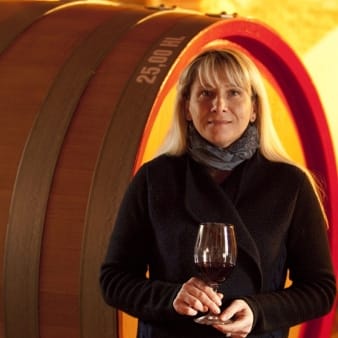
For four generations now, the Bertolino family has been dedicated to winegrowing in Piedmont. The acquisition of Villa Bauda in Incisa Scapaccino by Agostino Bertolino in 1961 was the starting point for the foundation of Tenuta Olim Bauda. Seven years later, the siblings Diana, Dino and Gianni took over the management of the company from their father, which was valued for its high quality, with the intention of continuing the family tradition with great commitment and the will to succeed. At the same time they rebuilt the cellar adjacent to the villa and equipped it with state-of-the-art technology. Today, the Tenuta Olim Bauda comprises six farms and around 100 hectares of land, of which about one third is planted with vines at altitudes of up to 350 metres.
The plants grow exclusively in their own vineyards in the municipalities of Nizza Monferrato, Castelnuovo Calcea, Fontanile and Isola d'Astigiano.‘Asti in a region that offers particularly favourable conditions for the cultivation of Barbera and Moscato. The soils are partly sandy, partly clayey. Most of the land was planted between the 1950s and 1980s, and new vineyards were added in the mid-1990s.
The owners of Tenuta Olim Bauda are very concerned about identification and recognition, especially with regard to the grape varieties used. In addition to Barbera, the family business also produces varieties such as Moscato d‘Asti, Chardonnay, Cortese (Gavi) and Grignolino, which are also used to make very authentic wines. The always impeccable Barbera wines provide a lot of drinking pleasure and convince by their complexity and fruitiness, without connoisseurs having to do without a fresh acidity. The Tenuta Olim Bauda has already enjoyed notable success and has won numerous awards and prizes, particularly for its Barbera wines.
For Dino Bertolino, the Barbera vine is only just beginning. According to him, there is still a lot to do in clone selection and in the vineyards. For example, not all major sites have been explored yet. The three siblings cultivate their arable land sustainably, under the supervision of the agronomist Federico Curtaz, by almost completely dispensing with chemical substances and herbicides. Gianni Bertolino is also president of the production consortium of the Barbera d‘Asti Superiore Nice. SUPERIORE.DE

Facts
- Year of foundation: 1961
- Owners: Diana, Dino and Gianni Bertolino
- Oenologist: Giuseppe Caviola
- Vineyard: approx. 30 hectares
- Annual production: approx. 180,000 bottles
- Conventional cultivation
- 24 Years of Expertise
- 3,500+ Wines in Stock
- 350+ Winemakers
- 28,000+ Positive Reviews
- Fully Air-Conditioned Storage