



-
![Pomino Bianco DOC 2025]()
Pomino Bianco DOC 2025
An exceptionally charming blend of Chardonnay and Pinot Bianco, grown on the cool slopes of Castello Pomino in the Florentine mountains, where the vineyards reach altitudes of up to 700 metres, making them among the highest-altitude white wine vineyards in Tuscany. Gentle pressing with minimal exposure to oxygen and temperature-controlled fermentation, carried out predominantly in stainless-steel tanks, preserve the fruit, whilst a small proportion is fermented in French barriques, lending the wine slightly creamy, toasty notes.
- Grape variety: Chardonnay and Pinot Bianco
- Filtration: yes
- Closure: natural corks
- Maturation: 6 months in stainless steel/oak barrels
- Alcohol content: 12,50 % vol
- Serving temperature: 8‑10 °C
- Storage potential: 2029+
- Food recommendations
vitello tonnato, pan‑fried king prawns with lemon butter, burrata with green asparagus, risotto with spring herbs - Total extract: 23,25 g/l
- Total acidity: 5,79 g/l
- Residual sugar: 1,57 g/l
- Sulfite: 82 mg/l
- pH value: 3,46
- Allergens
contains sulphites - Nutritional Information per 100 ml
- Energy in kcal: 73 kcal
- Energy in kJ: 307 kJ
- Carbohydrates: 0,90 g
- Of which sugar: 0,20 g
stored air-conditioned0,75 l · 17,20 €/l · Price (DE) incl. VAT, excl. Shippingavailable immediately
![Pinot Nero Pomino DOC 2024]()
Pinot Nero Pomino DOC 2024
As early as 1855, a grape variety unrivalled in Tuscany was planted at Castello Pomino, high up in the Florentine hills: Pinot Noir, introduced by Leonia, Lamberto Frescobaldi's great-great-grandmother, who, with her courage in embracing French grape varieties, laid the foundation for one of the estate's most distinctive wines. To this day, this single-varietal Pinot Noir stands as a testament to her pioneering spirit. The vines grow in cool, water-retaining soils at an altitude that ensures cool nights during the Tuscan summer and preserves the Burgundy grape's freshness right up to harvest.Fermented in wooden vats with careful punching down during the maceration period, the wine undergoes malolactic fermentation before maturing for twelve months in French barriques.
- Grape variety: 100% Pinot Nero
- Closure: natural corks
- Maturation: 12 months in barriques
- Alcohol content: 13,00 % vol
- Serving temperature: 16‑18 °C
- Storage potential: 2032+
- Food recommendations
glazed duck breast with orange jus, pan‑fried salmon with a soya glaze, taleggio with fig mustard, mushroom risotto with truffle oil - Total extract: 29,42 g/l
- Total acidity: 5,51 g/l
- Residual sugar: 1,85 g/l
- Sulfite: 86 mg/l
- pH value: 3,46
- Allergens
contains sulphites - Nutritional Information per 100 ml
- Energy in kcal: 74 kcal
- Energy in kJ: 309 kJ
- Carbohydrates: 0,90 g
- Of which sugar: 0,20 g
stored air-conditioned0,75 l · 33,33 €/l · Price (DE) incl. VAT, excl. Shippingavailable immediately
!["Leonia" Metodo Classico Millesimato DOC 2022 brut]()
“Leonia” Metodo Classico Millesimato DOC 2022 brut
Leonia is named after a woman who was a century ahead of her time in Tuscany: Leonia, Lamberto Frescobaldi's great-great-grandmother, planted French grape varieties in Pomino in the 19th century and pressed them in Italy's first gravity-fed cellar – a pioneering feat that was honoured with a gold medal in Paris in 1878. Today, her name stands for the estate's first Metodo Classico, made from Chardonnay and Pinot Nero. The grapes come from the high-altitude vineyards of Pomino, reaching up to around 700 metres above sea level. Harvested by hand, gently pressed and cold-settled for twelve hours, the must ferments in stainless steel tanks, with part of it in wood, before the classic bottle fermentation – involving a long period of ageing on the lees, riddling and disgorging – completes the wine.
- Grape variety: Chardonnay, Pinot Nero
- Serving temperature: 8‑10 °C
- Closure: natural corks
- Maturation: 36 months on the lees
- Filtration: yes
- Alcohol content: 12,00 % vol
- Storage potential: 2029+
- Food recommendations
dishes: oysters with lemon, mixed seafood fritters, tempura prawns - Total extract: 24,55 g/l
- Total acidity: 5,89 g/l
- Residual sugar: 6,00 g/l
- Sulfite: 78 mg/l
- pH value: 3,52
- Allergens
contains sulphites
stored air-conditioned0,75 l · 38,67 €/l · Price (DE) incl. VAT, excl. Shippingavailable immediately
!["Benefizio" Pomino Bianco Riserva DOC 2024]()
“Benefizio” Pomino Bianco Riserva DOC 2024
In 1716, Grand Duke Cosimo III de' Medici designated Pomino as one of only four Tuscan regions for so-called "quality wine", alongside Chianti, Carmignano and the Val d'Arno di Sopra – an early precursor to today's DOC classification. On the cool slopes, 700 metres above sea level amongst giant sequoias and chestnut trees, this led to the creation in 1973 of the Benefizio, the very first Italian white wine ever to be fermented and matured in barriques.
- Grape variety: Chardonnay and Pinot Bianco
- Filtration: yes
- Closure: natural corks
- Maturation: 6 months in stainless steel/oak barrels
- Alcohol content: 13,50 % vol
- Serving temperature: 10‑12 °C
- Storage potential: 2032+
- Food recommendations
pan‑fried scallops with cauliflower purée, ricotta ravioli with sage and brown butter, grilled sea bass with lemon oil, guinea fowl breast with porcini mushrooms - Total extract: 24,36 g/l
- Total acidity: 5,68 g/l
- Residual sugar: 1,55 g/l
- Sulfite: 80 mg/l
- pH value: 3,45
- Allergens
contains sulphites
stored air-conditioned0,75 l · 42,67 €/l · Price (DE) incl. VAT, excl. Shippingavailable immediately
!["Leonia" Metodo Classico Millesimato Rosé DOC 2021 brut]()
“Leonia” Metodo Classico Millesimato Rosé DOC 2021 brut
Leonia Rosé is a tribute to the woman who, in the 19th century, planted French grape varieties in Pomino and pressed them in Italy's first gravity-fed cellar: great-great-grandmother Leonia, who was awarded a gold medal in Paris in 1878 for her work. This Metodo Classico made from Pinot Nero carries on her legacy in rosé form. Harvested by hand into 15-kilo crates during the cool morning hours, the grapes come from the same high-altitude vineyards in Pomino that preserve the Burgundy grape's freshness. Gently pressed to produce a precise must and cold-settled for twelve hours, the wine ferments in steel tanks, partly in wood, before blending takes place in March, followed by a long ageing on the lees with shaking and disgorging.
- Grape variety: 100% Pinot Nero
- Serving temperature: 8‑10 °C
- Closure: natural corks
- Maturation: > 36 months on the lees
- Filtration: yes
- Alcohol content: 12,50 % vol
- Storage potential: 2029+
- Food recommendations
tuna tartare with lime, grilled prawn skewers, watermelon and feta salad, bresaola with rocket and parmesan - Total extract: 26,25 g/l
- Total acidity: 5,79 g/l
- Residual sugar: 5,85 g/l
- Sulfite: 82 mg/l
- pH value: 3,50
- Allergens
contains sulphites
stored air-conditioned0,75 l · 50,67 €/l · Price (DE) incl. VAT, excl. Shippingavailable immediately


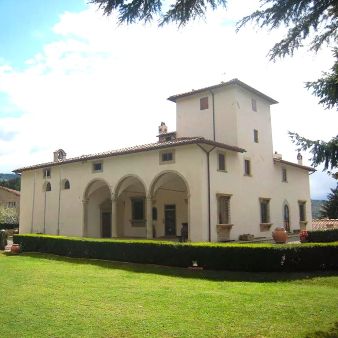
As the hills of Tuscany east of Florence become steeper and vineyards increasingly give way to forests, fir trees and chestnuts, the wines change too. Castello Pomino lies in a landscape that has little in common with the familiar image of sun-drenched Tuscan vineyards. The vines climb to around 700 metres – elevations where pronounced differences between day and night temperatures and intense light conditions set the rhythm.
This is precisely what makes Pomino so distinctive within Frescobaldi. While Sangiovese defines many of the other estates, Chardonnay, Pinot Bianco and Pinot Nero have been part of the identity here for generations. White wine and sparkling wine are not merely additions to a red-wine portfolio, but an essential part of the estate's character.
A small appellation with a remarkably rich history
As early as 1716, Pomino was among the Tuscan areas expressly recognised by Grand Duke Cosimo III de' Medici as particularly suitable for producing great wines. Together with Chianti and other historic wine-growing areas, Pomino was thus territorially defined at a remarkably early stage – long before modern controlled designations of origin existed.
The reason for this special status lies in its location. The vineyards extend towards the first wooded foothills of the Apennines, surrounded by firs, chestnuts and even sequoias. Altitude, brightness and pronounced day-night temperature differences prolong the ripening period and encourage the aromatic precision that gives Pomino's wines their distinctive character.
In the 19th century, this particular identity took a new direction. Leonia degli Albizi, the Burgundy-born wife of Angiolo Frescobaldi, introduced important innovations to Pomino in the middle of the century. She had a gravity-flow cellar built and embraced Chardonnay and Pinot Nero at an early stage – grape varieties that were anything but commonplace in Tuscany at the time.
Chardonnay and Pinot Nero, the Tuscan way
The great strength of Castello Pomino lies in making these international grape varieties feel entirely at home. Chardonnay and Pinot Nero have been cultivated here for well over a century and have long since become part of the character of the place.
Pomino Bianco offers the accessible introduction to this world. Benefizio takes the Chardonnay concept further and represents the estate's most ambitious expression of white wine. Pinot Nero follows the same logic from the red side: in Pomino's elevated vineyards, the variety finds the cooler conditions that suit it, without the resulting wine having to deny its Tuscan origins.
The sandstone-rich soils also play their part and, according to Frescobaldi, contribute especially to the elegance and complexity of Chardonnay and Pinot Nero. The individual wines therefore do not need to compete in terms of power. Their common denominator is instead the interplay of ripeness, freshness and fine aromatic tension.
Leonia – when Pomino's altitude becomes bubbles
It is almost a natural progression that this story leads to Metodo Classico. With Leonia, Castello Pomino uses Chardonnay and Pinot Nero for another stylistic expression that feels entirely at home here. A long growing season, cool nights and grapes whose freshness can be preserved until harvest create precisely the conditions that are also attractive for high-quality sparkling wines.
The name Leonia is no coincidence. Frescobaldi explicitly understands the range as a tribute to Leonia degli Albizi and her unusual openness to new ideas. Brut, Rosé and further Metodo Classico interpretations carry this historical connection into the present.
Castello Pomino therefore has a distinctly individual voice within Frescobaldi. This is neither about Brunello nor Chianti, neither the power of a great Tuscan red nor another interpretation of Sangiovese. Pomino tells a story of altitude, coolness and exceptionally long experience with Chardonnay and Pinot Nero.
That is precisely what makes this comparatively small area so fascinating. Its history reaches far back, yet its wines do not feel like historical quotations. Castello Pomino instead demonstrates that tradition can sometimes mean trying something new at an early stage – and then working with it long enough for it to become a natural part of the place. SUPERIORE.DE

Facts
- Founded: approx. 16th century
- Owner: Frescobaldi family / Marchesi Frescobaldi
- Oenologist: Francesca Pratesi
- Annual production: approx. 650,000 bottles
- Vineyard area: approx. 150 hectares
- 24 Years of Expertise
- 3,500+ Wines in Stock
- 350+ Winemakers
- 28,000+ Positive Reviews
- Fully Air-Conditioned Storage