


-
!["San Luigi" Dogliani DOCG 2025]()
“San Luigi” Dogliani DOCG 2025
Dogliani is THE home of Dolcetto. Here, in southern Piedmont, this sometimes temperamental grape variety finds ideal conditions: calcareous-clay soils that allow for perfect ripening, and a microclimate that combines elegance with structure. Pecchenino, a family-run estate since the late 18th century, has perfected this combination – around three-quarters of their production is Dolcetto, and San Luigi is the perfect introduction to what sets this winery apart. The grapes come from several vineyards surrounding the historic winery in Dogliani, all part of the San Luigi-Mencione estate, at altitudes between 390 and 430 metres with a south-east to south-west aspect. After the harvest, the grapes undergo a ten-day maceration at 28°C, before malolactic fermentation takes place naturally in stainless steel tanks. The wine is aged exclusively in stainless steel, which preserves the Dolcetto’s primary fruit and freshness.
- Grape variety: 100% Dolcetto
- Cultivation: close to nature
- Maturation: 6 months stainless steel
- Vegan: yes
- Filtration: no
- Alcohol content: 13,50 % vol
- Serving temperature: 16‑18 °C
- Storage potential: 2030+
- Closure: Diam
- Food recommendations
ragout of white meat with wild mushrooms - Total extract: 28,25 g/l
- Total acidity: 5,78 g/l
- Residual sugar: 0,56 g/l
- Sulfite: 39 mg/l
- pH value: 3,45
- Allergens
contains sulphites - Nutritional Information per 100 ml
- Energy in kcal: 75 kcal
- Energy in kJ: 313 kJ
stored air-conditioned0,75 l · 15,87 €/l · Price (DE) incl. VAT, excl. Shippingavailable immediately
!["Maestro" Chardonnay Langhe DOC 2024]()
“Maestro” Chardonnay Langhe DOC 2024
If Pecchenino is traditionally known for its great Dolcetto and Barolo, the Maestro reveals another facet of this family winery: the ability to give Chardonnay at 700 metres above sea level in the Alta Langa a form of expression that combines freshness with elegance. Since 1994, this wine has been produced from the vineyards around Bossolasco, where the Piedmontese hills rise up towards the Ligurian Apennines. Here, on medium-heavy soils with a high proportion of limestone and clay, the Chardonnay benefits from a south-easterly exposure and the cool climate that ensures pronounced acidity and aromatic intensity. After the harvest at the beginning of September, the chilled grapes are gently pressed, the must is naturally decanted and fermented in stainless steel tanks. Maturation takes place partly on the fine lees in steel and partly in barriques.
- Grape variety: 100% Chardonnay
- Cultivation: close to nature
- Maturation: 8 months stainless steel/barrique
- Vegan: yes
- Filtration: yes
- Alcohol content: 13,00 % vol
- Serving temperature: 10‑12 °C
- Storage potential: 2028+
- Closure: Diam
- Total extract: 21,56 g/l
- Total acidity: 5,81 g/l
- Residual sugar: 0,59 g/l
- Sulfite: 45 mg/l
- pH value: 3,44
- Allergens
contains sulphites - Nutritional Information per 100 ml
- Energy in kcal: 72 kcal
- Energy in kJ: 301 kJ
!["Maestro" Chardonnay Langhe DOC 2025]()
“Maestro” Chardonnay Langhe DOC 2025
If Pecchenino is traditionally known for its great Dolcetto and Barolo, the Maestro reveals another facet of this family winery: the ability to give Chardonnay at 700 metres above sea level in the Alta Langa a form of expression that combines freshness with elegance. Since 1994, this wine has been produced from the vineyards around Bossolasco, where the Piedmontese hills rise up towards the Ligurian Apennines. Here, on medium-heavy soils with a high proportion of limestone and clay, the Chardonnay benefits from a south-easterly exposure and the cool climate that ensures pronounced acidity and aromatic intensity. After the harvest at the beginning of September, the chilled grapes are gently pressed, the must is naturally decanted and fermented in stainless steel tanks. Maturation takes place partly on the fine lees in steel and partly in barriques.
- Grape variety: 100% Chardonnay
- Cultivation: close to nature
- Maturation: 8 months stainless steel/barrique
- Vegan: yes
- Filtration: yes
- Alcohol content: 13,00 % vol
- Serving temperature: 10‑12 °C
- Storage potential: 2029+
- Closure: Diam
- Total extract: 21,75 g/l
- Total acidity: 5,84 g/l
- Residual sugar: 0,69 g/l
- Sulfite: 49 mg/l
- pH value: 3,43
- Allergens
contains sulphites - Nutritional Information per 100 ml
- Energy in kcal: 72 kcal
- Energy in kJ: 301 kJ
stored air-conditioned0,75 l · 19,87 €/l · Price (DE) incl. VAT, excl. Shippingavailable immediately
!["Quass" Barbera Langhe DOC 2021]()
“Quass” Barbera Langhe DOC 2021
Originating from a single parcel in Dogliani, facing south-west and grown on a chalky-clay medium soil, Quass Pecchenino is a concentrated Barbera signature characterised by its terroir. The vines are over 35 years old, trained in Guyot with around 5,000 vines/ha – a classic Dogliani setting that combines density, freshness and a distinctive mineral line. The first release in 1994 also makes Quass a piece of house history.
- Grape variety: 100% Barbera
- Cultivation: close to nature
- Maturation: 12 months 50/50 barrique / oak barrel
- Vegan: yes
- Filtration: no
- Alcohol content: 14,50 % vol
- Serving temperature: 16‑18 °C
- Storage potential: 2029+
- Closure: Diam
- Total extract: 28,7 g/l
- Total acidity: 6,00 g/l
- Residual sugar: 0,46 g/l
- Sulfite: 92 mg/l
- pH value: 3,44
- Allergens
contains sulphites
stored air-conditioned0,75 l · 22,00 €/l · Price (DE) incl. VAT, excl. Shippingavailable immediately
![Riesling Langhe DOC 2023]()
Riesling Langhe DOC 2023
An international white wine in a region that is world-famous for its great red wines? Pecchenino dared to try this experiment in Bossolasco at an altitude of 700 metres, and the challenge was mastered with flying colours. Here, where one would expect to find Arneis or Cortese, Riesling Renano thrives on calcareous soils with marl and white clay. The south-easterly exposure and the cool, high-altitude climate of the Alta Langa create ideal conditions for the crystalline acidity and aromatic precision that characterise great Rieslings from France and Germany. The grapes are harvested in mid-September when perfectly ripe, cooled to 12°C in the cellar and gently pressed. This is followed by ten months of ageing on the fine lees with repeated bâtonnage and a further six months of bottle ageing.
- Grape variety: 100% Riesling
- Cultivation: close to nature
- Maturation: 10 months stainless steel on the fine lees
- Vegan: yes
- Filtration: yes
- Alcohol content: 13,00 % vol
- Serving temperature: 10‑12 °C
- Storage potential: 2029+
- Closure: Diam
- Food recommendations
fish carpaccio, sushi, scallop au gratin - Total extract: 23,70 g/l
- Total acidity: 7,08 g/l
- Residual sugar: 0,33 g/l
- Sulfite: 79 mg/l
- pH value: 3,48
- Allergens
contains sulphites - Nutritional Information per 100 ml
- Energy in kcal: 69 kcal
- Energy in kJ: 289 kJ
!["Sirì d'Jermu" Dogliani Superiore DOCG 2023]()
“Sirì d’Jermu” Dogliani Superiore DOCG 2023
There are wines that define a winery. Sirì d'Jermu is one of them. Since it was first bottled in 1988, this single-vineyard Dolcetto has embodied the elegance and ageing potential that Orlando and Attilio Pecchenino are able to draw from the grape variety – and it is the reason why Pecchenino is now counted amongst the most respected producers in the appellation. The name refers to the vineyard of the same name, situated right next to the historic winery in Dogliani, where 35-year-old vines are rooted in medium-heavy, calcareous soils with silt and clay components. The south-west-facing aspect ensures optimal ripening conditions for the concentration and complexity that characterise Dogliani Superiore. Vinification follows traditional principles with modern precision: after destemming, the must – including a proportion of whole bunches – is fermented for 15 to 20 days at 26°C in stainless steel tanks, using exclusively indigenous yeasts. What sets Sirì d’Jermu apart from San Luigi, however, is the ageing process: twelve months in large oak casks lend the wine structure, depth and the capacity for maturation that gives it an ageing potential of over ten years.
- Grape variety: 100% Dolcetto
- Cultivation: close to nature
- Maturation: 12 months in an oak cask
- Vegan: yes
- Filtration: yes
- Alcohol content: 14,00 % vol
- Serving temperature: 16‑18 °C
- Storage potential: 2033+
- Closure: Diam
- Food recommendations
brasato al barolo, agnolotti del plin with meat filling and butter sage, braised rabbit - Total extract: 27,85 g/l
- Total acidity: 5,75 g/l
- Residual sugar: 1,30 g/l
- Sulfite: 50 mg/l
- pH value: 3,40
- Allergens
contains sulphites - Nutritional Information per 100 ml
- Energy in kcal: 78 kcal
- Energy in kJ: 325 kJ
stored air-conditioned0,75 l · 22,53 €/l · Price (DE) incl. VAT, excl. Shippingavailable immediately
!["Botti" Nebbiolo Langhe DOC 2024]()
“Botti” Nebbiolo Langhe DOC 2024
A clear ruby colour with vibrant highlights. Botti comes predominantly from the estate’s own Bricco Botti plot in Dogliani: south to south-west facing slopes, with calcareous-clay soils – —a terroir that lends the Nebbiolo tension and delicate minerality. On the nose, red berries including raspberry and cherry, alongside blueberry, violet and a hint of spice. On the palate, it is straightforward and elegant, with juicy fruit, fine-grained, rounded tannins and lively, crisp acidity. The finish is delicately spicy and precise, with a cool, mineral note. A characterful Langhe Nebbiolo that showcases the signature of the exceptional Dogliani terroir in a youthful, approachable form. SUPERIORE.DE
- Grape variety: 100% Nebbiolo
- Cultivation: close to nature
- Maturation: 12 months in oak barrels
- Vegan: yes
- Filtration: yes
- Alcohol content: 13,50 % vol
- Serving temperature: 16‑18 °C
- Storage potential: 2032+
- Closure: Diam
- Total extract: 29,71 g/l
- Total acidity: 5,78 g/l
- Residual sugar: 0,95 g/l
- Sulfite: 55 mg/l
- pH value: 3,42
- Allergens
contains sulphites - Nutritional Information per 100 g
- Energy in kcal: 75 kcal
- Energy in kJ: 313 kJ
stored air-conditioned0,75 l · 24,67 €/l · Price (DE) incl. VAT, excl. Shippingavailable immediately
!["Bricco Ravera" Nebbiolo Langhe DOC 2022]()
“Bricco Ravera” Nebbiolo Langhe DOC 2022
There are wines whose labels do not tell the whole truth. Bricco Ravera is labelled "Langhe Nebbiolo", but in reality it is Barolo in every respect – except for the name. The grapes come from the Ravera vineyard in Monforte d'Alba, one of the most prestigious single vineyards in the Barolo region, where Pecchenino has owned plots since the early 2000s. A complicated dispute over appellation rights meant that this wine had to be marketed under the less restrictive Langhe DOC – a bureaucratic detail that nevertheless works in the favour of the connoisseur: Barolo quality at a Langhe price. The vineyards are located in the hamlet of San Giuseppe near the Pecchenino family's Barolo winery. The chalky, clayey soils with a southern and south-western exposure offer ideal conditions for Nebbiolo, the capricious, late-ripening grape variety that develops its full aromatic complexity here. After alcoholic fermentation in stainless steel tanks, the wine remains in contact with the skins for a prolonged post-maceration before being racked. Once malolactic fermentation is complete, the wine is transferred to oak barrels, where it develops the structure and depth that distinguishes it from simpler Langhe wines.
- Grape variety: 100% Nebbiolo
- Cultivation: close to nature
- Maturation: 24 months tonneau
- Vegan: yes
- Filtration: yes
- Alcohol content: 14,50 % vol
- Serving temperature: 16‑18 °C
- Storage potential: 2033+
- Closure: Diam
- Food recommendations
truffle and game dishes, brasato al barolo - Total extract: 29,78 g/l
- Total acidity: 5,91 g/l
- Residual sugar: 0,56 g/l
- Sulfite: 79 mg/l
- pH value: 3,44
- Allergens
contains sulphites - Nutritional Information per 100 ml
- Energy in kcal: 80 kcal
- Energy in kJ: 337 kJ
- Carbohydrates: 0,10 g
- Of which sugar: 0,10 g
![Pinot Nero Langhe DOC 2021]()
Pinot Nero Langhe DOC 2021
A fascinating Pinot Nero with the structure of a Nebbiolo. Fine cherry flavour with well-dosed extract sweetness, plus rose petals, mint and some Asian herbal spice. The wine prances on the palate with elegant restraint, revealing its finesse and structure on the third sip at the latest and with a medium-bodied finish. This is a wine for Pinot fans as well as lovers of subtle, subtle styles - and clearly love at second sight. SUPERIORE.DE
- Grape variety: 100% Pinot Nero
- Cultivation: close to nature
- Maturation: 18 months in oak barrels
- Vegan: yes
- Filtration: yes
- Alcohol content: 13,50 % vol
- Serving temperature: 16‑18 °C
- Storage potential: 2029+
- Closure: Diam
- Total extract: 23,70 g/l
- Total acidity: 5,06 g/l
- Residual sugar: 0,29 g/l
- Sulfite: 81 mg/l
- pH value: 3,47
- Allergens
contains sulphites
!["Psea" Metodo Classico Alta Langa DOCG 2020 pas dosé]()
“Psea” Metodo Classico Alta Langa DOCG 2020 pas dosé
While Franciacorta has long enjoyed worldwide fame, a quiet revolution is taking place in the hills of the Alta Langa. Here, where the Piedmontese provinces of Cuneo, Alessandria and Asti stretch towards the Ligurian Apennines, the sparkling wine that impresses connoisseurs with its freshness, precision and mineral depth is produced at an altitude of up to 700 metres. Pecchenino, which has been in family hands since the late 18th century and is traditionally known for its great Dolcetto and Barolo, ventured into this small but fine DOCG in 2012 with impressive success – with impressive success. The name "Psea" refers to the village of Pezzea in the municipality of Bossolasco, where Chardonnay and Pinot Nero are rooted in chalky soils at an altitude of 700 metres. The cool climate with pronounced day-night temperature fluctuations enables optimal ripening while maintaining lively acidity – the freshness that makes Alta Langa so unique. The cuvée of 70% Chardonnay and 30% Pinot Nero first undergoes alcoholic fermentation in steel tanks before maturing for nine months in barriques. Bottling is followed by 36 months on the lees before the wine is disgorged as a pas dosé, i.e. without any dosage.
- Grape varieties: 70% Chardonnay, 30% Pinot Nero
- Cultivation: close to nature
- Maturation: 36 months bottle fermentation
- Filtration: yes
- Alcohol content: 12,50 % vol
- Serving temperature: 8‑10 °C
- Storage potential: 2028+
- Closure: natural cork
- Allergens
contains sulphites - Nutritional Information per 100 ml
- Energy in kcal: 70 kcal
- Energy in kJ: 291 kJ
- Carbohydrates: 0,10 g
- Of which sugar: 0,10 g
stored air-conditioned0,75 l · 38,67 €/l · Price (DE) incl. VAT, excl. Shippingavailable immediately
![Barolo "San Giuseppe" DOCG 2020]()
Barolo “San Giuseppe” DOCG 2020
Pecchenino, traditionally known in Dogliani for Dolcetto, ventured into Monforte d'Alba, one of the eleven Barolo villages and home to some of the appellation's most prestigious single vineyards, in the early 2000s. Today, the family cultivates plots in the three prestigious Menzioni Geografiche Aggiuntive Ravera di Monforte, Le Coste di Monforte and Bussia – sites whose names carry weight in connoisseur circles. San Giuseppe is not a single vineyard, but a composed vision: 50% Ravera di Monforte, 35% Le Coste and 15% Bussia merge to create a Barolo that combines the strengths of these different terroirs. Ravera, at an altitude of 440 metres, with its whitish marl, brings minerality and structure. Le Coste, exposed to the south-east, delivers elegance and aromatic finesse. Bussia, the largest and best known of the three, contributes strength and ageing potential. The chalky, clayey soils, the south to south-westerly exposure and the precise manual labour in the vineyard – everything follows the principle of low yields for maximum concentration.
- Grape variety: 100% Nebbiolo
- Cultivation: close to nature
- Maturation: 24/12 months tonneau/cement
- Vegan: yes
- Filtration: yes
- Alcohol content: 14,50 % vol
- Serving temperature: 18‑20 °C
- Storage potential: 2038+
- Closure: Diam
- Total extract: 29,85 g/l
- Total acidity: 6,01 g/l
- Residual sugar: 0,79 g/l
- Sulfite: 75 mg/l
- pH value: 3,46
- Allergens
contains sulphites - Nutritional Information per 100 ml
- Energy in kcal: 80 kcal
- Energy in kJ: 336 kJ
stored air-conditioned0,75 l · 52,00 €/l · Price (DE) incl. VAT, excl. Shippingavailable immediately
![Barolo Bussia DOCG 2019]()
Barolo Bussia DOCG 2019
Bussia was there first. When the Barolo producers began to list their single vineyards on the label, Bussia was already there – the first MGA in the entire appellation ever to be bottled as a single vineyard. Today, covering 340 hectares, it is the second-largest MGA in the Barolo region, and despite its size, it is remarkably homogeneous in terms of soil and character: dense, earthy depth that unfolds into complexity over time. Orlando and Attilio Pecchenino hail from Dogliani, the heart of Dolcetto production in the Langhe. The fact that the brothers, renowned for their fine Dolcetti, also produce a Barolo of such precision is only surprising at first glance. Craftsmanship and terroir are the constants – whilst the grape variety varies.
- Grape variety: 100% Nebbiolo
- Cultivation: close to nature
- Maturation: 24 months in oak barrels/concrete tanks
- Filtration: yes
- Alcohol content: 14,50 % vol
- Serving temperature: 18‑20 °C
- Storage potential: 2042+
- Closure: natural cork
- Food recommendations
braised beef in barolo, tajarin with white truffle, aged fassona beef - Total extract: 30,55 g/l
- Total acidity: 5,96 g/l
- Residual sugar: 0,93 g/l
- Sulfite: 75 mg/l
- pH value: 3,45
- Allergens
contains sulphites
stored air-conditioned0,75 l · 73,33 €/l · Price (DE) incl. VAT, excl. Shippingavailable immediately
![Barolo Bussia DOCG 2021]()
Barolo Bussia DOCG 2021
Orlando and Attilio Pecchenino are from Dogliani. The fact that these brothers, who have made a name for themselves as Dolcetto producers, also produce a Barolo of such depth and precision is no contradiction – it is the same approach, applied to a different terroir. The Corsini vineyard in the Bussia MGA, Monforte d’Alba: south-west facing, calcareous-clay soil with brownish marl, Guyot training, 5,000 vines per hectare. At 340 hectares, Bussia is the second-largest MGA in the Barolo region – and was historically the first single vineyard to ever be bottled as such. Despite its size, its soils are remarkably homogeneous, and its character unmistakable: dense depth that unfolds into great complexity over time.
- Grape variety: 100% Nebbiolo
- Cultivation: close to nature
- Maturation: 24 months in oak barrels/concrete tanks
- Filtration: yes
- Alcohol content: 14,50 % vol
- Serving temperature: 18‑20 °C
- Storage potential: 2044+
- Closure: natural cork
- Food recommendations
braised beef in barolo, piedmont‑style hare, tajarin with black truffle, matured castelmagno from the mountain pastures - Total extract: 30,22 g/l
- Total acidity: 6,01 g/l
- Residual sugar: 0,97 g/l
- Sulfite: 84 mg/l
- pH value: 3,44
- Allergens
contains sulphites
stored air-conditioned0,75 l · 73,33 €/l · Price (DE) incl. VAT, excl. Shippingavailable immediately
![Barolo "Le Coste di Monforte" DOCG 2020]()
Barolo “Le Coste di Monforte” DOCG 2020
The MGA Le Coste is located in the heights of Monforte d'Alba, where the rows of vines nestle at 440 metres on south-east facing slopes – a site that Barolo connoisseurs appreciate for its vigour and unmistakable character. The whitish marl soils of this plot of just under one hectare give the Nebbiolo the mineral depth and structural rigour that make Monforte wines so unique. Orlando and Attilio Pecchenino vinify the grapes of this single-vineyard Barolo with the utmost respect for the terroir: temperature-controlled fermentation in steel tanks is followed by an extended maceration of 60 days using the historic method of the sunken cap, before the wine matures for a full 36 months in large oak barrels and cement vats after malolactic fermentation.
- Grape variety: 100% Nebbiolo
- Cultivation: close to nature
- Maturation: 24/12 months tonneau/cement
- Vegan: yes
- Filtration: yes
- Alcohol content: 14,50 % vol
- Serving temperature: 18‑20 °C
- Storage potential: 2044+
- Closure: Diam
- Total extract: 29,65 g/l
- Total acidity: 5,89 g/l
- Residual sugar: 0,55 g/l
- Sulfite: 55 mg/l
- pH value: 3,42
- Allergens
contains sulphites
stored air-conditioned0,75 l · 76,00 €/l · Price (DE) incl. VAT, excl. Shippingavailable immediately
![Barolo "Le Coste di Monforte" DOCG 2019]()
Barolo “Le Coste di Monforte” DOCG 2019
Barolo Le Coste di Monforte from the outstanding 2019 vintage is utterly captivating in the glass. Rose petals, cedarwood, mint, sweet pipe tobacco and blood orange are the first aromas to emerge. On the palate, it is deep and complex, and exceptionally beautiful and harmonious for a young Barolo. Time in the glass brings out its countless nuances. SUPERIORE.DE
- Grape variety: 100% Nebbiolo
- Cultivation: close to nature
- Maturation: 24 months in wooden barrel / 12 months in cement tank
- Vegan: yes
- Filtration: yes
- Alcohol content: 14,50 % vol
- Serving temperature: 18‑20 °C
- Storage potential: 2043+
- Closure: Diam
- Total extract: 28,20 g/l
- Total acidity: 4,69 g/l
- Residual sugar: 0,25 g/l
- Sulfite: 51 mg/l
- pH value: 3,44
- Allergens
contains sulphites
stored air-conditioned0,75 l · 76,00 €/l · Price (DE) incl. VAT, excl. Shippingavailable immediately


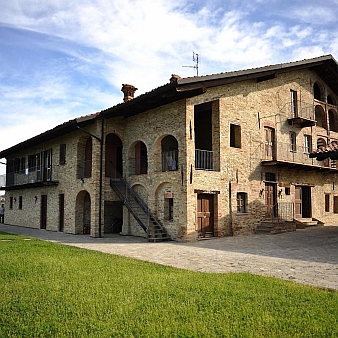
Centuries in the same family. Since the 18th century, this building jewel, enthroned on a vineyard south of Barolo, has always been passed down from father to son in the family. Eight hectares gradually turned into over thirty. Most of it directly below the magnificent old estate, circling the mountain as if to form the stairs up to the house. It is most beautiful here at the beginning of autumn when the leaves of the Dolcetto grapes turn red.
With Dolcetto, the brothers Orlando and Attilio Pecchenino, who have managed the winery since 1987, have also made an international name for themselves. The region north of Dogliani, with its vineyards reaching 450 metres above sea level, offers loose, calcareous soils that allow Dolcetto to mature particularly well. The Dolcetto grape was first documented here in 1432. The nearby mountains provide a constant cooling wind and allow the temperature to drop significantly at night. This brings a lot of fruit and a crisp acidity into the grapes. The brothers work a lot in the vineyard because they do without chemical sprays such as herbicides and herbicides, instead grow grass and herbs between the rows, incorporate organic fertilizers and compost into the soil and do almost all the work manually in their narrow Guyot wine rows.
The Fratelli Pecchenino also cultivate their three hectares in Monforte d'Alba, where they cultivate their Nebbiolo grapes for Barolo in the top vineyards of Bussia and San Giuseppe. The single layer Barolo "Bussia-Corsini" and "Le Coste" were long insiders' tips, but in the meantime they are constantly earning high scores. In Italy as well as internationally, such as with the American Wine Spectator.
Also in the cellar no chemical additives are used. The hand-picked grapes are placed in small boxes, selected again by hand and crushed. Only the own vineyard yeasts are used to maintain the typicality.
Their Dolcetto specialities, such as "Siri d'Jermu", are also based on long mash contact, similar to Barolo. The wine is fermented for 10 to 12 days and then matured in large and small wooden barrels. Depending on the vintage, a separate decision is made on how the wine is to be matured. Most winegrowers in Piedmont do not put so much effort into the Dolcetto. If you enjoy Dolcetto from Pecchenino, you will immediately notice that silky elegance, more fruit and complexity play on the palate. Just more drinking pleasure is available.
Almost three quarters of the vineyards are planted with Dolcetto. The rest is shared by Nebbiolo, Barbera, Chardonnay, Sauvignon blanc and some Pinot nero.
In the Casa Pecchenino, by the way, it has also been possible to spend the night in a very formidable way for some years now. The old premises have been lovingly restored and tastefully furnished with suitable furniture. Perfect for a wine trip to Piedmont. SUPERIORE.DE

Facts
- Owner: Family Pecchenino
- Oenologists: Orlando and Attilio Pecchenino
- Annual production: approx. 110,000 bottles
- Vineyard: approx. 32 hectares, of which 29 in yield
- Natural cultivation