


-
!["SANT'AGATA" Lambrusco di Sorbara DOC 2024 secco (BIO)]()
“SANT’AGATA” Lambrusco di Sorbara DOC 2024 secco (BIO)
Ruby red with light violet reflections. Inviting aroma of violets, redcurrants and wild strawberries. Delicately fruity, dry and crisp on the palate with a lively acidity and fine, sparkling perlage. Brings freshness and drinking pleasure to every garden party. Goes perfectly with finger food, cold cuts, prosciutto & co. SUPERIORE.DE
- Grape variety: 100% Lambrusco Sorbara
- Cultivation: biological
- Maturation: stainless steel
- Filtration: yes
- Alcohol content: 11,00 % vol
- Serving temperature: 8‑10 °C
- Storage potential: 2027+
- Closure: natural cork
- Food recommendations
mediterranean finger food - Eco-Control-No.: IT‑BIO‑006
- Allergens
contains sulphites - Nutritional Information per 100 ml
- Energy in kcal: 65 kcal
- Energy in kJ: 273 kJ
- Carbohydrates: 0,10 g
- Of which sugar: 0,10 g
stored air-conditioned07102324 · 0,75 l · 18,53 €/l · Price (DE) incl. VAT, excl. Shippingavailable immediately
!["GROSSO" Metodo Classico Lambrusco di Sorbara DOC 2021 brut]()
“GROSSO” Metodo Classico Lambrusco di Sorbara DOC 2021 brut
GROSSO is a Blanc de Noirs produced using the classic Champagne method and matures for 24 months on the fine lees. Delicate pink colour and a fine, persistent perlage. Crisp bouquet of violets, citrus peel, nectarine and wild strawberry. On the palate with a nice tang, very straightforward flavour of red berries. Very well balanced, it prances into a respectable finish with a finely spiced and impressive freshness. SUPERIORE.DE
- Grape variety: 100% Lambrusco Sorbara
- Cultivation: conventional
- Maturation: 24 months bottle fermentation
- Filtration: yes
- Alcohol content: 12,00 % vol
- Serving temperature: 8‑10 °C
- Storage potential: 2028+
- Closure: natural cork
- Total acidity: 6,04 g/l
- Residual sugar: 0,50 g/l
- Allergens
contains sulphites
stored air-conditioned07102821 · 0,75 l · 32,00 €/l · Price (DE) incl. VAT, excl. Shipping< 24 units available


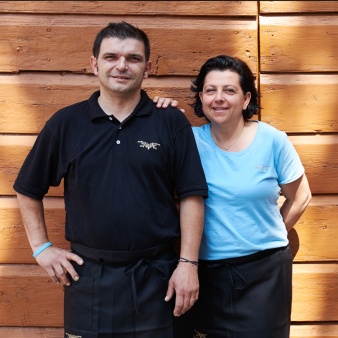
A vineyard with fifteen hectares of vineyards is almost ridiculously small in Emilia-Romagna. Nevertheless, Alberto Paltrinieri and his wife Barbara decided to continue the tradition of his grandfather, who founded the company in 1926. And yet to do almost everything in a completely different way.
Nobody dared to press a pure Lambrusco in the late 1980s. Then, a little later, to go one step further and select grapes from individual vineyards, as in the French "Cru" system. The two dared to do so, bet on the extremely delicate and in need of care grape variety Sorbara, and went to almost unbelievable lengths in the slightly hilly country between the two rivers Secchia and Panaro. Working hours like in a Mosel steep slope. To produce Lambrusco. The "bubble" that had just reached the low point of his image. They were called complete nutjobs. Who wants pure Sorbara Lambrusco, and that from a single vineyard? Absurd. You can't earn anything with that.
But quality prevails after all. And so it soon rained awards all the way to the coveted three glasses, the "tre bicchieri" of the famous Italian wine guide Gambero Rosso. It also brought reputation. Not only the Paltrinieris, but the whole region around Cristo di Sorbara. And slowly the wine world at Lambrusco no longer began to think of sweet dark supermarket sparkling wine, but of light, pink and above all dry Lambrusco, just a Sorbara. Fine fruity, with fine mousseux. In different variations, from Charmat pressure tank fermentation to the "Metodo Classico" spumante in bottle fermentation, as in Champagne.
The relaunch was a success that hardly anyone would have believed in. And one of the pioneers was Paltrinieri. The portfolio ranges from Bianco with Trebbiano and white fermented Sorbara to the red Solco from the grape variety Salamino and the pure Sorbara. Lambrusco Sorbara in purezza. Forget everything you've ever heard about Lambrusco! SUPERIORE.DE

Facts
- Year founded: 1926
- Owners: Alberto and Barbara Paltrinieri
- Annual production: approx. 120,000 bottles
- Vineyard area: approx. 15 hectares
- Conventional cultivation